| Annual Recurring Revenue (ARR) | and a key metric used by SaaS or subscription businesses that have Term subscription agreements, meaning there is a defined contract length. ARR is the value of the contracted recurring revenue components of your term subscriptions normalized to a one-year period. ARR is the less frequently used alternative normalization method of the two common ones, ARR and MRR. ARR is used almost exclusively in B2B subscription businesses. |
| 📚 Accounting | is the comprehensive process of systematically recording, summarizing, analyzing, and interpreting an entity's financial transactions to communicate its economic activities to stakeholders. |
| Asset accounts | Your asset accounts could include anything you own that has value, such as Buildings, Land, Equipment, Vehicles, Valuables, Inventory, Cash, Accounts receivable, Notes receivable |
| ✏️ Bookkeeping | is the clerical, day-to-day process of systematically recording all of a business's financial transactions, which forms the necessary input data for the accounting process. |
| Business Analysis | Business analysis is the practice of identifying, analyzing, and solving business problems. Get started with courses that empower you with the methods and tools you need to improve a process, implement a change, or deliver a solution. With these business analysis courses, you can develop skills in elicitation, modeling, documentation, communication, and stakeholder management. |
| Consideration: | In contract law, this refers to something of value exchanged between parties. In this context, it's what the contractor receives in exchange for their services. |
| Compensation: | This term signifies payment for services, often used in a broader sense than "wages." |
| Draw: | This is an advance payment against future earnings, often used for independent contractors who are paid on commission. |
| Accounts payable | These are payments that a company may owe to someone else for products or services. |
| Accounts receivable | This is money that the company is expecting from a client or customer. |
| Administrative expenses | These are expenses related to the administration or management of an organization, including wages and hiring costs. |
| balance sheet | business's revenue or assets from all sources, including accounts receivable and cash. Next, calculate the liabilities and expenses, such as taxes owed, wages, and mortgages. The assets and liabilities must include all large and small amounts as of the given date. The owner's (or shareholders') equity is the difference between the |
| Bank or other loans | Loans are liabilities that may be through varying financial institutions or individuals. |
| Cash and Cash Equivalents (CCE): | think your venmo account balance or your paypal / cash app, etc. This is a broader term often used in financial statements for an organization's most liquid assets. It includes: Cash on hand (physical currency), Demand deposits (checking accounts), Highly liquid, short-term investments that can be easily converted to cash. |
| Cash Flow | Cash flow refers to the movement of cash into and out of a business over a given period, typically a month, quarter, or year. It focuses on the actual cash inflows and outflows rather than accounting-based revenue or expenses. Cash flow can be categorized into three main types: operating cash flow (cash generated from core business operations), investing cash flow (cash related to investments in assets or securities), and financing cash flow (cash related to borrowing, equity, or debt repayments). |
| Cash position | the amount of cash and cash equivalents that a company or individual holds at a specific point in time. It represents the liquidity and financial strength of an entity by indicating how much cash is available to meet immediate financial obligations or make investments. Cash and cash equivalents typically include physical currency, such as banknotes and coins, as well as highly liquid assets that can be readily converted into cash, such as bank deposits, short-term government securities, and marketable securities with maturities of three months or less. These assets are considered to have minimal risk of value fluctuations and can be easily accessed for transactions or emergency needs.Monitoring and managing cash position is crucial for businesses and individuals to ensure they have enough funds to cover expenses, pay debts, take advantage of investment opportunities, and maintain financial stability. Analyzing the cash position helps in budgeting, forecasting cash flows, and making informed financial decisions. |
| Capital Expenditure | Capital expenditure refers to the funds spent by a company or organization to acquire, upgrade, or maintain long-term assets such as property, equipment, or infrastructure, with the aim of generating future benefits or revenue. |
| Capital Budgeting | |
| Cash dividends per common share | These are the cash dividends a company issues for every outstanding common share. |
| Company inventory | If the business sells physical products, it can include inventory as assets. |
| Contract price: | This is the total amount agreed upon in the contract for the services provided. |
| COGS - Cost of Goods Sold | |
| Costs of total goods sold | This refers to the expense of producing the products sold by the business. It includes labor and materials used to create goods. |
| Chart of Accounts COA | list of all the accounts involved in your business’s day-to-day operations. It's useful to refer to when recording transactions in your general ledger. |
| Current liabilities | classified as any outstanding payments that are due within the year, |
| Commission: | This is a percentage-based payment, often used for sales or marketing services. |
| RETAINED EARNINGS | the portion of a company's profits that are kept by the company instead of being distributed to shareholders as dividends. Retained earnings are usually reinvested in the company's operations or used to pay off debt, make acquisitions, or fund other growth opportunities. |
| Why are Retained earnings important | measure of a company's financial health and growth potential. Companies with strong retained earnings are often able to invest in research and development, expand their operations, or make strategic acquisitions, which can help them maintain a competitive advantage and generate long-term value for shareholders. |
| Downside risk | is the financial risk associated with losses. That is, it is the risk of the actual return being below the expected return, or the uncertainty about the magnitude of that difference. Risk measures typically quantify the downside risk, whereas the standard deviation measures both the upside and downside risk. |
| Development and research costs | These are expenses related to creating new products or researching advancements. |
| Depreciation | The most common noncash adjustment involves depreciation. |
| Efficiency | a culture of financial discipline and cost awareness |
| Equity Financing | Selling part of your business to investors for capital and shared ownership |
| Exited Unicorn | a privately held startup company that has achieved a valuation of over one billion USD and has subsequently gone public through an initial public offering (IPO) or has been acquired by another company. This term highlights the company's successful transition from a high-growth startup to a publicly traded entity or a part of another organization, marking a significant milestone in its business journey. |
| Expense accounts | Expense accounts represent any money that you’ve spent. For instance, if you rent, the money moves from your cash account to the rent expense account. Expense accounts allow you to keep track of money that you no longer have. EX: Cost of sales, Advertising expense, Interest expense, Depreciation expense, Salaries or wages, Interest expense, Depreciation expense |
| Fixed-type assets | These assets include owned objects or materials like equipment, structures and property. |
| fiscal responsibility | |
| 💰 Finance | is the broader field concerning the management of money, which involves decisions about how to acquire, allocate, and use funds, often focusing on planning future growth and risk. |
| FinOps | 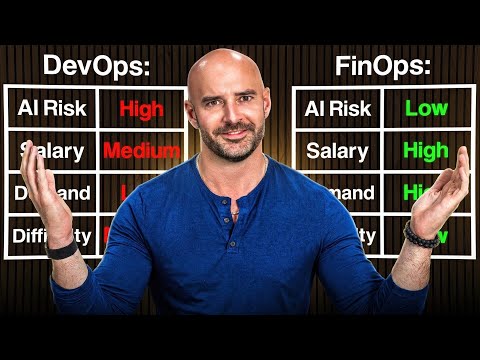 Financial operations is the process of managing a company's financial activities, including budgeting, forecasting, and reporting. It is a critical component of any business and is often used to improve financial performance and decision-making. Financial operations is the process of managing a company's financial activities, including budgeting, forecasting, and reporting. It is a critical component of any business and is often used to improve financial performance and decision-making. |
| 📝 Financial accounting | is a specialized branch of accounting focused on preparing standardized financial statements for external users (like investors, creditors, and regulators) to assess the company's past performance and financial position. |
| Fee: | This is a general term for payment for services rendered. It can be a fixed amount or based on an hourly or project rate. |
| Income accounts | Income tends to be the category that business owners underutilise the most. Below are the most common types of revenue or income accounts Sales income, Rental income, Dividend income, Contra income |
| IPO (Initial Public Offering) | In the best case scenario for our company, the founders believe that an IPO or acquisition would be appropriate. An IPO would allow us to raise funds for expansionary projects that we are passionate about, whereas an acquisition would allow our company’s proprietary knowledge and intellectual property to be transferred to another takeover company that would move our products forward. This option would allow for a reasonable return for both our founders and all of the investors in our company. |
| Internal Rate of Return - IRR | |
| Blue Sky | Businesses use "blue sky" for impractical ideas during brainstorming sessions to spark creativity. These ideas might be about disrupting the industry, achieving long-term goals, or solving problems from a new angle. Even if not directly implemented, they can lead to innovation and future breakthroughs. |
| burn rate | the pace at which your cash reserves are depleting. the amount of money your business needs in a certain period (usually a month) to cover all business expenses. formula: (Starting Cash - Ending Cash) / # of months = monthly burn rate |
| gross burn rate | how much cash you spend in a single month (i.e., cash outflows) |
| Net burn rate | subtracts the total revenue from the total money you’ve spent month-over-month. In other words, your net burn rate is your actual cash lost in a single month because it’s based on the difference between expenses (the cash outflows) and revenues (the cash inflows). |
| Dollar-cost averaging | is a popular strategy for reducing the sting of volatility — it involves buying a smaller amount of crypto every week or month no matter what the market is doing. |
| Intangible assets | Though these assets are not physical objects, they may include patents, logos or intellectual property. |
| Interest and selling expenses | A company may include all expenses related to interest paid and selling costs. |
| Payment: | Similar to "fee," this is a broad term indicating compensation for work completed. |
| Remuneration: | Similar to "compensation," this term indicates payment for services rendered. |
| Stipend: | This is a fixed sum of money paid regularly, often used for living expenses or a specific purpose, but can also apply to independent contractors. |
| Honorarium: | This is a payment for services rendered, often used for professionals like speakers or consultants. |
| Retainer: | This is an upfront fee paid to secure the services of an independent contractor, often used for lawyers or consultants. |
| Royalty: | This is a payment to an independent contractor for the use of their intellectual property, such as a writer or musician. |
| Per diem: | This is a daily allowance for expenses, often used for contractors who travel for work. |
| Net earnings: | This refers to the contractor's income after deducting business expenses. |
| Gross receipts: | This refers to the total income received by the contractor before deducting business expenses. |
| Liability accounts | Your liability accounts include things like Accounts payable or bills, Payroll taxes, Income taxes payable, Bank loans, Credit card balances, Mortgages, Deferred tax liabilities, Personal loans |
| Loan Servicer | A loan servicer is a company or entity that manages the administrative tasks and collection of loan payments on behalf of a lender or investor. |
| Long-term investments | Long-term investments are assets that the company can't liquidate in a year's time. |
| Liquidity | |
| Marketable securities | An organization may include assets for which there are liquid markets. |
| non-current or long-term liabilities | payments due more than a year from the date of the report. |
| NPV - Net Present Value | |
| Post-IPO debt | A post-IPO debt takes place when firms loan a company money after the company has already gone public. Similar to debt financing, a company will promise to repay the principal as well as added interest on the debt. |
| Prepaid expenses | Contracts, equipment or building rental and licenses are all pre-paid expenses. |
| Privately-held Business | A privately-held business is a company that is not publicly traded and is owned by a small group of individuals or entities. |
| Profit | Profit, also known as net income or net profit, represents the financial gain a business realizes after deducting all expenses from its revenue. It is calculated by subtracting all costs, including operating expenses, taxes, interest, and depreciation, from the revenue. Profit is a measure of a business's profitability and is typically reported on the income statement. Positive profit indicates that revenue exceeds expenses, while a negative profit indicates losses. |
| profit and loss statement | is a financial statement that provides a record of the revenues, expenses, and profits/losses incurred by a business over a specified time frame, typically issued monthly, quarterly and annually. This type of financial statement is prepared using the cash or accrual accounting method and gives information about how much your business is making or losing. A profit and loss statement can sometimes be referred to as an income statement, expense statement, earnings statement, statement of operations, or statement of financial results. |
| Regular Tax Liability | For a Limited Liability Company (LLC), the regular tax liability refers to the income tax liability that the LLC and its owners have based on the income generated by the business. LLCs are generally treated as pass-through entities for tax purposes, meaning that the income, deductions, and credits of the LLC are passed through to the individual owners or members, who report them on their personal tax returns. The LLC itself does not pay income taxes at the entity level. The regular tax liability for an LLC is calculated based on the taxable income of the LLC and the applicable tax rates for the individual owners. The taxable income is determined by subtracting allowable deductions, expenses, and losses from the LLC's total income. The individual owners of the LLC report their share of the LLC's income or losses on their personal tax returns and pay taxes at their individual tax rates. The specific tax rates and calculation methods vary depending on the tax laws of the jurisdiction in which the LLC operates. |
| Revenue | Revenue refers to the total amount of money generated from the sales of goods or services during a specific period. It represents the top line of a business's income statement and is often referred to as sales or sales revenue. Revenue does not take into account the expenses incurred in generating that income. |
| Monthly Revenue Growth | Take the current month’s revenue, subtract last month’s revenue, and then divide by last month’s revenue. |
| Revenue Run Rate | Take the revenues recognized in the most recent month and multiply by 12. |
| self liquidating event | |
| Tax Ready Books | solid financial statements and bookkeeping for better decision making and accurate taxes |
| Total revenues and sales | The amount of money that a business earns within the quarter or year is one of the most important aspects included in a profit and loss statement. |
| Tentative Minimum Tax | a calculation that determines whether a taxpayer is subject to the Alternative Minimum Tax (AMT) when claiming the R&D tax credit. |
| Wages and dividends | The organization may need to pay out dividends or wages to employees. |
| Operational Expenses | Operational expenses in the context of a tech startup encompass the costs associated with the regular functioning of the business, including expenses related to personnel, marketing, office space, utilities, software licenses, cloud services, and other day-to-day operational necessities. These expenses are incurred to support the ongoing activities and growth of the startup. |
| Zero based Budget (ZBB) | Maximize Runway. Align Every Expenditure to High-Value Product Goals. Build a Disciplined, Data-Driven Financial Culture. |
| Working Capital | the capital of a business which is used in its day-to-day operations, calculated as the current assets minus the current liabilities. |