MM LLC or Partnership
LLC Partners
In a business context, "GP" and "LP" can refer to different concepts:
-
GP: In the realm of finance and investing, "GP" often stands for "General Partner." A General Partner is a partner in a partnership or a member of a limited liability company (LLC) who has unlimited liability for the debts and obligations of the business. General Partners typically have management responsibilities and decision-making authority. They are also typically involved in the day-to-day operations of the business.
-
LP: "LP" typically stands for "Limited Partner." A Limited Partner is a partner in a partnership or a member of a limited liability company (LLC) who has limited liability for the business's debts and obligations. Unlike General Partners, Limited Partners are not usually involved in the day-to-day operations or management of the business. Their liability is generally limited to the amount of their investment in the partnership or LLC. Limited Partners often provide capital or financial resources to the business while leaving the operational decisions to the General Partners.
These terms are commonly used in the context of private equity firms, venture capital funds, and certain types of investment partnerships where there is a distinction between partners who have management responsibilities (General Partners) and those who have limited involvement (Limited Partners). However, it's worth noting that the specific usage of these terms may vary depending on the jurisdiction and the specific legal structure of the business.
Cofounders
As co-founders, the job roles of each individual can vary depending on the needs and structure of the company. However, here are some common job roles and responsibilities that co-founders may assume:
Chief Executive Officer (CEO): The CEO is responsible for the overall management and direction of the company. They set the company's strategic direction, manage the team, and are responsible for the company's growth and success.
Chief Operating Officer (COO): The COO is responsible for the day-to-day operations of the company, including managing the team, coordinating activities across departments, and ensuring that the company's goals and objectives are met.
Chief Financial Officer (CFO): The CFO is responsible for managing the company's finances, including financial planning, budgeting, and accounting.
Chief Technology Officer (CTO): The CTO is responsible for the company's technology strategy and oversees the development and implementation of new products or services.
Chief Marketing Officer (CMO): The CMO is responsible for the company's marketing strategy and oversees all marketing functions, including branding, advertising, and public relations.
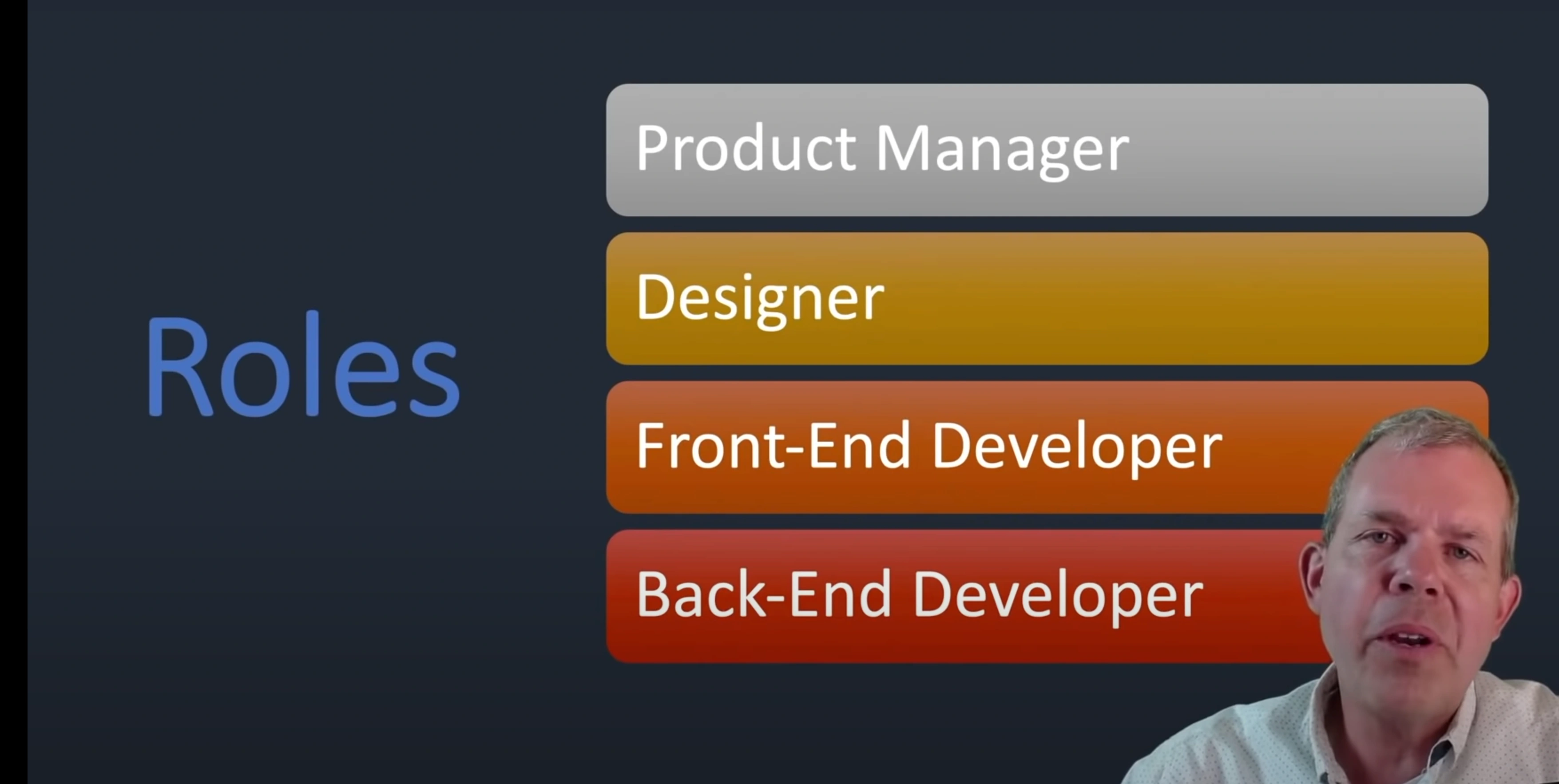
Product Manager: The product manager is responsible for the development and management of a company's products or services. They work with cross-functional teams to ensure that products are developed on time, within budget, and meet customer needs.
Sales Manager: The sales manager is responsible for the company's sales strategy and manages the sales team. They work to develop new business and maintain relationships with existing customers.
Human Resources Manager: The HR manager is responsible for managing the company's recruitment, training, and development of employees.
Operations Manager: The operations manager is responsible for managing the day-to-day operations of the company, including logistics, supply chain management, and customer service.
In a startup, co-founders may be required to take on multiple roles and responsibilities as the company grows and evolves. It's important for co-founders to communicate and collaborate effectively to ensure that the company is moving in the right direction and that everyone is working together towards a common goal.
That is a pivotal area of partnership tax law. For an LLC taxed as a partnership, particularly one in the pre-seed stage like your agile tech firm, the Profit Interest (PI) is the most sophisticated and tax-advantaged mechanism for issuing equity compensation.
The PI is the LLC counterpart to a corporation's stock option, but it offers superior tax treatment.
🔬 PI Mechanics and The Zero Liquidation Hurdle
A Profit Interest is a grant of a current ownership interest in a partnership that grants the holder the right to future profits and appreciation in the entity's value, but not a right to its existing capital base at the time of the grant.
1. The Core Tax Benefit (Rev. Proc. 93-27)
The primary advantage lies in the Internal Revenue Service (IRS) safe harbor established by Revenue Procedure 93-27 (and clarified by Rev. Proc. 2001-43).
- Zero Liquidation Value: To qualify as a PI, the interest must be structured with a Hurdle Amount (or Distribution Threshold) equal to the LLC's Fair Market Value (FMV) on the date of the grant.
- The Test: If the LLC were to hypothetically sell all its assets at FMV and immediately liquidate on the grant date, the PI holder would be entitled to zero proceeds.
- Tax Consequence: Because the interest has a zero value upon its issuance under this specific liquidation metric, the IRS will not treat the grant as a taxable event for the recipient or the LLC. This elegantly bypasses the taxation of immediate compensation.
2. The $ 704(b)$ Capital Account
The mechanics are codified through the $ 704(b)$ capital accounts detailed in the Operating Agreement.
- When a PI is granted, the LLC's assets are "booked up" to FMV.
- The existing partners' capital accounts are adjusted to reflect this pre-grant value.
- The new PI holder's capital account is established with a zero balance. This legal and accounting construct ensures that all future profits (and thus distributions) are allocated only after the original partners recoup the pre-existing value (the Hurdle Amount).
🔑 The Role of the $ 83(b)$ Election
While a properly structured PI is tax-free upon grant, it is almost always subject to a vesting schedule (a substantial risk of forfeiture). This triggers the rules of $ 83$ of the Internal Revenue Code.
| Action | Why it's Applied to PIs | Tax Impact |
|---|---|---|
| Timely Filing of $ 83(b)$ | The election accelerates the recognition date to the grant date. | Locks in the PI's value at \$0 (due to the Hurdle Amount) for tax purposes. This converts all future appreciation into long-term capital gains (taxed at the lower rate) upon eventual sale, assuming a holding period of over one year from the grant date. |
| Protective Measure | Although Rev. Proc. 2001-43 suggests a PI grant is tax-free even if unvested, this protection can be lost if the interest is disposed of within two years. | Filing a protective $ 83(b)$ election within $ \ days$ of the grant date is considered best practice to ensure the initial zero-tax treatment is maintained, even in the event of an early exit or disposition. |
PI in the Pre-Seed Stage
The PI instrument is particularly potent at the pre-seed stage for two primary reasons:
- Low Hurdle: Since your company valuation is at its absolute lowest, the Hurdle Amount is minimal. This means the PI holders begin to share in the upside almost immediately, maximizing the psychological incentive of their ownership.
- Tax Deferral for Service Partners: The PI recipient immediately becomes a Partner for tax purposes (receiving a K-1, not a W-2). They avoid an immediate cash outlay for taxes that would be required if they received a taxable capital interest, making it an attractive form of compensation when cash is scarce.
Would you like me to elaborate on the typical vesting structures and partnership documentation required for issuing these profit interests?
The term "Partnership" refers to a tax classification (Subchapter K of the IRC) while LLC, S-Corp, and C-Corp are primarily legal entities formed under state law.
🤝 Explaining the Term "Partnership"
The term "Partnership" refers to one of two things, which often align:
1. Legal Entity (The Old-School Partnership)
A partnership is a legal entity formed when two or more people agree to co-own and run a business for profit.
- Liability: The major drawback of a General Partnership is that the partners have unlimited personal liability for the business's debts. This is why most entrepreneurs choose an LLC instead.
- Formation: It's often the default legal structure for a multi-owner business that hasn't formally filed as an LLC or Corporation.
2. Tax Classification (The IRS Definition)
For federal tax purposes, a "Partnership" is a type of pass-through entity that the IRS recognizes.
- The business itself pays no income tax.
- It files an informational return (Form 1065).
- The business's profits/losses are allocated to the owners via Schedule K-1, and the owners pay tax on their personal returns.
- Crucially: The IRS automatically classifies any Multi-Member LLC (MMLLC) as a Partnership by default, unless the LLC affirmatively files a form to elect C-Corp or S-Corp tax status.
Conclusion: The LLC is the legal shield; the Partnership is the default tax treatment for a multi-owner LLC.
⚖️ Differentiating Single-Member LLC vs. Partnership LLC
The distinction depends entirely on the number of owners (members), which dictates the default tax treatment.
1. Single-Member LLC (SMLLC)
| Feature | Description | Tax Status | IRS Form |
|---|---|---|---|
| Legal Entity | Formed under state law by one owner (member). Provides limited liability. | Disregarded Entity (Default) | Schedule C (Filed with owner's personal Form 1040) |
| Default Tax Treatment | The IRS "disregards" the LLC for tax purposes and treats the business as a Sole Proprietorship. | Pass-Through (All business income/loss flows directly to the owner). | The LLC itself does not file a separate tax return (Form 1065). |
| Self-Employment Tax | The entire net profit is subject to Self-Employment Tax (SE Tax). | ||
| Alternative Election | Can elect to be taxed as an S-Corp or C-Corp by filing the appropriate forms. |
2. Multi-Member LLC (MMLLC) - The "Partnership LLC"
| Feature | Description | Tax Status | IRS Form |
|---|---|---|---|
| Legal Entity | Formed under state law by two or more owners (members). Provides limited liability. | Partnership (Default) | Form 1065 (Informational return for the LLC) |
| Default Tax Treatment | The IRS automatically classifies the MMLLC as a Partnership. | Pass-Through (Income/loss flows to members). | Schedule K-1 (Issued to each member, used to file personal Schedule E on Form 1040) |
| Self-Employment Tax | Each member's allocated share of income (and any Guaranteed Payments) is generally subject to SE Tax. | ||
| Alternative Election | Can elect to be taxed as an S-Corp or C-Corp by filing the appropriate forms. |
In short: The LLC is the legal framework providing limited liability. The Multi-Member LLC structure automatically results in the Partnership tax classification for federal income tax purposes.
That is a crucial comparison for you as you transition from a solo venture to leading a small team. The shift from Schedule C to Schedule K-1 represents a significant increase in complexity at the business level, while the individual member's tax filing becomes simpler due to the pre-calculation of allocations.
Here is a comparison of the complexity when moving from a Single-Member LLC (Schedule C) to a Multi-Member LLC taxed as a Partnership (Schedule K-1).
⚖️ Tax Complexity: Schedule C vs. Schedule K-1
| Factor | Single-Member LLC (Schedule C) | Multi-Member LLC (Partnership/K-1) |
|---|---|---|
| I. Entity-Level Complexity | Low (Easiest) | High (Most Complex Pass-Through) |
| Required Forms | None at the entity level. The owner just files Form 1040 + Schedule C. | Required. The LLC files Form 1065 (U.S. Return of Partnership Income), which is a separate, dedicated tax return. |
| Compliance Burden | Minimal. You calculate total income/expenses on Schedule C. | Significant. Requires filing the complex Form 1065, preparing a Schedule K-1 for each member, and adhering to an earlier filing deadline (March 15th). |
| Capital Tracking | Simple. You only track your own capital account. | Complex. Must track a separate "Outside Basis" and Capital Account for every member, which is mandatory and essential for determining if distributions are taxable capital gains. |
| Allocation/PIUs | N/A. 100% of profit/loss is allocated to you. | Highly Flexible (and Complex). Requires complex accounting to handle specific allocations (like your PIUs), Guaranteed Payments, and profit/loss splits that may not be proportional to ownership percentage. |
| II. Individual Owner Complexity | Moderate | Low to Moderate |
| Tax Reporting | You are responsible for all income and expense classification and calculation on Schedule C (Part I, Lines 1-31). | You receive a pre-calculated Schedule K-1 from the LLC, detailing your exact share of income, deductions, etc. You report this on Schedule E of your Form 1040. |
| Self-Employment Tax | You compute and pay SE Tax on your net profit using Schedule SE. | Your share of ordinary income (and Guaranteed Payments) is clearly noted in Box 14 of the K-1, simplifying the calculation of SE Tax on Schedule SE. |
| "Phantom Income" | Not an issue, as you control all cash flow. | Major Risk. You are taxed on the allocated profit in your K-1, even if the LLC holds the cash. You must budget for this "phantom income" tax liability. |
🚀 Key Takeaways for Your Firm
-
Business Cost Increases (Form 1065): The complexity shifts from your personal return to the business return (Form 1065). You will almost certainly need a dedicated CPA or tax professional to prepare the Form 1065 and the accompanying K-1s due to the detailed allocation rules, tracking of capital accounts, and special handling of your PIUs and Guaranteed Payments. This increases your recurring operational overhead.
-
Individual Filing Simplifies (Schedule E): For you and your new co-founders, filing your personal return (Form 1040) becomes simpler. Instead of filling out a detailed business income and expense statement (Schedule C), you essentially input the numbers provided on the Schedule K-1 onto Schedule E.
-
Governance is Taxable: The complex ownership structure you are building (using PIUs tied to vesting) requires an Operating Agreement that explicitly defines the partnership allocations. The IRS scrutinizes these allocations, making the initial drafting of the agreement, and the annual tax compliance, the most complex aspect of the K-1 structure.
In essence, you are trading personal tax complexity for entity-level compliance complexity and a higher cost for professional tax preparation, but gaining the flexibility needed to offer PIUs and manage a team.
Co-Founder / Business Partner
Table of Contents
cofounder
Developer-founder Trust
- you need income, a steady job for expenses, losses/profitability
- non-9-to-5-mindset
- sacrifice without regret (friends, time)
- Each person may wear many “hats” and juggle their job roles
Money is volatile
pro rata rights
Pro rata rights, also known as subscription rights or pre-emptive rights, are a shareholder's right to maintain their proportional ownership in a company when new shares are issued. Pro rata rights allow existing shareholders to purchase additional shares before they are offered to outside investors or the public.
When a company decides to issue new shares, it typically offers existing shareholders the opportunity to purchase a proportionate number of new shares based on their existing ownership percentage. This ensures that existing shareholders are not diluted by the issuance of new shares and have the ability to maintain their ownership stake in the company.
Here's how pro rata rights generally work:
-
Notification: When a company plans to issue new shares, it will notify existing shareholders of their pro rata rights. The notification will specify the number of new shares being offered and the price at which they can be purchased.
-
Proportional Allocation: Existing shareholders have the option to exercise their pro rata rights by purchasing additional shares in proportion to their current ownership. For example, if a shareholder owns 10% of the company, they would have the right to purchase 10% of the new shares being issued.
-
Timeframe: There is typically a specified timeframe during which existing shareholders can exercise their pro rata rights. This timeframe ensures that shareholders have a reasonable opportunity to make their investment decision.
-
Purchase Price: The purchase price for the new shares is usually set at a predetermined price, which may be the same as the price offered to outside investors or at a discount to incentivize existing shareholders to exercise their rights.
-
Dilution Protection: By exercising their pro rata rights, existing shareholders can protect themselves from dilution. Dilution occurs when new shares are issued, reducing the ownership percentage and voting power of existing shareholders.
Pro rata rights are often included in a company's articles of incorporation or shareholder agreements to protect the interests of existing shareholders. However, it's important to note that pro rata rights can be waived or modified based on the terms and conditions set forth by the company and agreed upon by the shareholders.
Pro rata rights are designed to maintain fairness and give existing shareholders the opportunity to participate in the growth and future financing of the company. They provide a way for shareholders to protect their investment and preserve their ownership percentage as the company raises additional capital.
Soft Skills
warmth & competence
- can I trust this person?
- Can I respect this person?
- https://medium.com/@paultowers/how-to-recruit-a-technical-co-founder-for-your-startup-cb5aca540ecf
- https://www.forbes.com/sites/stellafayman/2013/02/22/how-to-find-a-technical-cofounder/?sh=293ac6a72837
- https://www.forbes.com/sites/forbesnycouncil/2018/05/01/five-reasons-to-consider-hiring-a-co-founder/?sh=64fad84e4524
- https://thenextweb.com/news/ultimate-way-extensive-guide-hiring-perfect-co-founder
Founders Partnership Agreement
A partnership is merely the expressed intention of multiple parties to work together for profit. This typed contract agreement establishes what each partner is contributing. money, labour, or abilities in return for an ownership stake in the company.
Initial Capital & Contributions
If one of your co-founders contributes something other than cash, you all need to figure out the monetary value of that thing and record it here. You also need to figure out whether members will continue to contribute capital throughout the life of the company or just at that initial investment.
Improvement of long-term commitment
The company must improve commitment, engagement and enthusiasm to aim for further and better business success. The environment in which we work should be stimulating, satisfying and even fun. This at will agreement will last for 4 years OR when things change. When things change we re-negotiate a new agreement...
interview a co-founder sample questions
What inspired you to become a co-founder, and what motivated you to start your current venture?
- What skills and experiences do you bring to the table as a co-founder? How do these complement those of your fellow co-founders?
- What are your long-term goals for the company, and how do you see yourself contributing to its success in the years to come?
- How do you prioritize and manage your time as a co-founder? What strategies do you use to balance your various responsibilities and obligations?
- How do you approach problem-solving and decision-making as a co-founder? What frameworks and techniques do you use to navigate complex challenges and make tough choices?
- What are some of the biggest challenges you've faced as a co-founder, and how have you overcome them? What lessons have you learned from these experiences?
- How do you build and maintain strong relationships with investors, customers, and other stakeholders? What strategies do you use to keep them engaged and informed?
- What are your thoughts on company culture, and how do you contribute to creating a positive and productive work environment?
- How do you stay up-to-date with the latest trends and best practices in your industry? What resources do you use to continue learning and growing in your role as a co-founder?
- How do you see your role evolving over time as the company grows and evolves? What are your plans for the future, and what challenges do you anticipate along the way?