VCs and Investors
Breaking Into Startups Podcast
Table of Contents
Angel Types
who is my ideal investor?
- Entrepreneurial
- Corporate
- Professional
- Enthusiast
- Micromanagement
What if you don't get that much money?
A small investment, like $10K, is enough for a solo founder to fund their own salary for six months while they build their product.
Is it possible to get an investor before making sales?
Attracting investors for a pre-revenue tech startup can be challenging, but there are several strategies that can increase your chances of success. Here are some tips to help you attract investors:
Develop a strong pitch: Your pitch should clearly and concisely explain your product or service, the problem it solves, and why it is unique and valuable. Be sure to also highlight your team's expertise and track record.
Create a detailed business plan: Your business plan should include a detailed description of your market opportunity, your financial projections, and your marketing and sales strategy. Investors want to see that you have a clear plan for generating revenue and achieving profitability.
Build a prototype or MVP: If possible, build a prototype or minimum viable product (MVP) to demonstrate your product or service and show investors that you are making progress towards generating revenue.
Network with investors: Attend networking events, conferences, and other industry events to meet potential investors. Look for investors who have experience in your industry and are interested in your product or service.
Leverage online platforms: Use online platforms like AngelList, Gust, and LinkedIn to connect with potential investors and showcase your startup.
Consider joining an accelerator program: Accelerator programs like Y Combinator and Techstars provide startups with funding, mentorship, and other resources to help them grow and attract investors.
Be transparent and honest: Investors want to work with founders who are transparent and honest about their progress and challenges. Be upfront about your pre-revenue status and your plans for generating revenue.
Remember that attracting investors takes time and effort. Be patient, persistent, and open to feedback and advice from investors and mentors. With the right strategy and approach, you can increase your chances of attracting investors and growing your startup.
techstars does 2 selections per day
network of 7k founders
2-3 out of 10 applicants make it in after re-applying the 2nd time
- Never assume your new idea hasn't been thought of before.
- Ask your prospective angel investor, "Why do we do things this way?". A question like this helps you get a comprehensive understanding of why things are the way they are.
- Then, ask, "Why don't we do things this way?", and describe your idea. This moves things away from, "I have this great idea," to a genuine interest in finding out about how things work — it's a subtle, but significant difference.
Republic Acquire - Sell startups ventureroof
warnings
- avoid attaching my identity to the performance of this start-up!, that's central theme of some TV shows is attaching founder identity to their start-up
- why are you leaving a w2 job with healthcare benefits?
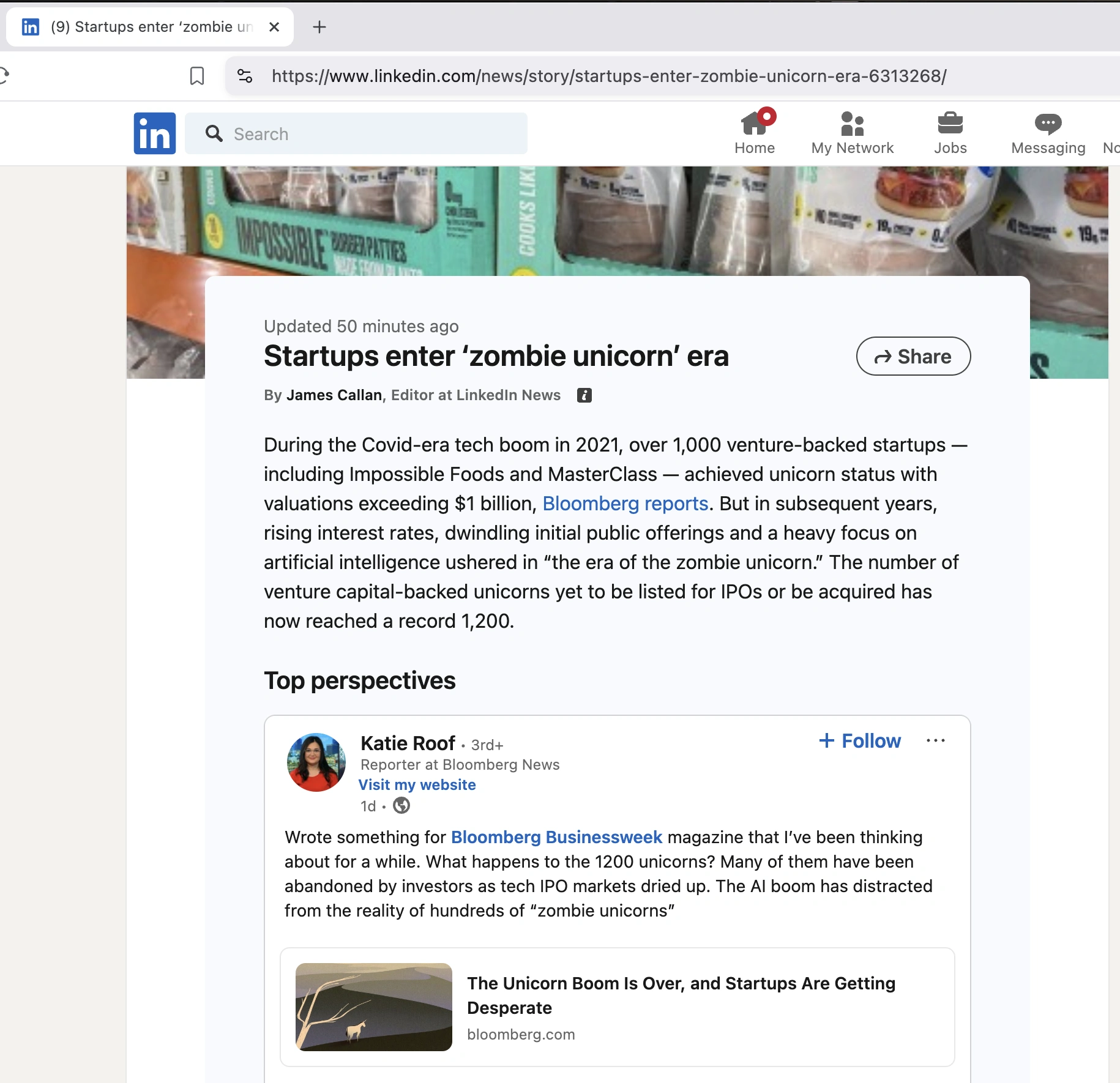
risks to venture-backed tech startups that have not gone public or been acquired
- vulnerable to lack the resources and stability of more mature companies
- need to be agile, adaptable, and have a strong leadership team that can make tough decisions
Funding Crunch
- Venture capitalists become more cautious during economic downturns, leading to a significant decrease in funding for startups.
- Unicorns that rely on continuous funding rounds to fuel their growth may find it difficult to secure additional capital.
- This funding crunch can lead to cash flow problems, forcing startups to cut costs, lay off employees, or even shut down.
Valuation Decline
- Economic downturns often lead to a decline in valuations for tech companies, including unicorns.
- Lower valuations can make it difficult for startups to raise additional funding or attract potential acquirers.
- This decline in perceived value can also negatively impact employee morale and retention.
Exit Challenges
- Initial Public Offerings (IPOs) become less attractive during economic downturns due to decreased investor appetite.
- Mergers and acquisitions also become less frequent as companies become more risk-averse.
- Unicorns that were counting on an IPO or acquisition as their exit strategy may find themselves stuck, unable to provide returns to their investors.
Increased Competition
- Economic downturns often lead to increased competition as companies fight for a smaller pool of resources.
- Unicorns may find themselves competing with larger, more established companies that have deeper pockets and greater resilience.
- This increased competition can make it harder for startups to gain market share and achieve profitability.
Talent Retention
- During economic downturns, talented employees may become more risk-averse and seek stability in larger companies.
- Unicorns that are struggling to secure funding or facing uncertainty may find it difficult to retain their top talent.
- Losing key employees can further weaken a startup's position and make it harder to navigate challenging times.
Operational Challenges
- Economic downturns can lead to decreased consumer spending and slower revenue growth.
- Unicorns may need to reassess their business models and make difficult decisions to reduce costs and extend their runway.
- This can lead to slower growth, delayed product launches, and a decrease in overall competitiveness.
Investor Pressure
- Venture capitalists may put pressure on unicorns to cut costs, accelerate profitability, or seek alternative exit strategies.
- This pressure can create tension between founders and investors, potentially leading to conflicts and disagreements.
- In some cases, investors may even force a sale of the company at a lower valuation than initially anticipated.
achieving a 10x return is rare and not the norm
The article discusses the concept of earning a 10x return on startup investments and examines its significance. It explains that the "10x" refers to earning ten times the initial investment in a successful exit (acquisition or IPO) of a startup. However, the article highlights that achieving a 10x return is rare and not the norm. It provides a breakdown of a typical successful startup portfolio, where only 1 out of 10 investments may yield a 10x return, while others may range from doubling the investment to returning nothing. The article emphasizes that startup investing is risky, and a majority of investments may result in failure. It concludes that the actual goal for investors is often a return of around 2.5x rather than a 10x return.
The article delves deeper into the factors and assumptions surrounding the notion of a 10x return in startup investing. It explains that investors typically purchase preferred shares (equity) in startups, with the expectation of the company's value growing over time and eventually experiencing an exit event, such as an acquisition or going public. The return on investment occurs when the investor receives a portion of the acquisition price or sells their shares on the public stock exchange.
The article presents a sample portfolio of ten investments and breaks down the potential outcomes. It reveals that achieving a 10x return on investment is relatively rare, with only one out of the ten investments in the portfolio reaching that level. The remaining investments may have returns ranging from doubling the investment (2x) to returning nothing (0x). It highlights that even for professional venture capitalists and experienced angel investors, a good result is typically having only one out of ten investments reaching the 10x mark.
The article emphasizes the importance of understanding the risk involved in startup investing. It points out that a significant portion of startups fail, resulting in a loss of investment. In the sample portfolio, seven out of the ten investments were considered failures. Despite this, the article notes that this level of performance is still considered successful in the startup investing world, with a 30% success rate being comparable to a .300 batting average in baseball.
Overall, the article provides a realistic perspective on the myth of consistently achieving 10x returns in startup investing. It highlights the challenges, risks, and likelihood of different outcomes, encouraging investors to have a more nuanced understanding of the potential returns they can expect.
Certainly! In addition to discussing the outcomes of startup investments, the article explores the reasons behind the commonly stated goal of a 10x return. It questions why investors consistently aim for this specific multiplier, regardless of the type of company they invest in. The article suggests that the 10x target has become a shorthand term with underlying assumptions and expectations.
The article also touches upon the mindset prevalent in the startup investment community. It mentions phrases like "swing for the fences" and "go big or go home," which reflect the belief that aiming for extraordinary returns is necessary in the high-risk, high-reward world of startups. It suggests that this mindset may discourage investors from seeking more modest but still successful outcomes, such as doubling their investment (2x) or returning the initial capital (1x).
Furthermore, the article discusses the importance of portfolio diversification in startup investing. It highlights that investors typically make multiple investments to spread the risk and increase the chances of having successful outcomes. By investing in a diversified portfolio, investors aim to mitigate the impact of potential failures and increase the likelihood of achieving overall positive returns.
The article concludes by providing a more realistic perspective on the average returns in startup investing. It suggests that a successful portfolio may yield an average return of around 2.5x, which is significantly lower than the commonly mentioned 10x target. It emphasizes the need for investors to have a balanced view of risk and return, considering the unique characteristics and challenges of the startup ecosystem.
Overall, the article offers insights into the expectations, realities, and nuances of startup investing, shedding light on the factors that contribute to the myth of a 10x return and providing a more nuanced understanding of the potential outcomes investors can expect.
| Name | Description |
|---|---|
| Venrock | A firm based in Palo Alto, CA which specializes in tech, software and cloud services |
| Accel | A VC firm that targets SaaS, fintech and information technology companies in their early stages and is headquartered in Palo Alto, CA |
| Benchmark | A San Francisco-based firm invested in consumer services, communication and software |
| Sequoia Capital | A firm headquartered in Menlo Park, CA interested in fields such as nanotechnology, financial services and healthcare |
| Madrona Venture Group | A Seattle-based firm that invests in e-commerce, gaming and digital media |
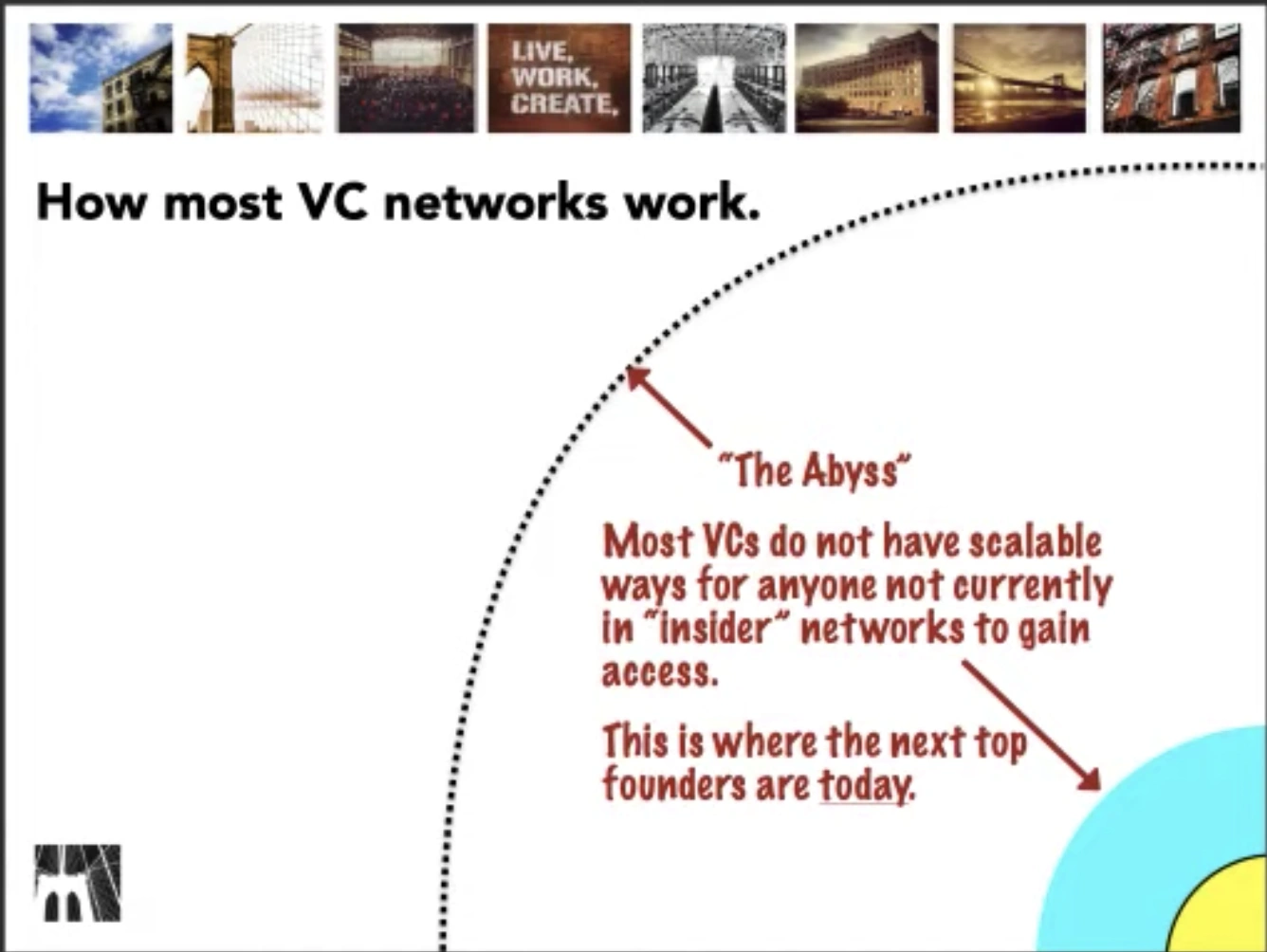
reasons not to use VCs: Why venture capitalists want startups to lose money
- Berks LaunchBox
- https://wefunder.com/home
- https://wefunder.com/upcounsel?utm_medium=Email&utm_source=All&utm_campaign=Last-Chance
- https://angel.co
- https://www.indiehackers.com/
- Berks LaunchBox Powered by Penn State
What is an investor looking for in potential candidate?
- Delivering value to your customers and having impact
- Team
- Market
- Progress
- Idea
Category Defining Tech
valuation
level of understanding
do they have the right approach?
revenue composition
letters of intent (LOI) - outlines the terms of a deal and serves as an “agreement to agree” between two parties.
looking for someone who is 3 std deviations of curiosity
“Acorn to Oak”
ego-less ambition - the zen arrow
being about to articulate your ideas to different people with different levels of comprehension
Terms
| Terms | Definitions |
|---|---|
| acquisition flu | a situation where a startup engages in a series of acquisitions or mergers in a rapid or frequent manner. This could imply a strategy of aggressively acquiring other companies to expand the startup's reach, capabilities, or market share. |
| Venture capital | a form of private equity investment that focuses on providing funding to early-stage, high-growth companies with significant growth potential. Venture capitalists invest in exchange for an ownership stake in the company and typically provide not only capital but also strategic guidance and expertise to help the company succeed. The ultimate goal of venture capital is to achieve a high return on investment through the eventual sale or initial public offering (IPO) of the portfolio companies. |
| Exit Plan | A plan for how the company will exit the market, such as through a merger or acquisition, or by going public. |
Business offering equity instead of money
- I should be entitled to the answers to financial questions
- written financial statement
- tell me better numbers
- worthless equity is worth nothing
VCs and Angel Investors
When it comes to SaaS (Software as a Service) startups, the requirements for seed funding are similar to those of other startups, but there are some additional factors that investors may consider. Here are some SaaS specific requirements that startups may need to meet in order to be eligible for seed funding:
-
A working product: Investors want to see that the startup has a functional SaaS product that is ready to be used by customers.
-
A clear value proposition: Investors want to see that the startup has a clear value proposition that solves a real problem for its target customers.
-
A viable target market: Investors want to see that the startup has identified a target market that is large enough to support its business and that there is potential for growth and profitability.
-
A scalable business model: Investors want to see that the startup has a scalable business model that can grow quickly and efficiently.
-
A strong sales and marketing strategy: Investors want to see that the startup has a plan for acquiring and retaining customers. This could include strategies such as content marketing, social media advertising, or email marketing.
-
A clear understanding of the competitive landscape: Investors want to see that the startup has a thorough understanding of the competition in the SaaS market and has identified a unique value proposition that sets it apart.
-
A plan for future development: Investors want to see that the startup has a roadmap for future development of its SaaS product, including new features and functionality that will enhance the user experience and drive growth.
-
A strong technical team: Investors want to see that the startup has a technical team that is capable of developing and maintaining the SaaS product.
Keep in mind that these are general requirements, and the specific requirements for SaaS seed funding can vary depending on the investor and the industry. It's important to research the requirements of different investors and tailor your pitch accordingly.
websites that provides financial data about companies, investments, and market trends
If you're looking for , you may consider the following alternatives:
-
Crunchbase (<www.crunchbase.com>): Crunchbase is a comprehensive platform that offers information on companies, investments, funding rounds, and industry trends. It focuses on startups, venture capital, and private equity.
-
CB Insights (<www.cbinsights.com>): CB Insights provides data-driven insights on private companies, venture capital, and emerging industries. It offers market intelligence, funding and investment data, and industry analysis.
-
PrivCo (<www.privco.com>): PrivCo focuses on private company financial data and business intelligence. It provides information on private companies, venture capital deals, private market M&A, and private equity activity.
-
Bloomberg Terminal: Bloomberg Terminal is a professional platform widely used in the financial industry. It offers real-time market data, news, and analytics, covering various asset classes, including equities, fixed income, and commodities.
-
Capital IQ (<www.capitaliq.com>): Capital IQ, a product of S&P Global Market Intelligence, provides financial data, research, and analytics on public and private companies. It offers comprehensive information on financials, transactions, market data, and industry analysis.
-
FactSet (<www.factset.com>): FactSet is a financial data and analytics platform used by professionals in investment management, wealth management, and investment banking. It offers a wide range of data, including company information, market data, and portfolio analytics.
Venture Capital Database - Harmonic AI
