Ad Keyword Relevance and Quality Score
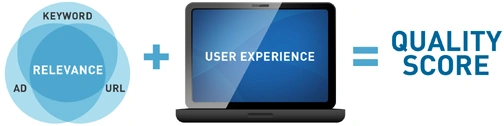
The term "ad keyword relevance score" typically refers to a metric used in online advertising platforms to assess the relevance of keywords to an advertisement or a specific search query. Although there is no universal standard for this score across all platforms, I can provide a general understanding of how it works.
Ad keyword relevance score is a measurement that indicates how well a keyword matches the content of an ad or the intent of a user's search query. It helps advertisers evaluate the effectiveness of their chosen keywords and determine whether they are likely to generate relevant traffic and engagement.
The relevance score is usually calculated based on various factors, including:
- Ad Copy: How well the keyword aligns with the text and content of the ad.
- Landing Page: The relevance of the keyword to the landing page that users are directed to after clicking on the ad.
- Click-Through Rate (CTR): The historical performance of the keyword in terms of generating clicks and engagement.
- User Feedback: Feedback signals such as user ratings, reviews, or interactions that indicate the relevance of the ad to the user's search query.
Platforms often assign a numerical score or rating to indicate the keyword's relevance. Higher scores generally indicate a stronger relevance between the keyword, ad, and user intent, which can lead to better ad performance and potentially lower costs (e.g., lower cost-per-click or higher ad placement).
Keep in mind that the specific algorithms and factors used to calculate the relevance score may vary across advertising platforms, such as Google Ads, Bing Ads, or social media platforms. It's recommended to consult the documentation or support resources of the specific platform you are using for more detailed information on their relevance scoring system.
The article titled "How to Choose the Right Keywords for SEO," written by Joshua Hardwick, provides a comprehensive guide on selecting keywords for search engine optimization (SEO) purposes. The author emphasizes the importance of choosing the right keywords, as they can significantly impact the success of an SEO campaign.
The article outlines a four-step process for choosing keywords effectively:
-
Find keywords with search traffic potential: The first step is to identify keywords that people are actively searching for. The article suggests using keyword research tools such as Google Keyword Planner or third-party tools like Ahrefs' Keywords Explorer. These tools provide keyword ideas and search volume data, allowing you to gauge the potential traffic for each keyword.
-
Align content with search intent: Search intent refers to the purpose behind a user's search query. It's crucial to create content that aligns with the search intent of your target audience. The article provides examples and highlights the need to understand whether searchers are looking to learn something, buy something, or find a specific website. By analyzing the search results for a keyword, you can determine the type of content that resonates with search intent.
-
Consider business potential: The article emphasizes the importance of assessing the "business potential" of a keyword. This involves evaluating whether ranking for a particular keyword will be beneficial for your business. For ecommerce-related keywords, it's relatively straightforward to determine business potential. However, for informational content, you need to consider whether you can naturally incorporate your product or service into the content without being overly promotional.
-
Evaluate keyword ranking difficulty: Ranking difficulty refers to the level of competition for a keyword in search engine results pages (SERPs). The article suggests using a keyword difficulty score, such as Ahrefs' Keyword Difficulty (KD) metric, to assess the difficulty of ranking for a keyword. The higher the KD score, the more challenging it may be to rank for that keyword. However, it's essential to consider other factors beyond just the keyword difficulty score, as various elements influence ranking difficulty.
Throughout the article, the author provides examples and insights to help readers understand the concepts and apply them effectively. The article concludes by reiterating that choosing keywords for SEO is a manageable task if you focus on keywords with high traffic potential, business potential, alignment with search intent, and a reasonable chance of ranking.
Please note that the above summary is based on the truncated content provided, and it does not include the entire article available at the provided URL.