Pricing Strategy
| Service | List Price | Floor Price | Scope | Annual Projected Count | Timeline / Complexity |
|---|---|---|---|---|---|
| Static Site Project | $5,000 | $1,500 | No-Code Site on Managed Platform (Wix/Squarespace) Google Calendar Booking Integration, | 20 | 3wks or ~25hrs |
| e-Commerce Project | $30,000 | $24,000 | E-commerce, Custom Velo Scripting. Large Catalog, Membership Areas, Advanced API Integrations. | 3 | 12wks |
| Social Media - Small Project | $1k/mo | 3 Posts/week, 1 Platform, Community Monitoring. | |||
| Social Media - Medium Projects | $3.5k/mo | Daily Posts, 3 Platforms, Graphic Design included. | |||
| Social Media - Large Projects | $8k/mo | Full Video Production, Influencer Mgmt, 24/7 Response. |
| Small Project | Small Project | Small Project
project-cost-variability-chart.webp)
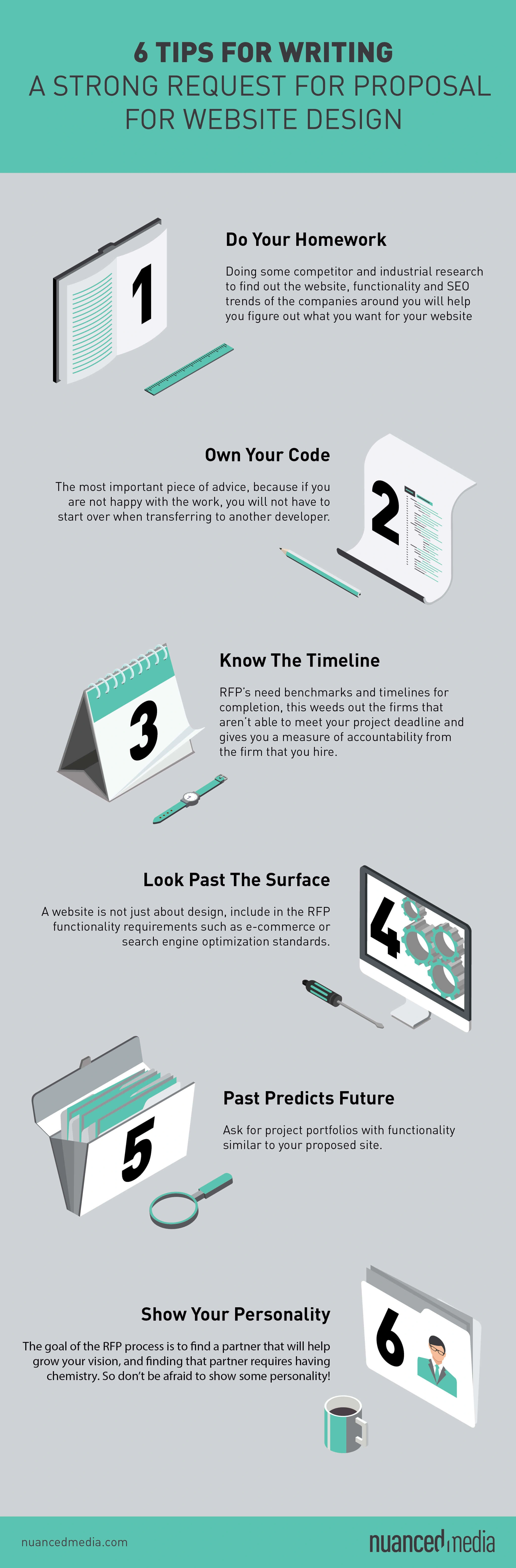
Psychological Pricing Strategies for Tech Startups
Psychological pricing strategies can significantly enhance sales by leveraging buyer behavior. For tech startups looking to establish their market presence, understanding and implementing these strategies can be crucial for driving conversions and attracting customers.
What is Psychological Pricing?
Psychological pricing involves setting prices based on how buyers perceive value, appealing to their subconscious motivations. This tactic is particularly effective in the tech industry, where pricing can influence perceptions of innovation, quality, and value.
Why It Matters for Tech Startups
In the competitive landscape of technology, where customers often face a plethora of options, psychological pricing can help your startup stand out. By catering to buyer needs—saving money, seeking quality, or finding a good deal—you can create pricing structures that resonate with your target audience.
Advantages and Disadvantages
Advantages:
- Cost-Effective: Implementing psychological pricing strategies often requires minimal investment, making them ideal for startups with limited budgets.
- Enhanced User Experience: Simplifying pricing can help potential customers make quicker decisions, reducing friction in the buying process.
Disadvantages:
- Perception of Manipulation: Some buyers may view these tactics as deceptive. Startups should ensure transparency to build trust.
- Short-Term Gains: While effective, these strategies shouldn’t replace a solid overall marketing strategy.
10 Key Strategies for Tech Startups
- Charm Pricing: Using prices like $9.99 instead of $10 can create a perception of value, particularly for software subscriptions.
- Odd/Even Pricing: Price software tools ending in odd numbers to attract budget-conscious users, while premium features can be priced with even numbers.
- Slash the MSRP: If applicable, show the original price alongside a discounted rate to highlight savings.
- Artificial Time Constraints: Limited-time offers for software trials or discounted subscriptions can create urgency.
- Innumeracy: Presenting a “buy one, get one free” model for add-ons can make offers more appealing.
- Price Appearance: Use clean, simple pricing formats (e.g., $12 instead of $12.00) to enhance perceived affordability.
- Flat-Rate Bias: Offer flat-rate subscription models instead of pay-per-use to simplify budgeting for customers.
- The Decoy Effect: Introduce a high-priced option to make your primary offering look like a better deal.
- Center Stage: Position your most attractive subscription plan in the middle of your pricing table to draw attention.
- Bracketing: Place a mid-tier software package between a basic and a premium option to encourage users to choose the middle option.
Best Practices for Implementation
- Price with Purpose: Align pricing strategies with your target audience’s values and needs to avoid appearing manipulative.
- Gradual Implementation: Roll out pricing changes slowly to gauge their effects on customer behavior.
- Continuous Optimization: Regularly analyze sales data to refine pricing strategies and align them with market trends.
Conclusion
For tech startups, leveraging psychological pricing strategies can be a game-changer. By understanding and implementing these techniques, you can enhance customer perceptions, drive conversions, and establish a competitive edge in the tech landscape.
Pricing: Marketing agency service plans may be priced on a monthly retainer basis, a project basis, or on a percentage of advertising spend.
Basic webpage only platforms**
From concept to finished site - 1–4 weeks
Web App including backend, admin panel, chat platform, file upload etc**
From concept to finished MVP - 2–3 months
Complex Hybrid Web & Mobile App with chat, voice and video calls, social feed etc**
From concept to finished MVP - 3–6 months
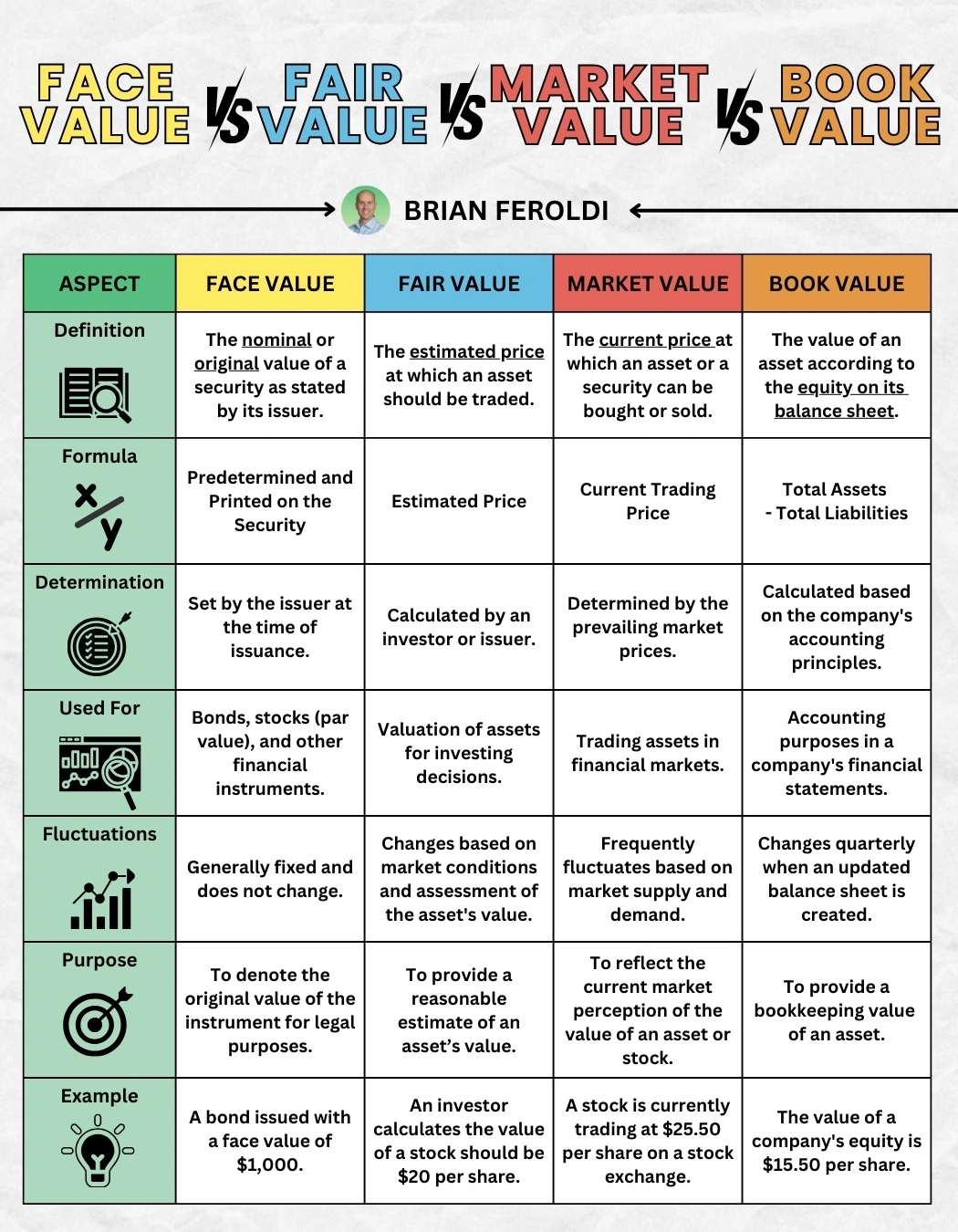
- Tier 1 vs Tier 2
- Pareto for Profit
- Dictating the terms
- Commanding Premium Pricing
 


Project Catalog
Ways to price (Philosophy)
- Pricing the effort
- Time-based rates > hourly
- CON: punishes our team for working faster
- Pricing the task(s)
- itemizing and pricing individual tasks within a service
- simplifies efforts to pricing repetitive features
- provides a clear breakdown of the cost of each feature
- CON: undervalues the overall service by not emphasizing KPIs, outcomes, or broader value delivered
- Pricing the job
- set a single price for the entire scope of work
- customer PRO: predictable upfront cost reduces uncertainty
- business CON: risk of underpricing if the project takes up more time, or has unanticipated complexity
- Pricing the customer
- Pricing the guaranteed outcome
- Pricing the relationship
Pricing Strategies (positioning)
Supporting Strategies (modifiers)
Dynamic Pricing Modifier
Adjusts prices to fit demand but aligns with low, middle, or high positioning.
Ron Bakers 7 T's
- Tailoring
- Talent
- Technology
- Terms
- Timing
- Transference
- Travel
Average Cost
How much does a website cost?
- Web development costs $1000 – $145,000 on average.
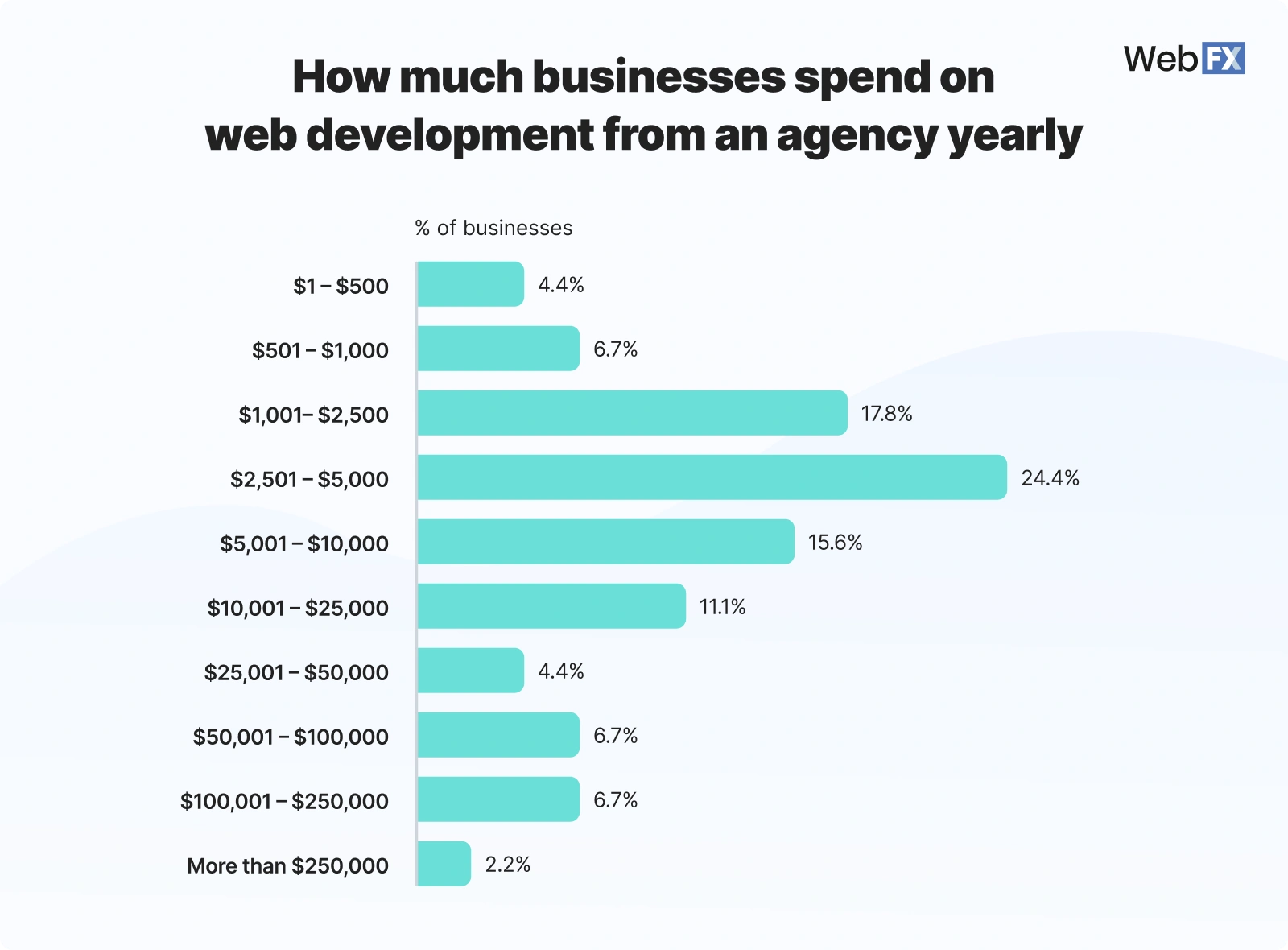
- Website development costs $1001 – $10,000 per year on average
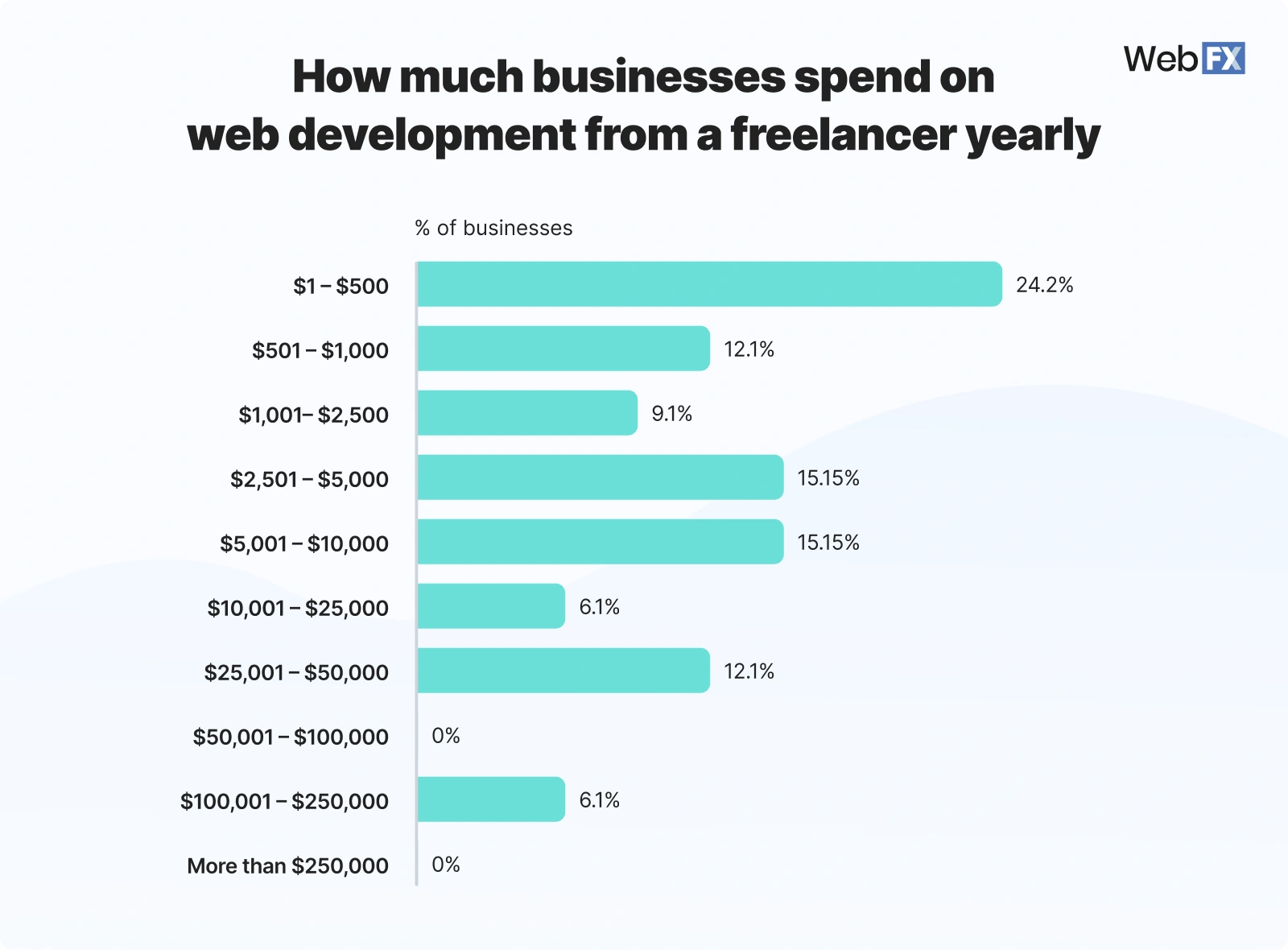
- Web development from a freelancer costs $1 – $500 per year on average
- a website is constantly evolving, average lifespan of a web page is 100 days
- $100 - $300 / hr (Fiverr)
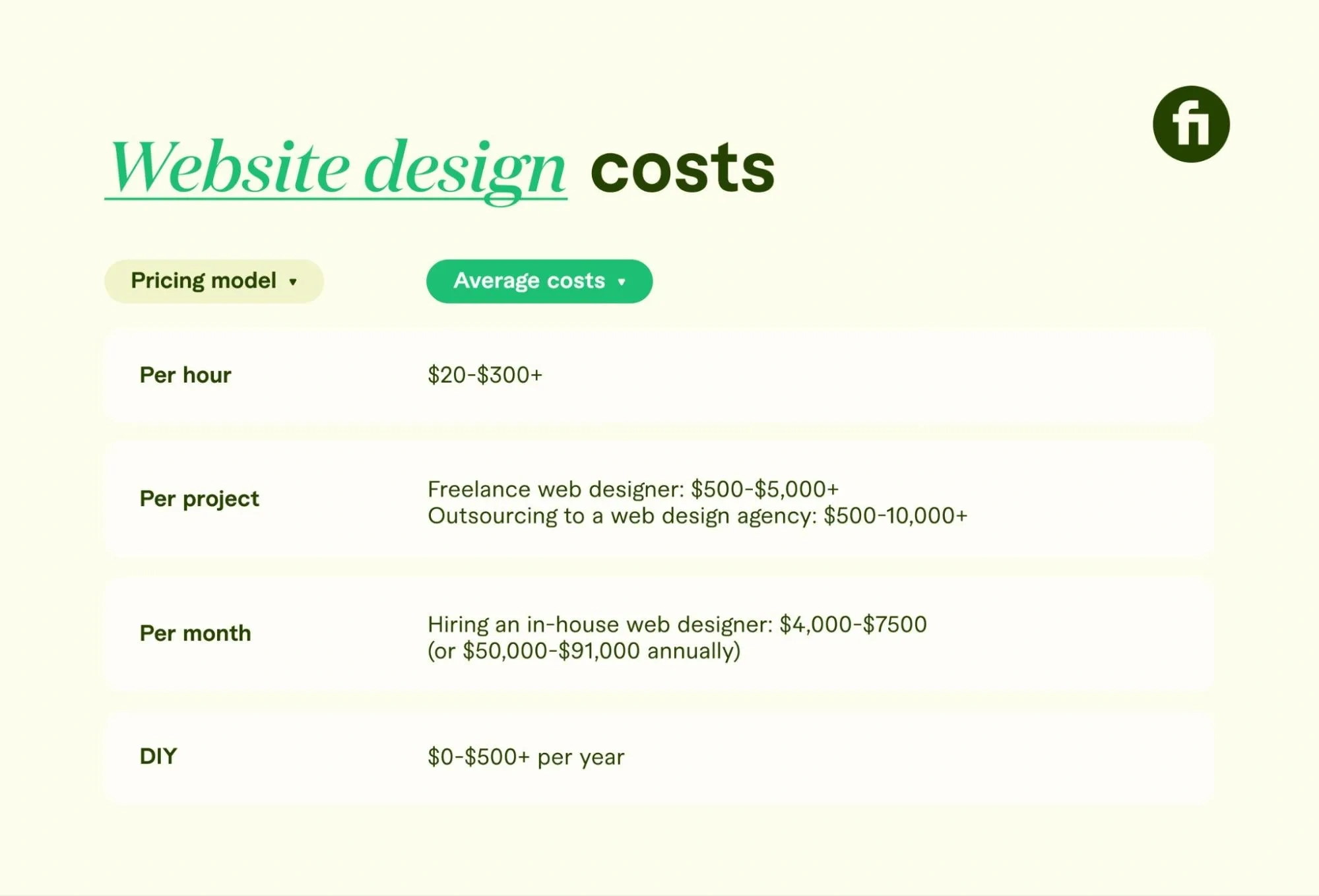
Design costs
- you can break down the project into different phases such as branding and logo design, static design, homepage design, web app design
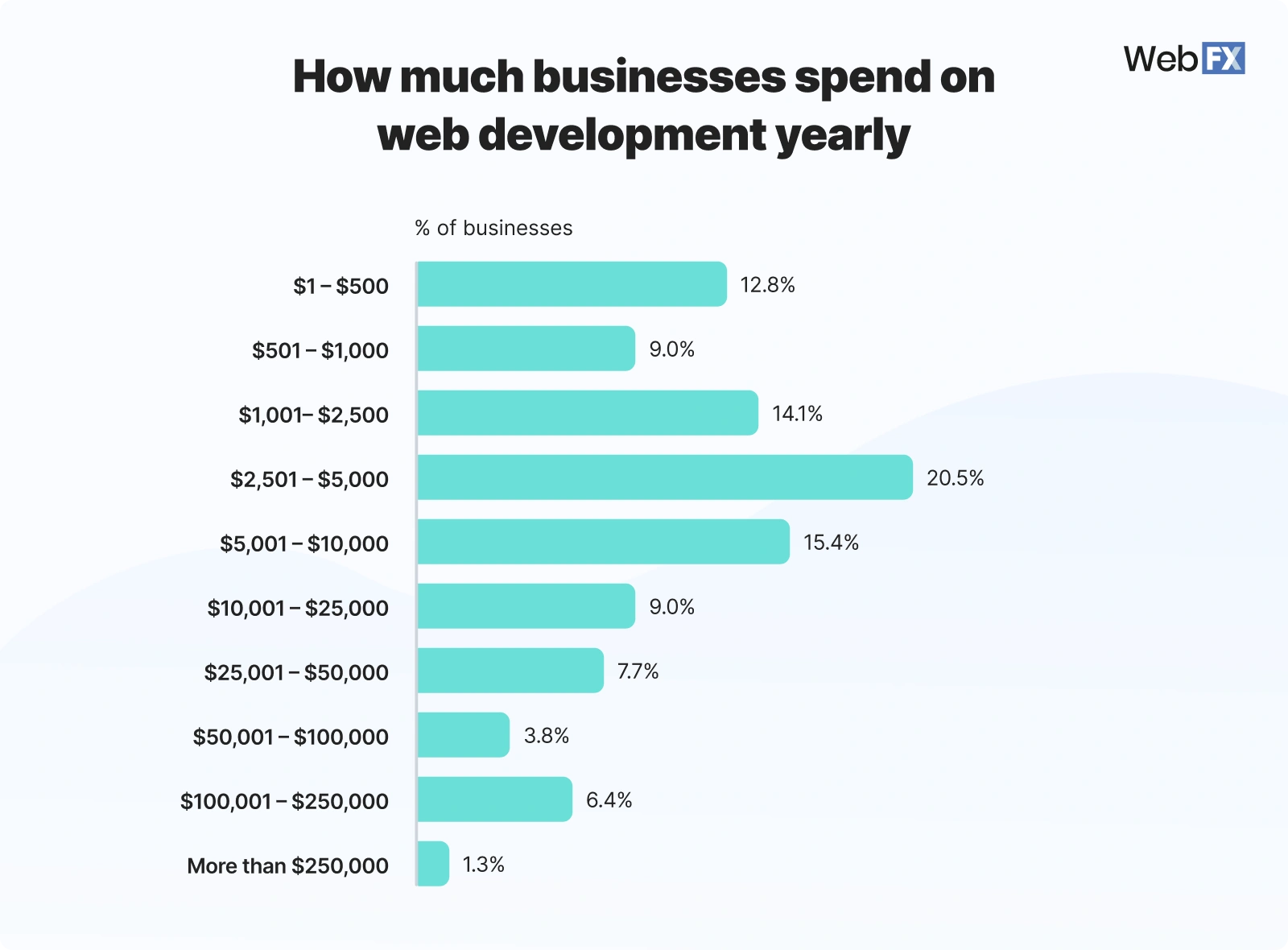
Marketing Agency Web Development Average yearly spend
Freelancer Average yearly spend
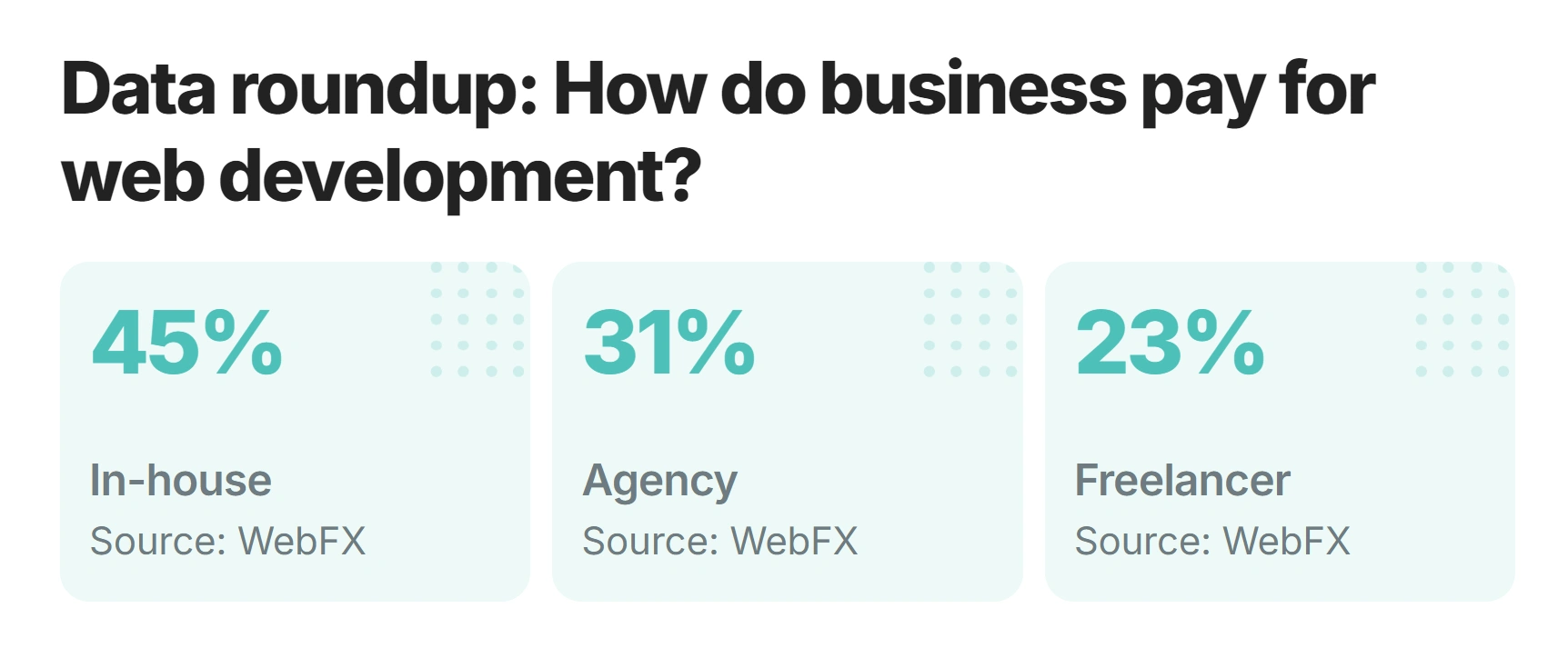
Basic web development (small businesses)
Basic web development costs $1000 -- $48,000 on average.
For small businesses and start-ups, basic web development offers a cost-effective solution. Basic web development packages and pricing take into account the smaller size of your website and scope of your web development project.
Intermediate web development (mid-sized businesses)
Intermediate web development costs $5000 -- $80,000 on average.
If you're a mid-sized business, intermediate web development is a great option. These packages often include additional elements like more advanced ecommerce functionality and database integration.
Advanced web development (enterprises)
Advanced web development costs $10,000 -- $145,000 on average.
For enterprises and corporations, advanced web development usually offers the best solution.
Advanced web development packages take your company and website size into account while also providing several add-on services like ecommerce functionality and CMS integration to keep your business competitive.
Website size ($1000 -- $10,000)
Security and website maintenance ($3600 -- $50,000+)
Domain name ($0.99 -- $60+ per year)
SSL ($0 -- $1500)
Website hosting ($10 -- $200 per month)
Style of design ($2000 -- $15,000)
Responsive design ($3000 -- $25,000)
Interactive multimedia ($300 -- $10,000+)
CMS integration ($3000 -- $25,000)
Ecommerce functionality ($5000 -- $30,000)
Database integration ($2000 -- $25,000)
Recommended Payment Terms for Freelance Web Development Projects
Here are some best practices for structuring your payment terms as a freelance web developer:
Factors to Consider:
- Project Size and Complexity: Larger or more complex projects with higher upfront costs for you might necessitate a higher upfront payment percentage.
- Client History: For established clients with a proven payment track record, you might be more comfortable with a lower upfront payment.
- Your Cash Flow Needs: Consider your own financial needs and how upfront payments can help with cash flow management.
Common Payment Terms:
- 50% Upfront, 50% on Completion: This is a widely used structure, offering a balance between upfront security for you and affordability for the client.
- Staged Payments: Consider breaking down payments into smaller milestones, like 20% upfront, 30% at a specific development stage, and 50% on completion. This aligns payments with project progress.
- Hourly Rates with Retainers: If you work on an hourly basis, you might request a retainer (e.g., monthly deposit) to ensure a minimum income flow throughout the project.
Unreasonable 50% Upfront Threshold:
There's no hard and fast rule for when 50% upfront becomes unreasonable. Here are some factors to consider:
- Project Size: For smaller projects with minimal upfront costs for you (e.g., website refresh under $1,000), 50% upfront might be excessive.
- Client Risk: If you're working with a new client with no payment history, a higher upfront percentage (30-50%) might be more prudent.
Project Time and Monthly Payments:
Project time alone isn't the only factor to consider for monthly payments. Here's a breakdown:
- Short Projects (Under a Month): Monthly payments might not be necessary for very quick projects. Consider a 50/50 split or a small upfront payment with the rest due upon completion.
- Long-Term Projects (Over 3 Months): Staged payments or monthly payments based on milestones can be beneficial for cash flow and project control.
Pro Tip: Always include clear and concise payment terms in your contract. This avoids misunderstandings and ensures both you and the client are on the same page regarding payment expectations.
Additional Considerations:
- Late Payment Fees: Consider including late payment penalties in your contracts to incentivize timely payments.
- Payment Methods: Offer convenient payment options like bank transfers, online payment processors, or checks.
By implementing these best practices and tailoring your terms to each project, you can establish secure and transparent payment structures as a freelance web developer.
A Bottle of water can be .50 cents at a supermarket. $2 at the gym. $3 at the movies and $6 on a plane. Same water. Only thing that changed its value was the place... So the next time you feel your worth is nothing, maybe you're at the wrong place!
Examples
Business Model Comparison
- Rev Share Biz Model
- Software Licensing Fees
- Hourly Rate: Charging based on time
Fixed Price (Menu-based): Pricing set by provider BEFORE or WITHOUT THE NEED FOR a "Value Conversation" based on the perceived value of the service to the client, often tailored to their unique needs and outcomes.
- clearly defined deliverables
- large, long time
- well defined scope
- minimized costs
- Pay as you Go
- Fixed Price (Value-based): Pricing set by provider AFTER a "Value Conversation" based on the perceived value of the service to the client, often tailored to their unique needs and outcomes.
- Subscription (Menu or Value-based): Offering recurring services for a flat monthly or annual fee, either tied to a menu of services or based on the value delivered.
- Monthly Subscriptions / monthly retainer
When subcontracting to other freelancers, how does that effect the choice between hourly and project based pricing
When deciding between hourly and project-based pricing for your client when you plan to subcontract some of the work, here's how it affects your choice:
Project-Based Pricing:
- Pros:
- Simpler for you: You estimate the total project cost upfront, including subcontractor fees, and charge a fixed price to your client. Less time spent tracking hours.
- Predictable income: You know your total profit margin as long as your estimate for subcontractor fees is accurate.
- Cons:
- Risk of underestimating: If subcontractor costs are higher than expected, your profit margin shrinks.
- Less client control: Client might push for revisions that impact subcontractor fees, squeezing your profit.
Hourly Billing:
- Pros:
- Less risk: You pass on the hourly cost of subcontractors directly to your client.
- Client flexibility: Client can adjust the scope of work (and your subcontractor hours) without impacting your profit margin as much.
- Cons:
- More management: You need to track both your own hours and subcontractor hours for accurate billing.
- Client perception: Hourly billing can sometimes feel less transparent to clients compared to a fixed price.
Here's how your choice might differ depending on the situation:
- Clearly Defined Project: If the scope of work is well-defined and unlikely to change, project-based pricing can be efficient and profitable, especially if you can accurately estimate subcontractor fees.
- Uncertain Project Scope: If the project is open-ended or subject to revisions, hourly billing provides more flexibility for you and the client.
Here are some additional tips:
- Negotiate with Subcontractors: Negotiate a fixed rate with your subcontractors if possible, to minimize risk when using project-based pricing.
- Mark Up Subcontractor Rates: When using hourly billing, consider a reasonable markup on subcontractor fees to cover your management time and profit margin.
- Transparency with Client: Be upfront about subcontracting and explain how it affects the pricing structure. Consider including a breakdown of estimated subcontractor costs in your proposal.
the best choice depends on your specific project, risk tolerance, and negotiation skills.
| Monthly Subscription Business Model | Step 2 | Step 3 |
|---|---|---|
static/img/monthly-subscription-cancel-workflow-2.webp) | 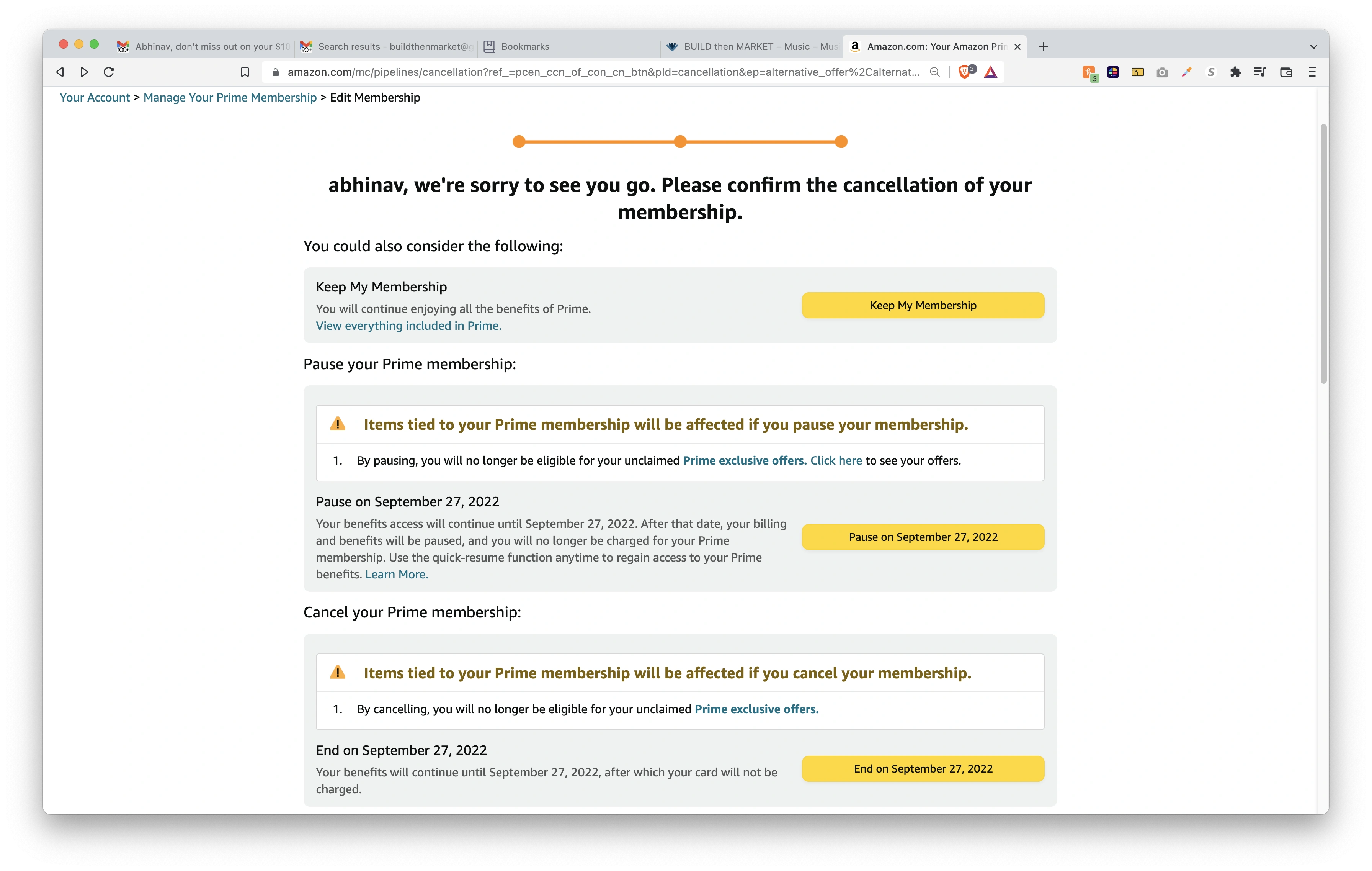 |