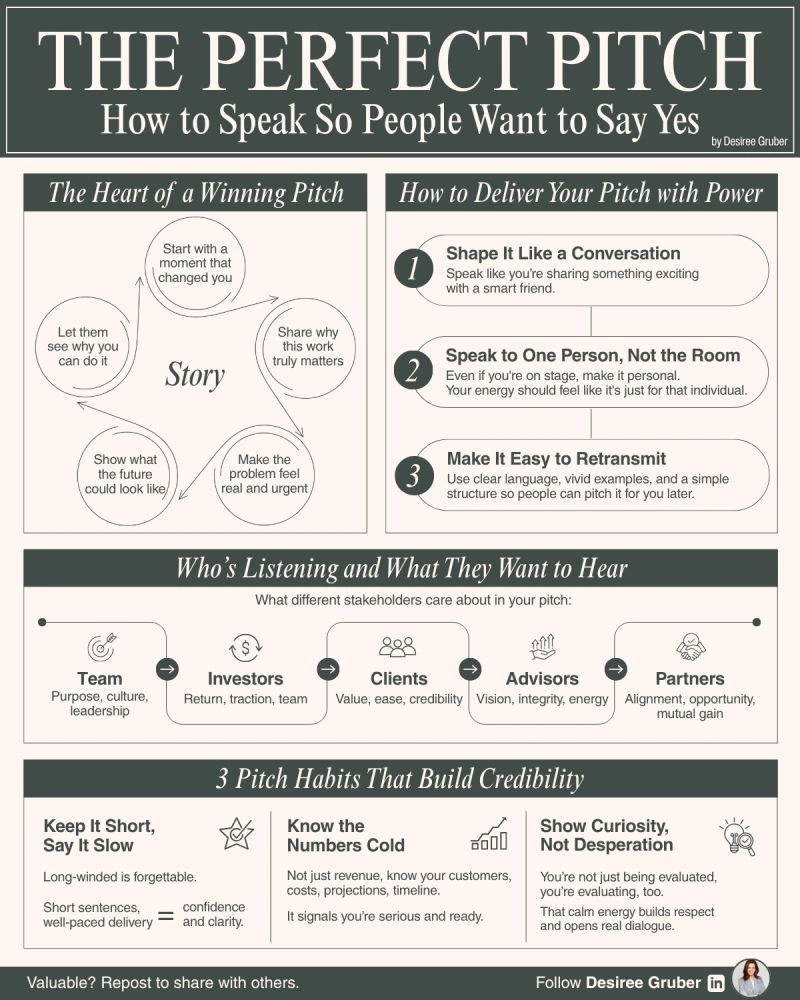
Pitch
In a digital marketing and dev studio, a full-cycle AE acts as a Technical Consultant who happens to handle the paperwork.
SOP: Full-Cycle Account Executive (AE)
1. Roles and Responsibilities
The AE owns the Unit Economics of their pipeline. They are responsible for the health of the funnel from "Stranger" to "Signed Client."
- Outbound Prospecting: Sourcing 20 high-fit "Whales" per week.
- Technical Discovery: Performing initial audits (SEO, UI/UX, or Tech Stack) to find "bleeding neck" problems.
- Proposal Engineering: Designing the agile sprint roadmap and pricing.
- Closing & Onboarding: Securing the deposit and managing the handoff to the production team.
- KPIs: * Self-Sourced Meetings: 5+ per week.
- Close Rate: >20% (Lead-to-Close).
- Contract Value (ACV): Maintaining a minimum project floor of [$X,000].
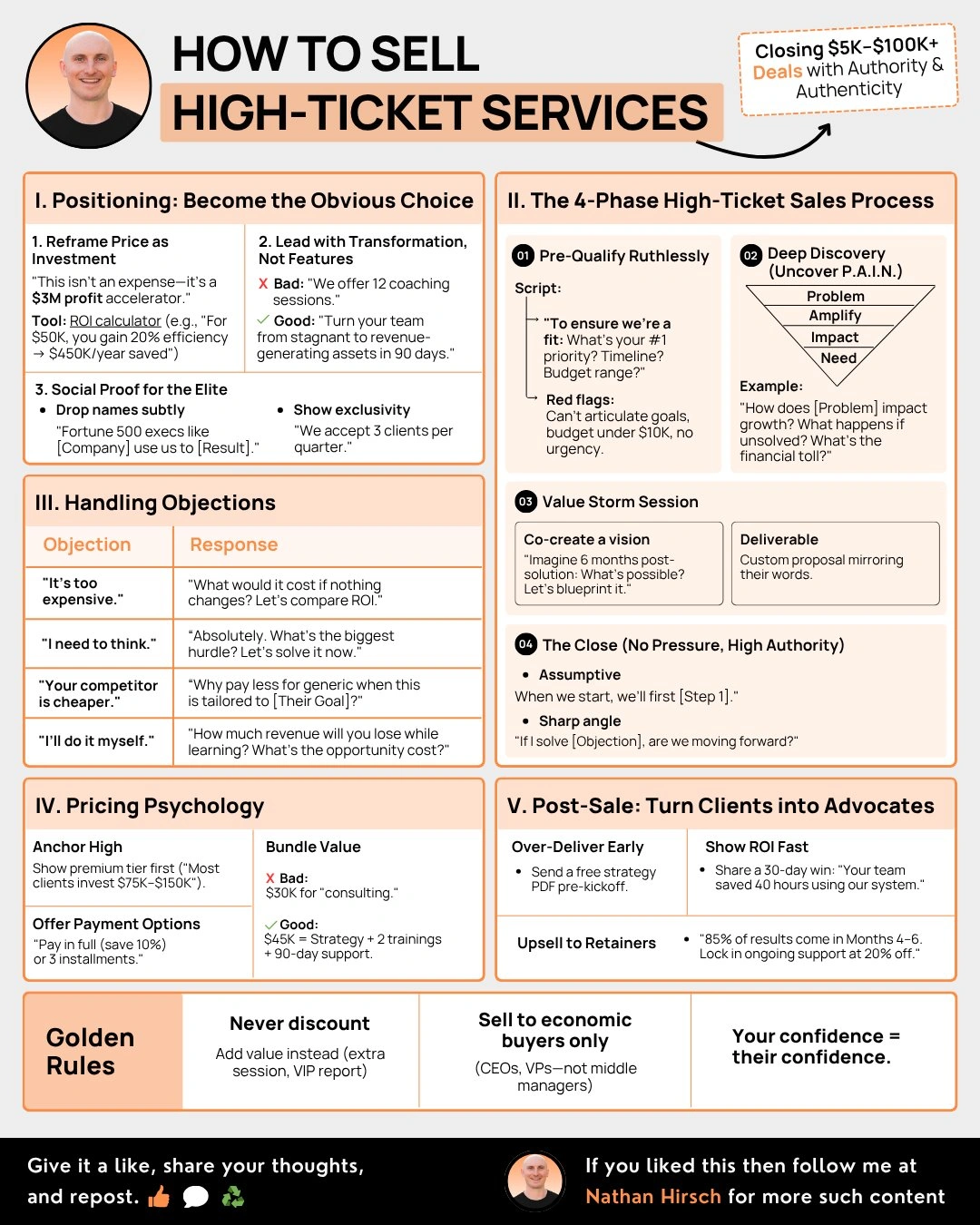
2. Step-by-Step Refined Pricing Strategy
As the sole owner of the deal, the AE uses Price Framing to prevent "Feature Creep."
- The Discovery Audit (Loss Leader/Hook): Offer a low-cost or free "Agile Audit" to find friction points.
- The Three-Tiered Proposal:
- Minimum Viable Project (MVP): Fixes the immediate emergency.
- Growth Suite (Recommended): The full digital marketing + dev integration.
- Scale Partner (Premium): Your team acts as their fractional CTO/CMO.
- The "Agency Tax" Justification: Always frame pricing against the cost of an in-house hire (e.g., "A full-time senior dev is $150k + benefits; we provide a whole studio for 1/3 of that.")
3. Outreach Scripts & Templates
Cold Email (The "Insight-Led" Outreach)
Subject: Problem with [Prospect Company]'s checkout/loading speed "Hi [Name], I was reviewing your current site and noticed that [Specific Technical Flaw] is likely causing a [X%] drop in your conversion rate compared to industry benchmarks. At [Your Firm], we specialize in agile refactoring for [Industry] firms. I've put together a 2-minute screen share showing exactly where your revenue is leaking. Worth a look? — [AE Name]"
Warm Follow-up (Post-Engagement)
"Hi [Name], glad you enjoyed our recent case study on [Topic]. Since you're currently using [Tech Stack], I thought you’d find this specific snippet on [Solution] useful. Do you have 10 minutes Thursday to see how we’d map this to your Q4 goals?"
4. Discovery Call Role-Play & Objectives
Objective: Move from "Vendor" to "Partner."
- Scenario: Prospect thinks they just need "a new website."
- AE Objective: Uncover the underlying business failure (e.g., low lead quality).
- Key Questions:
- "If we build this perfectly, what is the #1 metric that moves for your business?"
- "What is your current Customer Acquisition Cost (CAC), and what happens to your margin if we cut that by 20%?"
- "Who else at [Company] feels the pain of this current system being slow/broken?"
5. Proven Objection Handling
| Objection | AE Response (The "Professional Peer" Tone) |
|---|---|
| "We're looking at cheaper agencies." | "I understand. If you're looking for a commodity, there are cheaper options. If you're looking for an agile partner that treats your ROI like our own, that's where we fit. Do you want the cheapest price, or the lowest risk of failure?" |
| "Can we start in 3 months?" | "We can, but based on your current burn, waiting 90 days will cost you approximately [$X] in missed conversions. Does it make sense to delay that?" |
6. Lead Qualification (The "Studio-Fit" Filter)
The AE must disqualify fast to stay agile. Use the BANT method with a Technical twist:
- Budget: Can they afford a "Professional" tier project?
- Authority: Are you talking to the person who feels the financial pain?
- Need: Is their problem something your studio is "World Class" at solving?
- Timing: Is the "Go-Live" date realistic for an agile sprint?
7. Lead Nurturing Strategy (The "Value Loop")
Since the AE is full-cycle, they don't just "check in"; they educate.
- Day 1: Personalized "Thank You" Loom video recapping the discovery call.
- Day 4: Send a testimonial from a client in a similar niche.
- Day 10 (The Value Drop): "I saw this article on [New Tech/Trend] and thought of our conversation about your [Project]."
- Day 20 (The Logic Check): "Still planning on hitting [Goal] by [Date]? If so, we need to kick off by Friday to hit that window."
8. Funnel Stage Dialogue Examples
- Engaging (ToFu): "I’m not here to sell you a retainer; I’m here to show you why your current dev velocity is stalling your growth."
- Educating (MoFu): "Most of our clients thought [Software A] was the answer, but they actually had a data-architecture problem. Here’s why..."
- Closing (BoFu): "We’ve mapped out the first three sprints. If we sign the SOW today, my dev team can start the environment setup tomorrow. Shall we get the ball rolling?"
1. Roles and Responsibilities
The objective is a seamless handoff that minimizes friction and maximizes LTV (Lifetime Value).
Sales Development Representative (SDR)
- Focus: Top-of-Funnel (ToFu) and Middle-of-Funnel (MoFu) Lead Gen.
- Responsibilities: High-volume prospecting, initial qualification (BANT), and booking discovery calls.
- KPIs: 50+ activities/day (calls/emails), 10 discovery calls booked/month, 70% "Show" rate.
Account Executive (AE)
- Focus: Bottom-of-Funnel (BoFu) and Closing.
- Responsibilities: Conducting discovery calls, scoping technical requirements, presenting pricing, and overcoming final hurdles.
- KPIs: Win rate (>25%), Average Deal Size, Sales Cycle Length (<30 days).
2. Refined Pricing Strategy: The "Value-Based" Anchor
Avoid "cost-plus" pricing. Since you run a studio, we use Tiered Anchoring.
- The Anchor (Premium): A high-ticket, full-service suite (e.g., Full Custom Dev + Managed SEO).
- The Target (Professional): The solution most clients need. Price this based on the Opportunity Cost of them not fixing their problem.
- The Entry (Starter): A low-friction entry point (e.g., Audit or Landing Page optimization).
The Pitch: "Our Professional tier costs $5k/mo, but based on your current churn rate, the cost of inaction is roughly $15k/mo in lost revenue."
3. Outreach Templates
Cold Outreach (The "Value-First" Approach)
Subject: Quick observation on [Company Name]’s checkout flow
"Hi [Name], I noticed your mobile site has a 3-second lag on the CTA button. In our experience with [Industry] firms, that usually translates to a 15% drop in conversions. We built a fix for this recently that boosted a peer's revenue by $X. Open to a 5-minute chat on how we’d apply that to your stack? — [SDR Name]"
Warm Outreach (Post-Lead Magnet)
Subject: Regarding the [Whitepaper/Guide] you downloaded
"Hi [Name], I saw you grabbed our guide on Agile Development. Most founders find page 4 regarding 'Sprint Velocity' the hardest to implement. I have a custom calculator for that—would you like me to send it over? — [SDR Name]"
4. Discovery Call Scenarios
Scenario: The "Scaling Pains" Founder
- Objective: Identify technical debt or marketing bottlenecks.
- Key Questions:
- "If you doubled your lead volume tomorrow, where would the system break first?"
- "What is the manual task your team does daily that you wish was automated?"
- "What happens to your bottom line if this isn't solved by Q4?"
5. Proven Objection Handling (The "Feel-Felt-Found" Method)
| Objection | AE Response Strategy |
|---|---|
| "It's too expensive." | "I understand how you feel. Others felt the same, but they found that the automated lead flow paid for the software in 3 months." |
| "We do this in-house." | "That’s great—it means you value the function. How much of your Lead Dev’s time is spent on maintenance vs. new features?" |
| "Send me a proposal." | "I’d love to, but I don't want to waste your time with a generic PDF. Can we spend 5 minutes defining your 'must-haves' so the proposal is actually useful?" |
6. Lead Qualification: The "Studio" Criteria
To keep your firm agile, SDRs must filter leads through the BANT+C framework:
- Budget: Do they have a minimum of $X available?
- Authority: Is the person on the call the signer or the "champion"?
- Need: Is there a documented technical or marketing gap?
- Timeline: Are they looking to implement within 90 days?
- Culture (The "+C"): Are they a "nightmare" client? (Check for unrealistic expectations or poor communication).
7. Lead Nurturing: The "8-Touch" Sequence
- Day 1: Personalized Video (Loom) via Email.
- Day 2: LinkedIn Connection + Value post tag.
- Day 4: Case Study relevant to their specific industry.
- Day 7: Phone Call (Leave a "no-pressure" VM).
- Day 12: "The Breakup" Email (Asking if the project has been deprioritized).
8. Specific Dialogue Examples per Stage
Stage: Awareness (SDR)
"I’m not trying to sell you a full site rebuild today. I just want to show you the data on why your competitors are outranking you in [Region]."
Stage: Consideration (AE)
"We’ve identified that your API latency is the primary cause of your user drop-off. If we reduce that by 40%, how does that change your user retention goals?"
Stage: Decision (AE)
"It sounds like we are aligned on the technical scope. If we can get the kick-off scheduled for Monday, we can have the first sprint delivered before your next board meeting. Does that timeline work for you?"
Our Consulting Firm specializes in providing the following services
- Web & App Development
- Design (Logos, photoshoots, videography, UX, flyers, merch, company uniforms)
- Social Media Marketing
- Search Engine Optimization (SEO)
- Lead Generation (60 Qualified Leads Per Month – Only $499 for Any Business)
Today's business owners need technology solutions to meet customer demands. We take all the guesswork out of developing your web design. Then we ensure smooth progress with your online marketing promotions.
Youtube - $500 vs $5,000 vs $50,000 Websites (With Examples)
- web development small business b2b and b2c pitch that sends a strong message and appealing emotional value propositions. managing a website is tedious.
- not all customers are alike.
- understand the behavior and habits of the customer
- people have little patience for a canned or cliche sales presentation. to be taken seriously, you'll need to use a consultative approach.
- people are very careful and practical in how they select a company to pay for services. quickly establishing rapport and demonstrating your expertise will be critical. -people will shape their opinion of you based on your ability to thoroughly and thoughtfully uncover their concerns and situation. people are not always that forthcoming, they prefer to let you prove yourself by asking good questions. demonstrating your skills will be an indication of your worthiness.
- have the confidence to ask potentially tough questions
people have little patience for hassles
- they expect you to be on time, well organized, professional, available 24/7, direct, deliver what you promise.
- customers want one point of contact, and that is you
Products and Services
- User Experience Design, Custom UI, Automated Testing
- Web Design
- Digital / Inbound / Search Engine Marketing
- Online Store & Mobile App Advertising
- Mobile & Tablet App, Mobile Web App, Desktop App Development
- Multimedia Production
- Enterprise Content Management Systems
- Blogging, Public Relations, Online Reputation Management
- Web Design
- Web Development
- Digital Marketing
- Email Marketing
- Search Engine Optimization (SEO)
- Computer Repair
- IT Consulting
- Business Consulting
- Print Design
- Project Management
Salesman: Good morning! Thank you for considering our web agency for your project needs. I'd be happy to discuss the different products and services we offer. Let's start with a static brochure website design and development. description Next, let's move on to the medium-sized project: an eCommerce CMS. description Lastly, let's discuss the custom web app, which is a large project. description I hope this gives you a good overview of the products and services we offer. Please let me know if you have any questions or if there's anything else I can assist you with!
Objections during Pitch
sometimes the customer will show feelings of anxiety or fear of losing control. They might express this by saying things like:
- I don't have much time
- i'm not making any decisions today
- i'm getting other quotes before making a decision
- I don't want to change anything
- let's skip your presentation, I know what I want
sometimes it might be neccesary to follow their lead until you can lead them back to where you left off.
Table of Contents
- Pitch
- The sacrifices that small business owners feel they make
- Sales Pitch Steps
- Idyllic Picture + Bold Promise + Proof + Offer
Sales pitch: This is a term commonly used to describe the process of presenting a product or service to a potential customer with the intent of making a sale. It typically involves highlighting the benefits of the product or service and addressing any objections the customer may have.
Sales presentation: Similar to a sales pitch, a sales presentation is a formal presentation that outlines the features and benefits of a product or service. It is often used in a business-to-business (B2B) setting, where a salesperson presents to a group of decision-makers.
customers want to hear your advice and be given some options but prefer not to get bogged down in too many details. your success as a sales rep is based on the comfort and trust you build and your skills and proper execution
The sacrifices that small business owners feel they make
- 56% felt that they could never be away from their business.
- 43% accepted that vacations simply won't happen anytime soon.
- 43% found wearing many hats to be difficult.
- 66% cited finding new customers as a major concern.
- 56% cited not having enough time as a major concern.
- 40% found customer retention to be something they worried about.
- 32% were concerned about paying their bills.
Sales Pitch Steps
Idyllic Picture + Bold Promise + Proof + Offer
First, the letter paints a picture of the easy life:
exotic trips, expensive gifts purchased on a whim, home renovations and other extravagances.
Then it paints an equally vivid picture of most people’s reality:
living paycheck-to-paycheck, working at a job they hate, barely able to make ends meet, unable to afford the break they so desperately need.
The promise is made:
no matter who you are or what your previous experience, you can have the easy life. (pictures can be used)
The proof is piled on:
examples of real people who went from financial difficulties to raging success. Then the reader asked to tap into the power of their own imagination.
At this point, just before the offer is made, they’re asked to imagine life on their own terms.
Make the offer
After discussing hypothetical solutions to determine the customer's preferences, recommend specific solutions that deliver the outcomes the customer wants.
| pics | visuals |
|---|---|
| img/agile-project-management/project-plan.webp) |
Powerpoint Templates
https://pikbest.com/ https://powerpointify.com/ https://www.presentationgo.com/ https://www.powerslides.com/
Sales demo: A sales demo is a demonstration of a product or service that showcases its features and functionality. It is often used in a business-to-consumer (B2C) setting, where a salesperson demonstrates the product to a single customer.
Sales meeting: A sales meeting is a face-to-face or virtual meeting between a salesperson and a potential customer. It is an opportunity for the salesperson to present their product or service, answer any questions, and address any concerns the customer may have.
Discovery call: A discovery call is a phone call or virtual meeting between a salesperson and a potential customer. It is used to gather information about the customer's needs and pain points, and to determine if the salesperson's product or service is a good fit.
Consultative selling: Consultative selling is a sales approach that focuses on building a relationship with the customer and understanding their needs and goals. It involves asking questions, listening actively, and providing solutions that meet the customer's specific needs.
The most common name for the sales pitch or sales presentation process is likely "sales pitch." This term is commonly used in both business-to-business (B2B) and business-to-consumer (B2C) settings to describe the process of presenting a product or service to a potential customer with the intent of making a sale. However, other terms such as "sales presentation," "sales demo," and "sales meeting" are also commonly used depending on the context and the specific sales approach being used. Ultimately, the most appropriate term to use may depend on the industry and the specific sales process being used.
sales presentation on small business web development
Consultative Approach
A consultative approach in business refers to a sales or marketing strategy that emphasizes understanding the needs and challenges of the customer and providing tailored solutions based on that understanding. Instead of taking a transactional or pushy sales approach, the focus is on building a relationship with the customer and acting as a trusted advisor.
When marketing and sales professionals use the term "consultative approach" to prospects, they are essentially highlighting the benefits of their approach and positioning themselves as more than just salespeople. Here are a few reasons why marketing and sales professionals emphasize the consultative approach:
-
Building trust: By positioning themselves as consultants, marketers and salespeople aim to establish trust with potential customers. The consultative approach signals that they are genuinely interested in understanding the customer's needs and providing the best solution, rather than just making a quick sale.
-
Differentiation: In a competitive market, the consultative approach sets a company apart from its competitors. It demonstrates a commitment to personalized service and a focus on long-term customer satisfaction, which can be appealing to prospects who are looking for a more customized and thoughtful approach.
-
Solution-oriented: The consultative approach emphasizes problem-solving. Instead of pushing a specific product or service, marketers and salespeople aim to identify the customer's pain points and offer tailored solutions that address those challenges. This approach is more customer-centric and can result in higher customer satisfaction and loyalty.
-
Long-term relationships: By adopting a consultative approach, businesses aim to foster long-term relationships with customers. The focus is on understanding the customer's evolving needs and being a trusted partner throughout their journey. This can lead to repeat business, referrals, and positive word-of-mouth recommendations.
-
Value creation: The consultative approach is centered around creating value for the customer. By understanding their unique requirements and providing tailored solutions, marketers and salespeople can demonstrate the benefits and advantages of their offerings more effectively. This approach helps customers see the value in the product or service and how it can positively impact their business.
Overall, the consultative approach in business is a customer-centric strategy that focuses on building trust, providing tailored solutions, and fostering long-term relationships. By emphasizing this approach, marketing and sales professionals aim to differentiate themselves, demonstrate value, and establish themselves as trusted advisors to their prospects.
Quotables
- cookie cutter websites
- sometimes when time pressures may arise, you keep or hand over as much project management control that you want
- The web is ephemeral
- Cost was right Friction was low
Fun Facts
- Average lifespan of a web page is 100 days
- 2 billion websites on the web today
- Americans are known to check their phones 80 times a day, on an average.
- Facebook over 300 million users globally
- 85% of the US population use Cell Phones
- Google is part of our brain function
- Organic is a $21 Billion dollar industry
- Communicating by Text Messaging
- 24 Hour Cable News began
- Online Transactions done with 1 click
- 40 million American's use Dating Apps
- Digital Cameras, 1 trillion photos captured yearly
- Over 3.2 billion YouTube watched monthly
how IT spending is now directly tied to business initiatives:
- Increase organization's productivity (57%)
- Reduce organization's costs (52%)
- Improve organization's business processes (45%)
- Increase organization's revenue (43%)
- Introduce new products and services (38%)
- Increase organization's agility (31%)
- Improve customer acquisition and retention (31%)
gartner trends
- Software engineers struggle to navigate the expansive codebases and open-source software dependencies in their organization, leaving them with less time for high-value work.
- Maintaining local development environments is a time-consuming and error-prone activity that results in an inefficient developer onboarding process.
- While most software engineering teams have strengthened their awareness of software security, unsecure code and libraries continue slipping into production and exposing the organization to greater risk.
Tips for Success
Remember to practice your presentation beforehand to ensure a smooth delivery and to be prepared to answer any questions your audience may have.
-
Know your audience: Before creating your presentation, research your audience and their needs. Understand the type of small business they have, their target audience, and their pain points. This will help you tailor your presentation to their specific needs and challenges.
-
Start with a strong introduction: A strong introduction is crucial to capturing your audience's attention and setting the tone for the rest of the presentation. Start with a hook that highlights the benefits of having a professional website and how it can help their business.
-
Focus on benefits: Rather than just listing features, focus on the benefits of having a professional website. Talk about how a website can increase their online presence, attract more customers, and boost conversions.
-
Use visuals: Visuals can help illustrate your points and make your presentation more engaging. Use images, charts, and graphs to show how a professional website can improve a business's online presence and revenue.
-
Keep it simple: Avoid using technical jargon and keep your presentation simple and easy to understand. Use simple language and clear, concise sentences.
-
Provide examples: Provide examples of websites you've developed for small businesses and how they've helped those businesses succeed. This can help your audience visualize what their website could look like and understand the potential benefits.
-
End with a strong call to action: End your presentation with a strong call to action, encouraging your audience to take the next step, whether that's scheduling a consultation or signing up for your services.
value proposition
A value proposition is a statement that explains the benefits a customer will receive by purchasing your product or service. It is a key element in sales because it helps to differentiate your product or service from those of competitors and communicate why your product or service is the best choice for the customer. Here are some tips on how to use a value proposition in sales:
-
Understand your customer: To create an effective value proposition, you need to understand your customer's pain points, needs, and preferences. Conduct market research and talk to your customers to gain insights into their motivations and challenges.
-
Highlight the benefits: Focus on the benefits your product or service provides to the customer, rather than just the features. For example, if you are selling a software product, highlight how it will save the customer time and increase their productivity, rather than just listing its technical specifications.
-
Be specific: Use specific details and data to illustrate the benefits of your product or service. For example, if you are selling a cleaning product, quantify how much time and money it will save the customer by providing actual numbers or testimonials.
-
Differentiate yourself: Your value proposition should clearly differentiate your product or service from those of your competitors. Focus on what makes you unique and how you can provide a better solution to the customer's needs.
-
Keep it concise: A value proposition should be concise and easy to understand. Use simple language and bullet points to communicate your message clearly.
-
Use it consistently: Incorporate your value proposition into all your sales and marketing materials, including your website, sales pitches, and advertising. Consistency is key to building a strong brand and a clear message.
By using a value proposition in your sales approach, you can better communicate the benefits of your product or service and differentiate yourself from competitors. It can help you connect with your customers and increase your chances of making a sale.
Good luck with your presentation!
Propose Outcomes
- Proposal and/or presentation delivered
- Validation of interest to purchase confirmed by decision maker
- Preliminary pricing confirmed/agreed upon