Negotiation
Table of Contents
define the context of the negotiation
- who is the decision maker
- what are they trying to get out of the negotiation
- what is at stake?
- risk gaining/losing
- what will it take to close the deal
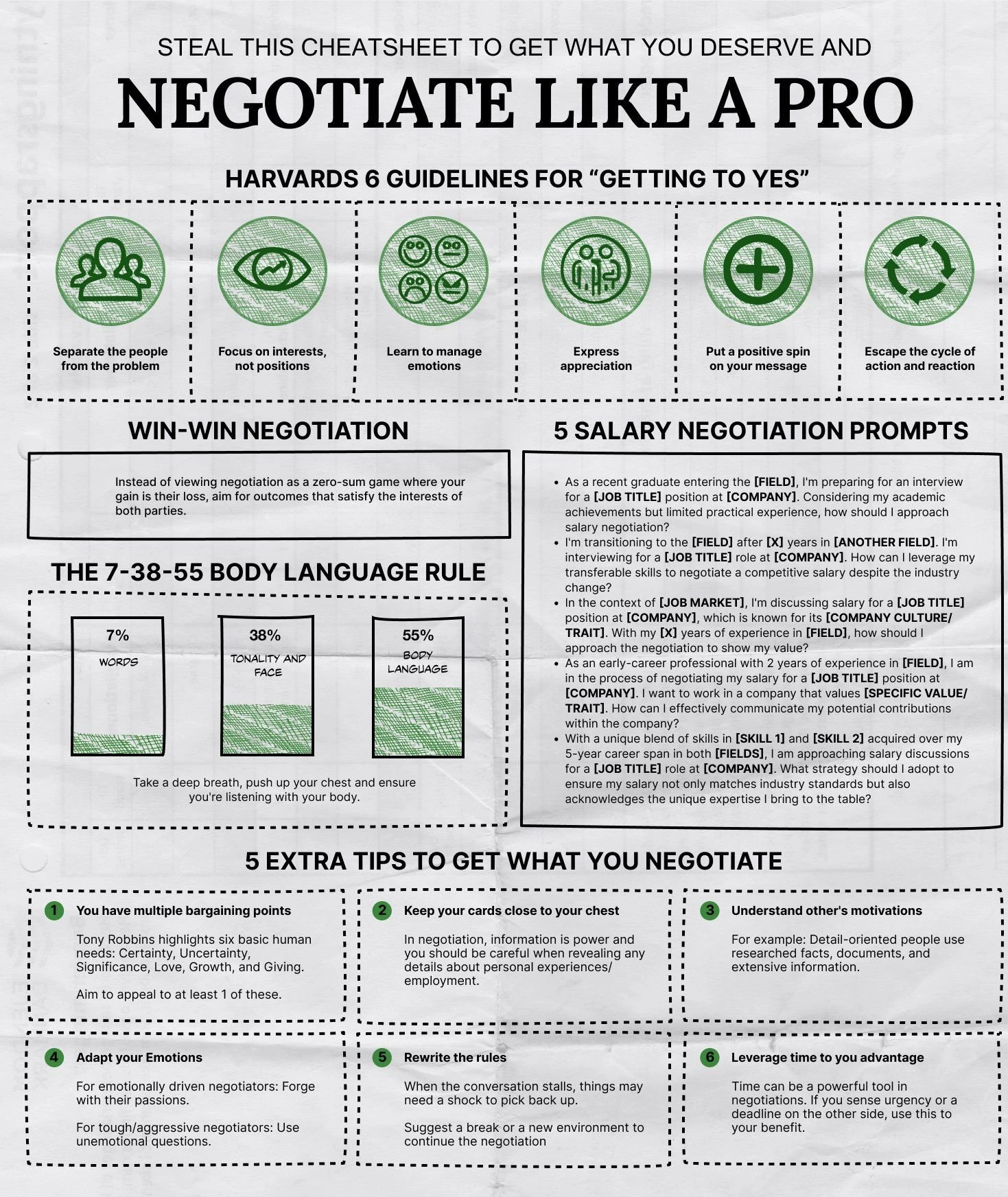
Overcoming Objections
your ability to overcome the most common objections will have a tremendous impact on your success. Most objections fall into three categories:
Indecision (think it over, not ready)
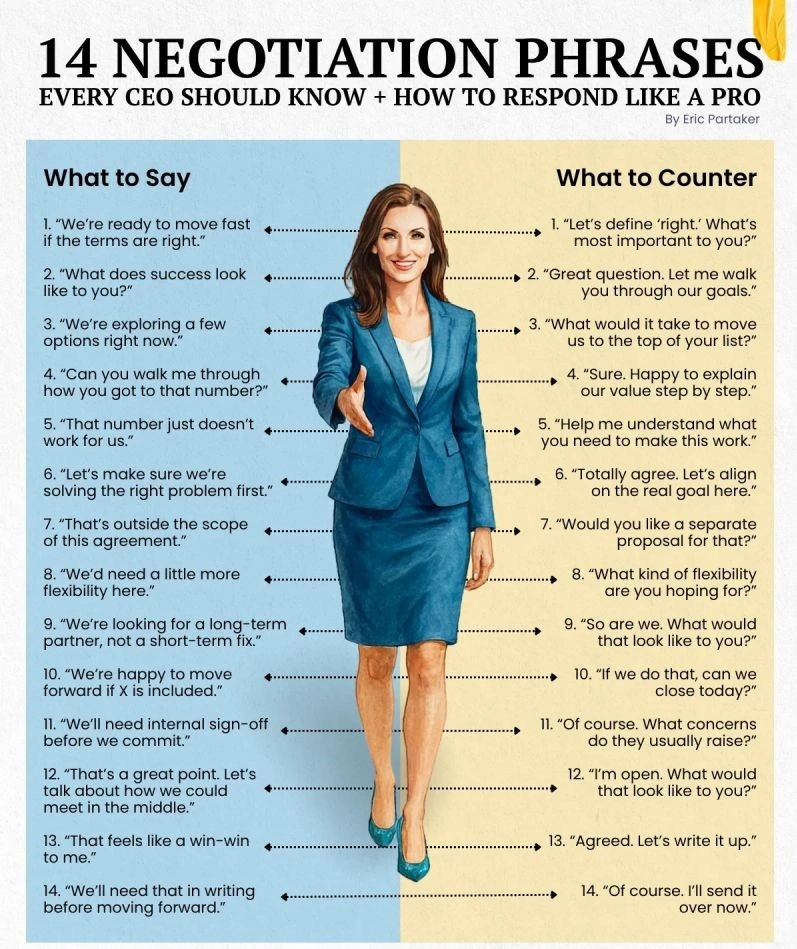
Competition (shop around)
most people realize they won't get high quality for the lowest price. so it's easier to explain the value of our services than it is for our competitors to explain the catch for having such a low price. for another company to offer you a lower price, you're going to have to make compromises, the quality will have to cut corners.
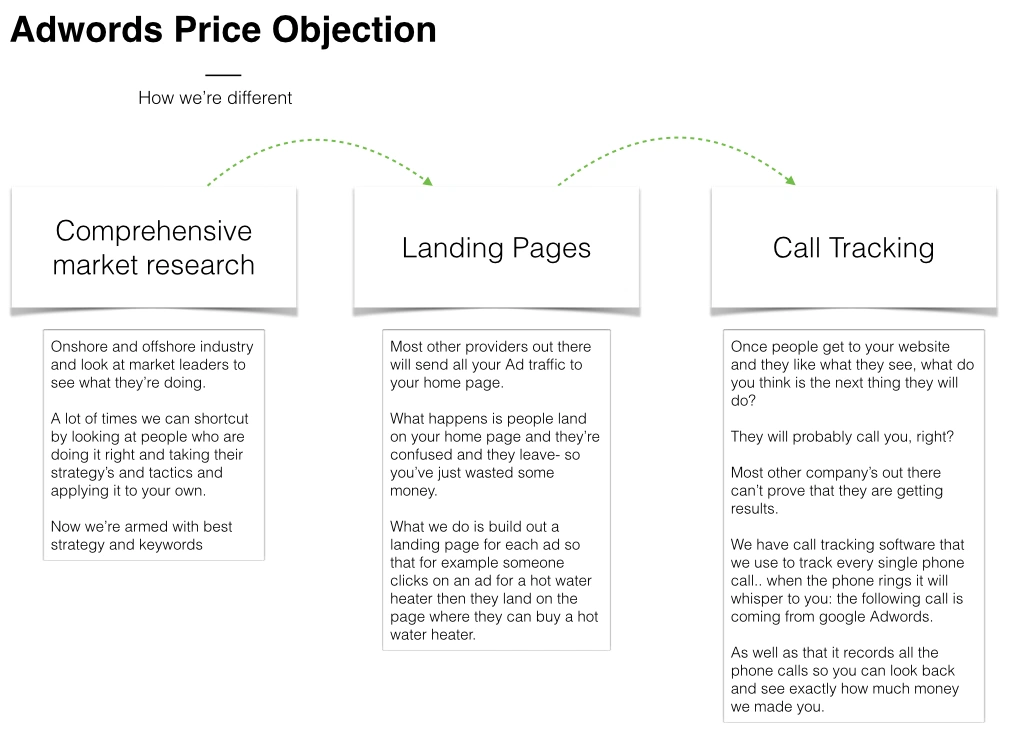
Overcoming sales objections is a common challenge in the sales process. When a prospect says they are not interested in a website, it's important to approach the objection with empathy and address their concerns. Here are some steps you can take to overcome this objection:
1 - Active Listening
Listen carefully to the prospect's objection and avoid interrupting. Let them express their concerns fully so that you understand their perspective.
2 - Empathize
Show understanding and empathy towards their lack of interest. Acknowledge their perspective and let them know that you appreciate their honesty.
3 - Ask Open-Ended Questions
Ask open-ended questions to uncover the root cause of their disinterest. This will help you understand their concerns better and provide a more tailored response.
4 - Address Concerns
Once you have identified their concerns, address them directly. Explain how your website can benefit their business or solve their pain points. Highlight specific features or advantages that align with their needs.
5 - Provide Social Proof
Share success stories or testimonials from satisfied customers who have benefited from your website services. This helps build trust and credibility, showing that others have found value in your offering.
6 - Offer a Solution
If their disinterest stems from specific issues, propose a solution to overcome those challenges. This could involve customizing the website design, optimizing user experience, or providing ongoing support.
- We have customizable templates that're fully adaptable to your needs. We can design a working prototype in no time at all.
- Average project takes 6 weeks to completion
7 - Highlight Unique Selling Points
Emphasize what sets your website apart from competitors. Whether it's a user-friendly interface, innovative features, or superior customer service, highlight the unique value your website brings to their business.
8 - Offer a Trial or Demo
If appropriate, offer a trial or demo of your website. This allows the prospect to experience its benefits firsthand and can help overcome objections based on preconceived notions.
9 - Follow-up
If the prospect is still hesitant, don't push too hard. Instead, suggest staying in touch and following up at a later date. Circumstances and needs may change over time, and they may become more receptive to your offering.
10 - Maintain Professionalism
Throughout the process, maintain a professional and positive attitude. Remember that objections are a natural part of the sales process, and it's important to respect the prospect's decision even if they ultimately decline.
By employing these strategies, you can address a prospect's disinterest in your website and potentially turn their objection into a sales opportunity. Remember to adapt your approach based on the specific circumstances and needs of each prospect.
Handling Objections: Still No Close
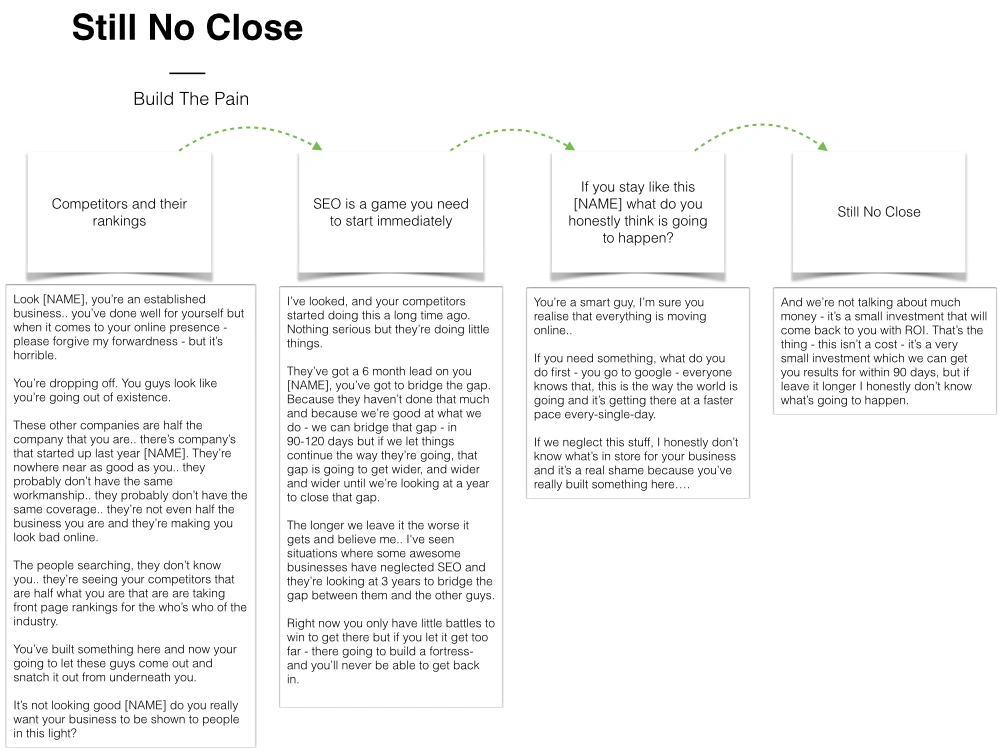
- I need to think it over. I'll get back to you.
Ans: I’ll send you an email summarizing our discussion
- 25% of appointments will be with people that initially told you no.
- Threshold using the straight line method
- handle potential rebuttals in a courteous manner
Examples:
- Ok, if you can give me a few more details I'll send out your free quote email
- I'll send out your free quote email
- I'm happy with my current website
- Would you like to find out ways to improve your conversion rate, increase your number of warm leads generated, and boost your sales revenue
- I know someone who can make me a website.
Insults Intelligence/Experience
image.webp)
1. You sound like a smart guy, but…. (excuse)
When a prospect insults a salesperson's intelligence, it can be challenging to handle the situation professionally and effectively. However, it's important to remain calm and composed to maintain a productive conversation. Here are a few strategies you can use to address the objection:
-
Stay professional and composed: Regardless of the insult, it's crucial to maintain professionalism and avoid getting defensive or engaging in a heated argument. Take a deep breath, compose yourself, and respond in a calm and collected manner.
-
Don't take it personally: Remember that the prospect's insult is not a reflection of your intelligence or abilities as a salesperson. People may express frustration or use insults as a defense mechanism when they feel pressured or unsure. Remind yourself that you are a professional and focus on addressing the prospect's concerns.
-
Acknowledge and empathize: Show empathy by acknowledging the prospect's frustration or concerns. You can say something like, "I understand that you may be frustrated or skeptical, and I apologize if I've given you that impression. My intention is to provide you with valuable information and assist you in making an informed decision."
-
Redirect the conversation: Pivot the conversation back to the prospect's needs and the value your product or service can provide. Ask open-ended questions to encourage the prospect to share their specific concerns or objections. This approach can help refocus the conversation on finding solutions rather than dwelling on the insult.
-
Provide evidence and build credibility: When appropriate, offer evidence or examples that demonstrate your expertise or the benefits of your product or service. This can help rebuild credibility and address any doubts the prospect may have about your intelligence or capabilities.
-
Seek a resolution: Once you've addressed the insult and refocused the conversation, work towards finding a resolution that meets the prospect's needs. Offer solutions or alternatives that align with their goals and demonstrate your commitment to their success.
Remember, it's essential to maintain your professionalism and not let insults affect your confidence or ability to perform your job effectively. Focus on providing value, addressing concerns, and building a productive relationship with the prospect.
ANCHORING Bias
- whoever says the price first wins
- if they drop an anchor first, ignore it and drop a new anchor
- dig deeper: sales goal?
- if you could buy an insurance policy
Anchoring and making adjustments to negotiated price points.
- unfair anchors can kill a deal, consider a party may walk away
- many deals will be made within a reasonable distance from the anchor
- the anchor has to be based in reality
Reframing
process of resolving conflicts by challenging and changing situations or thoughts. Techniques to influence customer objections
- ask questions they haven't considered
Kubler-Ross Model for Sales Negotiation
The Kübler-Ross model, originally developed to describe the stages of grief, can be adapted for various scenarios, including sales negotiations. This model consists of five stages: denial, anger, bargaining, depression, and acceptance. Here's how these stages can be applied in a sales negotiation context:
-
Denial: The prospect may initially deny the need for the product or service being offered, or they might not believe that the benefits are as significant as claimed. Salespeople can address this by providing clear, tangible evidence of the product's benefits and addressing any misconceptions.
-
Anger: The prospect might become frustrated or upset, possibly due to perceived pressure or the cost of the product. Salespeople should remain calm and professional, acknowledging the prospect's feelings and providing reassurance that the negotiation is a collaborative process.
-
Bargaining: This stage involves negotiation and compromise. Prospects may try to negotiate the price, terms, or features of the product. Salespeople should be prepared to offer concessions or alternatives that still meet the company's objectives and the prospect's needs.
-
Depression: The prospect might feel overwhelmed by the decision-making process or the potential change the purchase will bring. Salespeople can provide support by offering resources, such as case studies or testimonials, and emphasizing the positive outcomes of the purchase.
-
Acceptance: In this final stage, the prospect acknowledges the benefits and agrees to the purchase. Salespeople should ensure that all details are clear and that the prospect feels confident about the decision.
By understanding and addressing the emotions and concerns that prospects may experience during a sales negotiation, salespeople can build stronger relationships and increase the likelihood of a successful sale.