Content marketing
Content Marketing is a traffic driver for cheap
Table of Contents
- Content Audit
- Content Strategy
- Content Effectiveness
- [Calendar]
- [Evergreen Content]
Content Marketing is a broad strategy focuses on creating, distributing, and optimizing valuable content to attract, engage, and convert audiences—without relying solely on direct advertising. It's particularly relevant in tech, where educating users on complex topics (e.g., AI ethics or SaaS integrations) builds trust and drives organic growth.
- Why Content Marketing? It integrates:
- Content as the core creation process (e.g., blogs, videos, whitepapers).
- Copywriting as the persuasive layer within that content (e.g., headlines, calls-to-action).
- SEO as the optimization and distribution mechanism to ensure visibility.
Content Marketing is often contrasted with traditional outbound tactics like ads; instead, it's inbound-focused, pulling users in through search and value. For your tech firm, this could mean a unified approach where a blog post (content) uses compelling language (copywriting) to highlight product benefits, while being keyword-optimized (SEO) to rank for queries like "best cloud security tools."
If you're thinking of web presence specifically, these three contribute to Digital Presence Management or Online Visibility Strategy, but Content Marketing is the standard industry term that ties them together holistically.
Insights on Overlaps and Whether They're Nested Concepts
These aren't strictly nested (like Russian dolls, where one fully contains another), but they are highly interdependent and overlapping tactics within a larger framework like Content Marketing. Think of them as Venn diagram circles: significant shared areas, but each has unique purposes. They're not hierarchical in a rigid sense—e.g., SEO doesn't "contain" copywriting—but they nest loosely under strategies where one supports the others. Below, I'll break down the overlaps, provide examples for your tech firm, and explain the nesting potential.
Key Overlaps
- Shared Goal: Audience Engagement and Conversion: All three aim to connect with users online, but they overlap in execution. For instance, a piece of content (like a tech webinar script) might use copywriting for persuasive hooks and SEO for discoverability.
- Technical and Creative Integration: SEO often requires embedding keywords into copywriting (e.g., natural phrasing in ad copy) and content (e.g., blog structure). Copywriting enhances content by making it actionable, while content provides the canvas for both.
- Measurement and Iteration: They all use analytics—e.g., Google Analytics tracks SEO traffic, which reveals how well content performs, and A/B testing refines copywriting within it.
- Web Presence Amplification: Together, they build a cohesive online footprint. Weak SEO means great content and copy go unseen; bland content wastes strong copy; unpersuasive copy fails to convert SEO-driven traffic.
Overlap Examples in a Tech Firm Context
- Content + Copywriting: A blog post (content) on "The Future of Quantum Computing" might include copywriting in the intro ("Unlock unprecedented speed—explore our quantum simulator today") to drive sign-ups.
- Content + SEO: The same blog is optimized with headers, meta tags, and backlinks to rank for "quantum computing applications."
- Copywriting + SEO: Landing page copy ("Accelerate Your DevOps with Our AI Tool") incorporates long-tail keywords for better search rankings without sounding forced.
- All Three: An email newsletter (content) uses SEO-researched topics, copywriting for subject lines ("Boost Productivity 50% with These Hacks"), and links to SEO-optimized pages.
Are They Nested Concepts?
-
Not Strictly Nested: They don't form a clear hierarchy where one is a subset of another. For example:
- Content is the broadest in scope (encompassing various formats), but it doesn't fully "contain" SEO (which can apply to non-content elements like site architecture) or copywriting (which exists in ads outside of content).
- SEO is a technical enabler that overlaps but isn't nested under the others—it's more of a layer applied to them.
- Copywriting is the most tactical and can stand alone (e.g., in paid ads), but it's often embedded within content.
-
Loose Nesting Under Broader Strategies: If we view them hierarchically:
- Top Level: Content Marketing (umbrella, as mentioned).
- Mid-Level: Content (the vehicle that often nests copywriting for persuasion and relies on SEO for reach).
- Supporting Layers: Copywriting nests within content as a style/tool, while SEO wraps around both for optimization.
In practice, for a tech firm, treat them as modular components: Content is the foundation, SEO the amplifier, and copywriting the closer. They're interdependent—neglecting one weakens the others—but not nested in a way that makes one redundant without the rest.
Comparison Table for Clarity
| Aspect | Overlap with Others | Nesting Potential | Tech Firm Implication |
|---|---|---|---|
| Copywriting | Integrates into content (e.g., CTAs); can be SEO-optimized for search ads. | Often nested within content as a persuasive element; not a container itself. | Use to convert SEO traffic on product pages—e.g., "Sign up now" buttons. |
| Content | Serves as the base for copywriting; optimized via SEO for distribution. | Broadest; can "nest" copywriting (as style) and incorporate SEO (as tactic). | Core for thought leadership; overlaps ensure blogs drive leads, not just views. |
| SEO | Applies to both copy (keyword-rich text) and content (structure/links). | Acts as an outer layer; doesn't nest others but enhances them. | Essential for visibility; without it, even great content/copy gets buried in search results. |
| All Three | Full synergy in campaigns (e.g., SEO-optimized content with copy CTAs). | Loosely nested under Content Marketing; interdependent, not strictly hierarchical. | Builds scalable web presence—e.g., ranking high, engaging users, and closing sales. |
If your tech firm's goals lean toward lead gen, prioritize their integration under Content Marketing. For more tailored advice, share specifics like your niche (e.g., fintech) or current challenges (e.g., low traffic).
Content Strategy
develop a content strategy that supports the website's goals and user experience.
- High impact, low level reading
- Short phrases
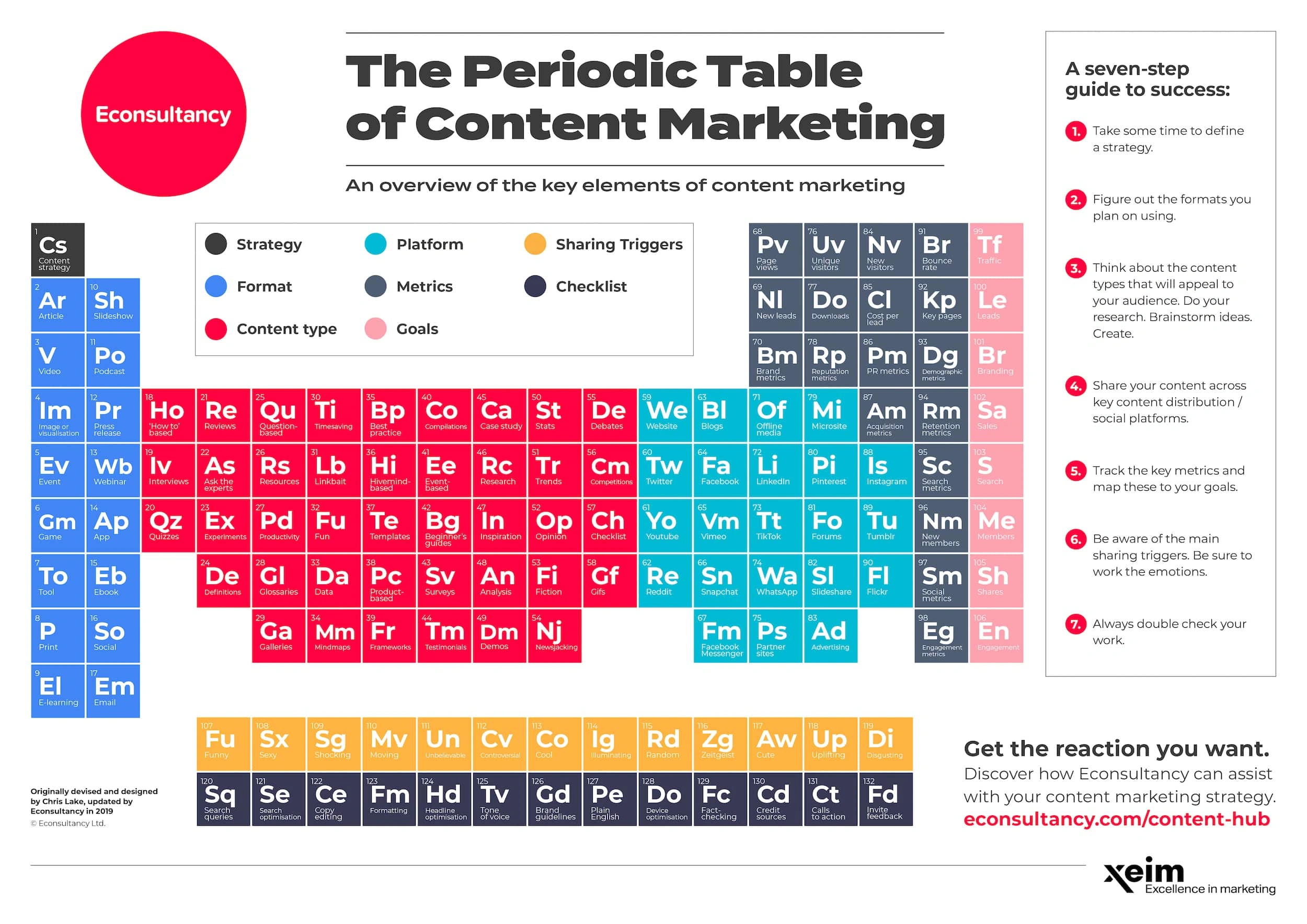
A lot of inbound marketing could easily fall under the umbrella of content marketing. For our purposes, though, we'll discuss content marketing as it relates to content that lives on your website's blog.You are planning on a blog, aren't you? If not, you absolutely should. A blog gives you the opportunity to set yourself apart as an industry expert, a voice of authority in your field. Click here for more about why you need a blog and how to create a great one.
https://sproutsocial.com/insights/content-marketing/
Calendar
January
- New Years
- Send out a "Coming Soon" email announcement to pique your customers' interest and increase engagement
- One-off Email- Take a fresh approach to your marketing by promoting a curated showcase of new arrivals and top products
- Shoppable Landing Page- Encourage customers to share pictures enjoying your products --- they can even feature their four-legged friends on National Dress Up Your Pet Day
- Social Media Presence- Check out these New Year Promotions
February
- Valentines Day
- Check out how your holiday marketing campaigns performed and use your new customer insights to optimize your online store and create targeted campaigns to re-engage past customers
- One-off Email- Online Store- Social Ad- Automated Email- Ask customers to share a story of someone they care about to win a curated package of your products and feature the winner on your social media pages
- One-off Email- Social Media Presence
March
- St. Patrick's Day
- Develop a free in-person or virtual educational event, like an art class or cocktail-making seminar, and offer a discount to attendees to encourage sales
- One-off Email- Social Media Presence- Social Ad- Partner with a local business to do a cross-promotion on National Mom and Pop Business Owners Day
- One-off Email
April
- Earth Day
- Share out fun activities, places to visit, and the best restaurants in your area to encourage visitors during the spring & summer months and increase foot and website traffic to your business
- One-off Email- Social Media Presence - Social Ads
May
- Cinco De Mayo
- Now is the time to revisit how your sign-up tools are performing and encourage potential new customers to sign up for your email list for early access to spring product releases
- Email Sign-Up Tools- Social Media Presence- Social Ads- Optimize your customers' shopping experience by building out or updating a shop on Facebook and Instagram and encourage customers to check them out through your social posts
- Social Ad- Social Media Presence- Share a teachers' appreciation post on the 2nd and include a discount code for teachers to use or for people to share with the teachers in their lives.
- One-off Email
June
- Father's Day
- Encourage customers to enjoy their summers by sending out upcoming local virtual or in-person activities and events that are relevant to your business
- One-off Email- Social Media Presence
July
- 4th of July
- Join top retailers in building out a 4th of July promotion and personalize it with your favorite summer recipe
- One-off Email
August
- The holiday shopping surge started in September last year --- take advantage this year by scheduling out holiday-related promotional emails for the end of the year
- Marketing Calendar- One-off Email- Be ready for key dates like Small Business Saturday, Cyber Monday, Hanukkah, Christmas, and more by ensuring your year-round tactics are optimized!
- Year-Round Tactics- Encourage sign-ups for your holiday push by adding a clear call to action that offers a discount, free gift, or additional material such as a product guide or how-to video to increase excitement
- Social Media Presence- Social Ads- Email Sign-Up Tools
September
- Back to School
- Connect with your customers while they're celebrating Labor Day with end-of-summer BBQ recipe ideas and ask them to share out their top memories on social media
- One-off Email- Social Media Presence
October
- Halloween
- Celebrate Halloween with a "trick or treat" contest --- have customers drop their email addresses into a cauldron (either in person or virtually) for a chance to win a 20% off coupon
- Email Sign-Up Tools- One-off Email- Check out these Halloween promotion ideas.
November
- Thanksgiving
-
Build out a holiday gift guide that directs customers to your top products or creative gift-giving ideas for Black Friday, Small Business Saturday, and Cyber Monday
- One-off Email- Social Media Presence- Social Ad
-
Learn how to send a perfect Black Friday Email.- Get our tips for what to include in a Cyber Monday email.- Don't forget to use our advice to take advantage of Small Business Saturday!
December
- Offer an end-of-year promotion to encourage people to buy and develop a sense of community by providing behind-the-scenes video for your customers
- One-off Email- Social Media Presence
Evergreen Content
Evergreen content refers to online content that remains relevant and valuable to readers over an extended period, regardless of changing trends or current events. It is typically timeless, providing information, insights, or entertainment that maintains its usefulness and appeal. Evergreen content often attracts consistent traffic and can be repurposed or updated to maintain its relevance.
• Frequently Asked Questions (FAQs) • “How To” Guides • Tutorials • Testimonials • Industry Resources • Glossaries of Terms and Phrases • “History of” Articles
"Content Marketing: The Complete Guide & Examples"
The blog post begins by defining content marketing as the process of creating and distributing valuable content to attract new leads and convert them into customers. It highlights the importance of using various types of content across different platforms to engage with the audience and build trust.
The post then discusses the key benefits of content marketing, such as increasing online visibility, boosting loyalty, generating more leads, building relationships with customers, and creating awareness around a brand's mission and values.
Next, it explores the different roles and responsibilities involved in content marketing. These roles include the content strategist, who manages the content marketing strategy; the SEO strategist, who optimizes content for search engines; content creators, such as writers, graphic designers, and video editors; editors, who review and maintain the quality of content; and social media managers, who promote content on social media platforms.
The blog post emphasizes the importance of crafting a successful content marketing strategy. It suggests defining the brand offering and positioning, identifying the target audience, researching competitors, measuring results, and creating valuable and relevant content. It also highlights various channels and formats that support content marketing, such as social media profiles, blogs, email, videos, and paid advertising.
Finally, the post explains how content marketing fits into the marketing pipeline. It discusses how different types of content can be used at each stage of the marketing funnel, including awareness, consideration, conversion/decision, loyalty, and advocacy stages.
Overall, the blog post aims to provide a comprehensive guide to content marketing, offering insights, strategies, and examples to help businesses effectively implement content marketing strategies to achieve their marketing goals.