Marketing Analytics
Analytics is not just a side function—it's the nervous system of modern marketing, providing the data-driven insights that inform strategy, measure performance, and optimize campaigns. Measuring and evaluating content effectiveness in digital marketing can help you understand whether your content strategy is meeting your goals and objectives. Here are some methods for measuring and evaluating content effectiveness in digital marketing. Overall, measuring and evaluating content effectiveness in digital marketing requires a combination of quantitative and qualitative methods. By using a variety of metrics and methods, you can gain a comprehensive understanding of how your content is performing and make data-driven decisions to optimize your content strategy.
content effectiveness
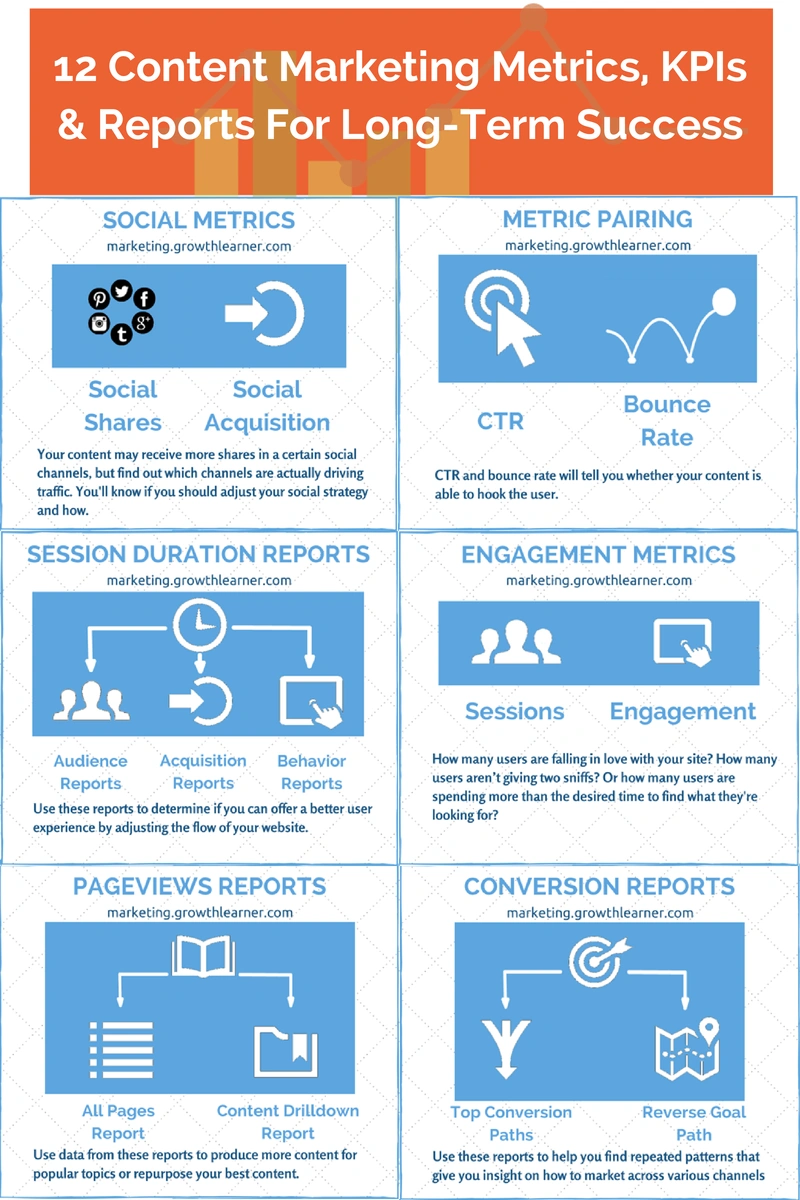
Website analytics: Website analytics can provide valuable insights into how your content is performing. Metrics such as page views, time on page, bounce rate, and conversion rate can help you understand which pieces of content are resonating with your audience and which are not.
Social media analytics: Social media analytics can help you understand how your content is performing on social media platforms. Metrics such as engagement rate, reach, and shares can help you understand which pieces of content are generating the most engagement and which are not.
Surveys and feedback: Surveys and feedback from your audience can help you understand how your content is being received. You can ask your audience about their preferences for content format, topics, and frequency to guide your content strategy.
A/B testing: A/B testing involves creating two versions of a piece of content and testing them against each other to determine which version is more effective. You can test different headlines, images, or calls-to-action to determine which elements have the biggest impact on engagement and conversions.
Conversion tracking: Conversion tracking involves tracking the actions users take after interacting with your content. This can include signing up for a newsletter, completing a purchase, or filling out a form. By tracking conversions, you can understand which pieces of content are driving the most valuableactions for your business.
SEO performance: Analyzing your content's search engine optimization (SEO) performance can help you understand how it ranks in search engine results pages (SERPs). You can track metrics such as organic traffic, keyword rankings, and backlinks to determine how well your content is performing in search engines.
Cost per acquisition (CPA): CPA is a metric that measures the cost of acquiring a new customer or lead through your content. By tracking CPA, you can understand which pieces of content are driving the most cost-effective conversions.
Purposes and Uses of Analytics
for Optimizing UI/UX page designs
Use A/B testing: A/B testing involves creating two versions of a page and testing them with different groups of users to see which version performs better. Analytics tools can be used to measure the effectiveness of each version, such as click-through rates, conversion rates, and bounce rates. This information can be used to optimize the design of the website.
Optimize page elements: UX designers can use analytics tools to identify areas of the page that are not performing well, such as low click-through rates or high bouncerates. They can then use design techniques such as visual hierarchy, color, typography, and layout to optimize these elements and improve the user experience.
Continuously iterate and improve: Analytics and UX design should be an ongoing process of iteration and improvement. Designers should use analytics data and user research to continuously improve the design of the website and ensure that it meets the needs of the target audience.
Identify the pages with high exit rates: Analytics tools can be used to identify the pages on the website with high exit rates. These are the pages where users are leaving the website without taking any further action. By identifying these pages, UX designers can focus their efforts on optimizing them to improve the user experience.
Analyze user behavior: Analytics tools can provide data on user behavior, such as how long users are spending on the page, which elements they are interacting with, and where they are clicking. This information can be used to identify pain points, areas of confusion, and opportunities for improvement in the user experience.
Measuring the ROI of outbound marketing Measuring the ROI of outbound marketing tends to be much easier than measuring the ROI of inbound marketing. For digital channels, you'll be able to see how many people clicked on your ads, and which of those ended in conversions.If the focus of your marketing campaign is conversions, you'll be able to set up your Google Analytics and your Google Ads dashboard to track conversions through SEM, social media marketing and display advertising. You can also use Google Analytics to track your email campaigns (this is a cinch if your campaigns lead to dedicated landing pages).
1. It Proves and Measures ROI
This is arguably the most crucial role of analytics. By tracking key metrics, you can directly link marketing activities to business outcomes, like leads, sales, and revenue. This allows you to answer questions like:
- Which lead magnet is generating the most qualified leads?
- How much did a client's social media campaign contribute to their total sales last quarter?
- What is the return on investment (ROI) of a new website you developed?
For your agency, this is essential for demonstrating value to clients and justifying your services.
2. It Informs and Optimizes Strategy
Analytics moves marketing from guesswork to a science. Instead of relying on assumptions, you can use data to make informed decisions about your strategy.
- Understanding the Audience: Analytics reveals who your customers are, where they come from (traffic sources), their behaviors on your website (pages visited, time on page, bounce rate), and their preferences. This insight helps you create more effective marketing messages and user-friendly designs.
- A/B Testing: Analytics is the foundation of A/B testing (or split testing). By analyzing the data from different versions of a landing page, ad, or email, you can determine which performs better and why. This is a core part of the iterative, agile approach you apply to your business.
- Predictive Insights: More advanced analytics can use historical data to predict future trends and customer behavior. This allows you to proactively adjust your campaigns and allocate resources to the most promising channels.
3. It Enhances User Experience (UX)
Given your expertise in UX design, you know how important it is to understand user behavior. Marketing analytics tools, particularly those focused on user behavior, provide invaluable data for this.
- Heatmaps and Session Recordings: Tools like Hotjar show you exactly where users click, scroll, and spend their time on a webpage. This can uncover usability issues that you can then fix to improve conversion rates.
- Funnel Visualization: Analytics allows you to map out a user's journey through a funnel—from an initial click to a conversion. This can identify where users are dropping off, revealing bottlenecks in the user flow or problems with the design.
4. It Improves Resource Allocation and Budgeting
By knowing which channels, campaigns, and content are performing best, you can allocate your marketing budget more efficiently. For example, if your analytics show that your organic social media efforts are generating high-quality leads at a low cost, you can reallocate budget from a less effective paid advertising campaign to double down on what works.
Key Types of Marketing Analytics
There are generally three types of analytics, all of which you can leverage in your business:
- Descriptive Analytics: What happened? (e.g., "Our blog post got 10,000 views and generated 50 leads last month.")
- Predictive Analytics: What might happen? (e.g., "Based on past data, we can predict that a similar campaign next quarter will result in a 10% increase in leads.")
- Prescriptive Analytics: What should we do? (e.g., "To increase conversions by 15%, we should add a 'Request a Quote' button to our services page and re-engage visitors with a targeted email sequence.")
In essence, analytics is the feedback loop that allows you to constantly monitor, evaluate, and refine your marketing and development efforts, ensuring that you and your clients are always working towards measurable, data-backed goals.