Business KPIs
Account Executive KPIs
Primary KPIs
- Deals closed
- Contract value (ACV/TCV)
- Recurring revenue generated (MRR)
- Profit margin per deal
Secondary KPIs
- Retention of their clients
- Expansion / upsells
- Pipeline creation
Behavioral KPIs (optional)
- CRM hygiene
- Speed of follow-up
- Pass-off quality to fulfillment team
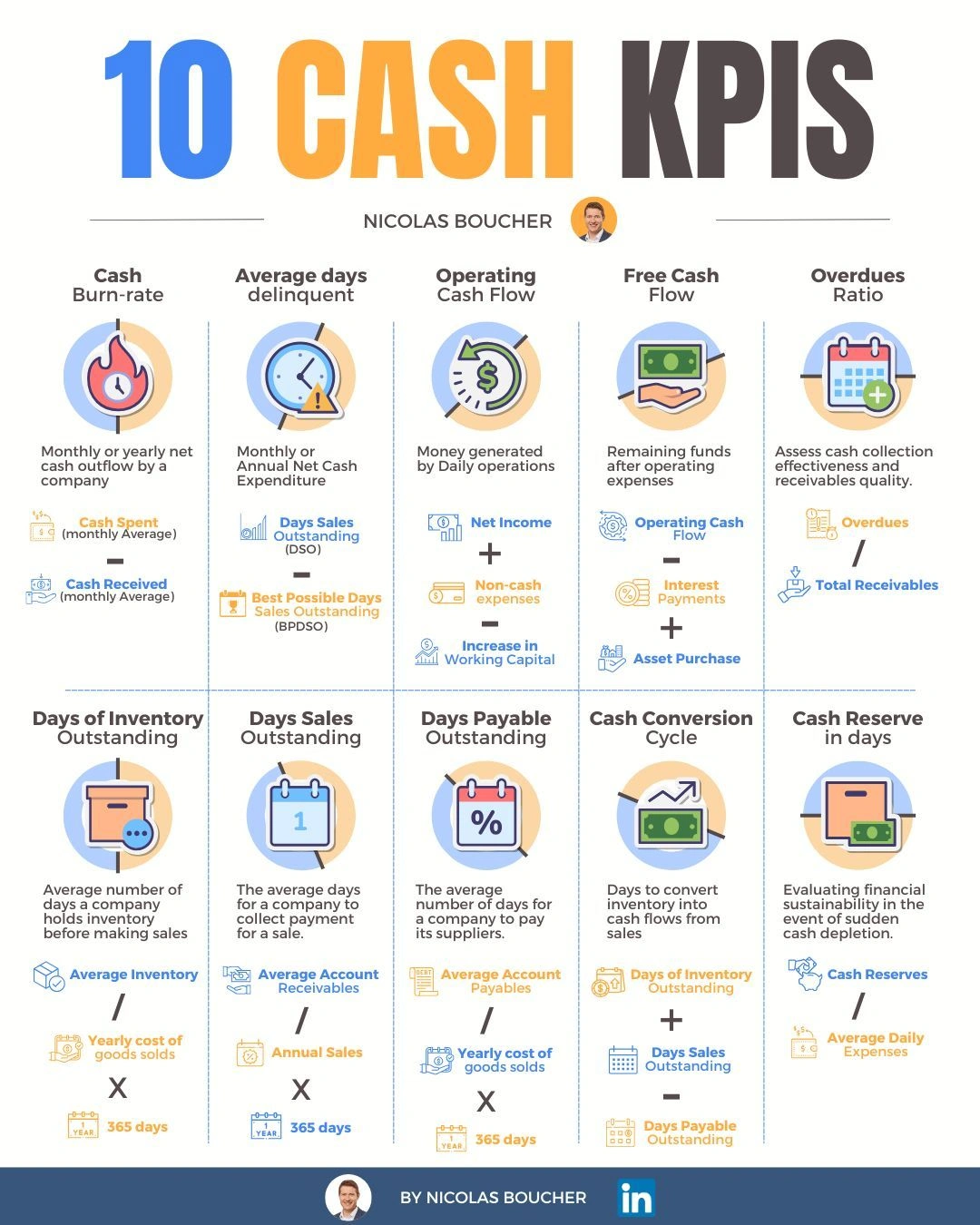
🚀 Organizational & Financial Health (Strategic OKRs)
These metrics evaluate the overall performance and sustainability of the business.
| Category | OKR Examples | KPI Examples |
|---|---|---|
| Revenue & Profitability | O: Achieve a \$Q4\$ financial foundation suitable for scaling. KR: Increase Net Profit Margin by \$15%\$ and achieve \$95%\$ billing realization on all projects. | Gross Profit Margin, Recurring Revenue Rate, Customer Lifetime Value (\$CLV\$), Operating Cash Flow, Average Contract Value (\$ACV\$). |
| Client Success & Retention | O: Establish a dominant reputation for delivering high-value technical and marketing solutions. KR: Increase \$Net Promoter Score\$ (\$NPS\$) to \$>60\$ and reduce client churn to \$<5%\$. | Client Retention Rate, Customer Satisfaction (\$CSAT\$) Score, Renewal Rate, Client Health Score (composite of usage, support tickets, and satisfaction). |
| Operational Efficiency | O: Optimize the service delivery lifecycle to maximize throughput. KR: Decrease the average time from project initiation to first Minimum Viable Product (\$MVP\$) deployment by \$20%\$. | Billable Utilization Rate, Project Overrun Rate (\$Budget/Timeline\$), Cost of Service Delivery, Average Response Time for Support Tickets. |
🧑🤝🧑 Employee & Team Metrics (Capacity & Talent)
Even as a solo developer who eventually scales through consultants/reps, these metrics are crucial for measuring future capacity, training efficiency, and talent acquisition.
| Category | OKR Examples | KPI Examples |
|---|---|---|
| Talent Acquisition & Onboarding | O: Systematize the onboarding process to ensure new hires are immediately productive. KR: Reduce the Time to First Sale or Time to Billable Status for new reps/consultants by \$30\$ days. | Time to Hire, Candidate Quality Score, Offer Acceptance Rate, Cost Per Hire, \$30/60/90\$ Day Performance Check-ins. |
| Training & Development | O: Cultivate deep expertise in cutting-edge technology domains. KR: Ensure \$100%\$ of consultants achieve a specified Cloud/Agile certification (e.g., \$SAFe\$ Agilist or AWS Solutions Architect). | Training Completion Rate, Certification Rate, Average \$360^{}\$ Feedback Score, Internal Knowledge Sharing Contribution Rate. |
| Team Performance (Future) | O: Maintain a high-performing and motivated contractor/employee base. KR: Achieve a Team Engagement Score of >85%. | Voluntary Attrition Rate, Average Performance Review Score, Project Success Rate per Team/Rep, Number of Cross-functional Deployments. |
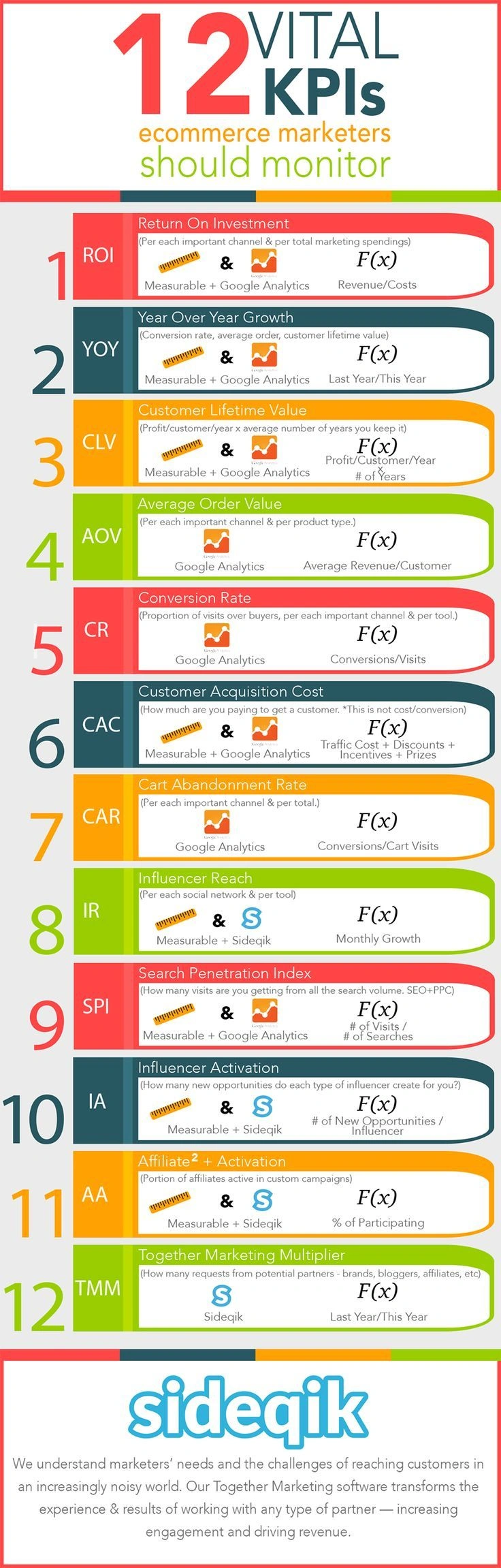
Sales KPIs
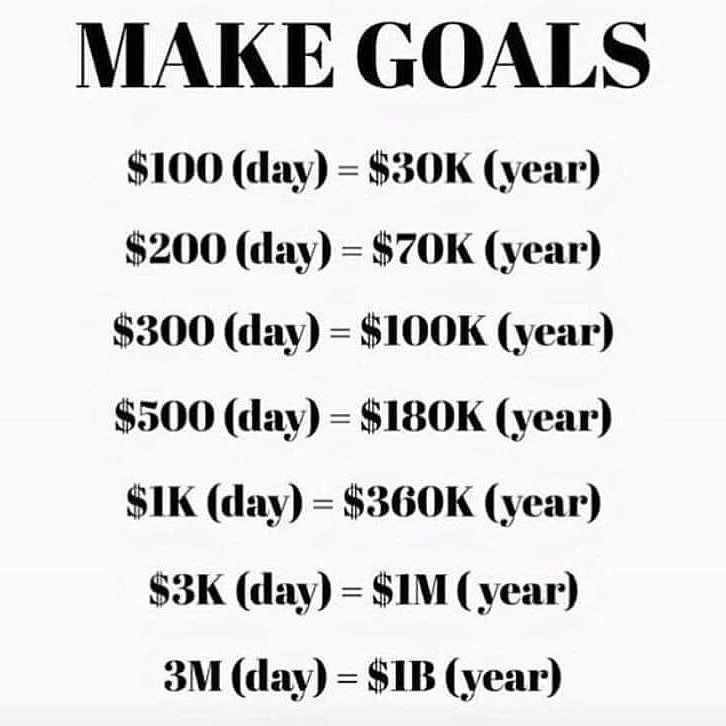
Define a PBD Perfect Week
- blog articles 75-78-80 per year / 2 articles every 3 weeks
- sales 25 per/yr 2 per month
- cold calls 7,200 per yr / 600 per month
If you want it, measure it
It's one thing to have Performance Standards - it's another to make sure you get the performance those standards dictate. One of our clients - BP Oil in New Zealand - has implemented a system to make sure it happens. You may well be able to use some or all of the components of the system. So let's look at the ingredients:
1. Commitment
BP Worldwide has two key strategies right now to increase their market share - so-called "re-imaging" and vastly improved service levels. Re-imaging refers to the new standard colors, the new logo and, of course, the re-design of their service stations (you'll have seen that in action with the new green and gold facades and interiors). Improved service? Well that's an obvious one. BP New Zealand is totally committed to it. And they demonstrate that commitment in a number of ways. Management is totally involved. Sure, they've committed dollars to the project but they've done things much more important than that. Number 1 - the words "customer," "dedication" and "service" are central to their ne
Number 2 - they do it visibly, NOT by memos. In fact, every BP dealer and their key peo- ple took part in 12 days of initial seminars throughout the country. The seminars were conducted by Management leading the programs, visibly and publicly demonstrating their commitment.
2. Focus on Specifics with Customer Involvement
BP commissioned some detailed research (listening) with customers. And they were sur- prised by what the customers said. We can't give the absolute detail of the research because of confidentiality. But we can tell you that the ATTITUDE of the forecourt attendants was critical. The only problem is that the word "attitude" is somewhat "fuzzy." So, BP went fur- ther to define very specific ACTIONS which their customers feel contribute to their percep- tion of service.
3. Establish Standards that are Observable/Measurable
Armed with the specific action information from the customers, BP then developed a list of nearly 40 observable and measurable things. And then they established a baseline - a kind of "where-are-we-now" survey of every existing BP site AND a very large number of competitive sites too. Then, in a very interesting move, they went to a charitable organization and asked them to form a large group of "mystery shoppers." These mystery shoppers did the groundwork. Through their filling in a detailed form after their mystery visit to a site, each site got an accurate rating of their current performance. (As an example of the detail, on one part of the mystery shopper form they record the length of time they had to wait - a waiting time of 0-15 seconds scores a 4, a waiting time greater than 30 seconds scores a big fat zero).
4. Set a target
Once the baseline numbers were established, BP set a target. For instance, "we're now averaging a survey score of 70%, our aim is for 80% at each site within the first six months of the program."
5. Provide incentives for everyone involved
Each year, BP has an off-shore Conference for their dealers. As from now, attendance at that Conference is determined solely by performances against the standards - you don't even get invited unless you get the target number on your mystery shopper surveys (these surveys are done on each site at least once a month).
But not only that, the forecourt attendant -- now called a salesperson - has incentives too. Each time that person gets a 95 percent score from a mystery shopper, his or her name gets entered into a prize draw for a fifteen day all expenses paid double holiday to Club Med.
6. Provide training to reach the goal
To underscore the commitment, BP New Zealand has developed a very creative program called SMART - it stands for Service Management and Retail Training. The program is very creatively put together and aimed both at management and the front line service deliverers - the forecourt attendants. Dealers invest in the program in a co-operative effort with BP.
7. Go Public and keep everyone informed
The final icing on the cake is BP's commitment to publish the month by month results of the mystery shopper program. They publish a league table ranking each outlet - a great way to get a performance lift across the network. BP knows that most motorists simply don't shop by brands- there is little, if any, brand loy- alty. There is no product differentiation. Differentiation by service is the key. Applying these steps, and most importantly, MEASURING the results is a great way to start the process.
Related Images
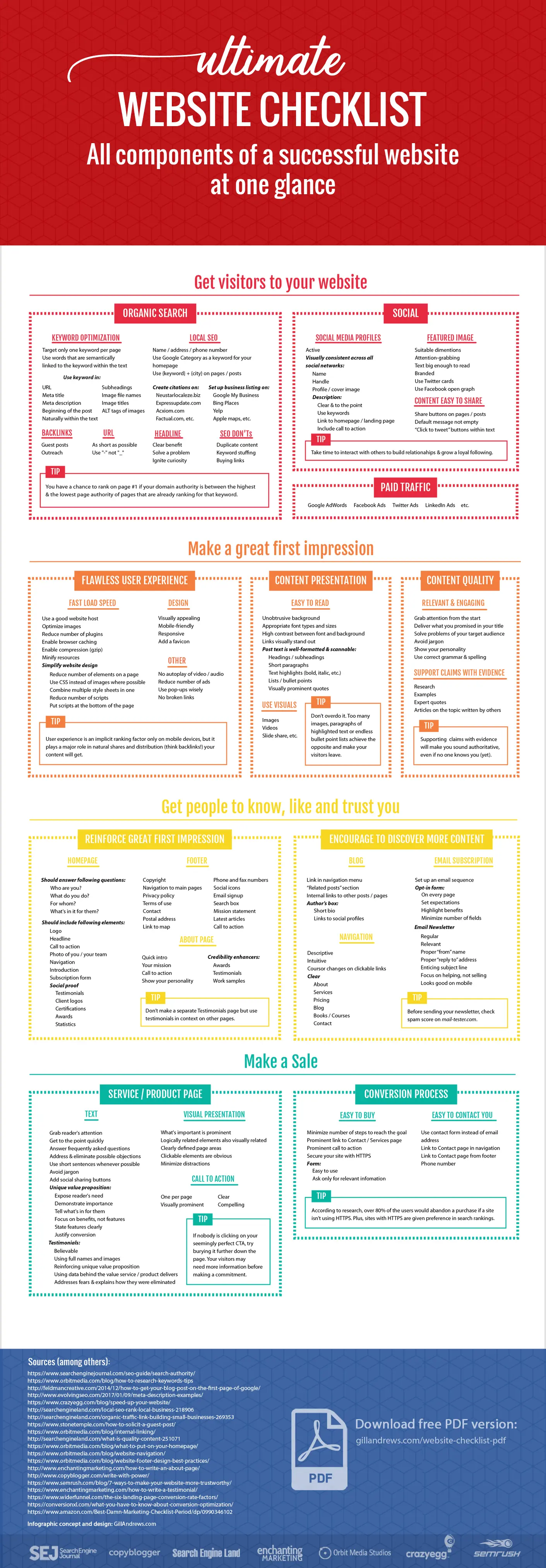
Overhead costs are typically considered fixed costs, as they do not vary significantly with changes in sales volume or production output. Because they are not directly tied to the production or delivery of the product or service, overhead costs are often allocated to the product or service on a per-unit basis, in order to determine the true cost of producing and selling the product or service.