Financial Statements Overview
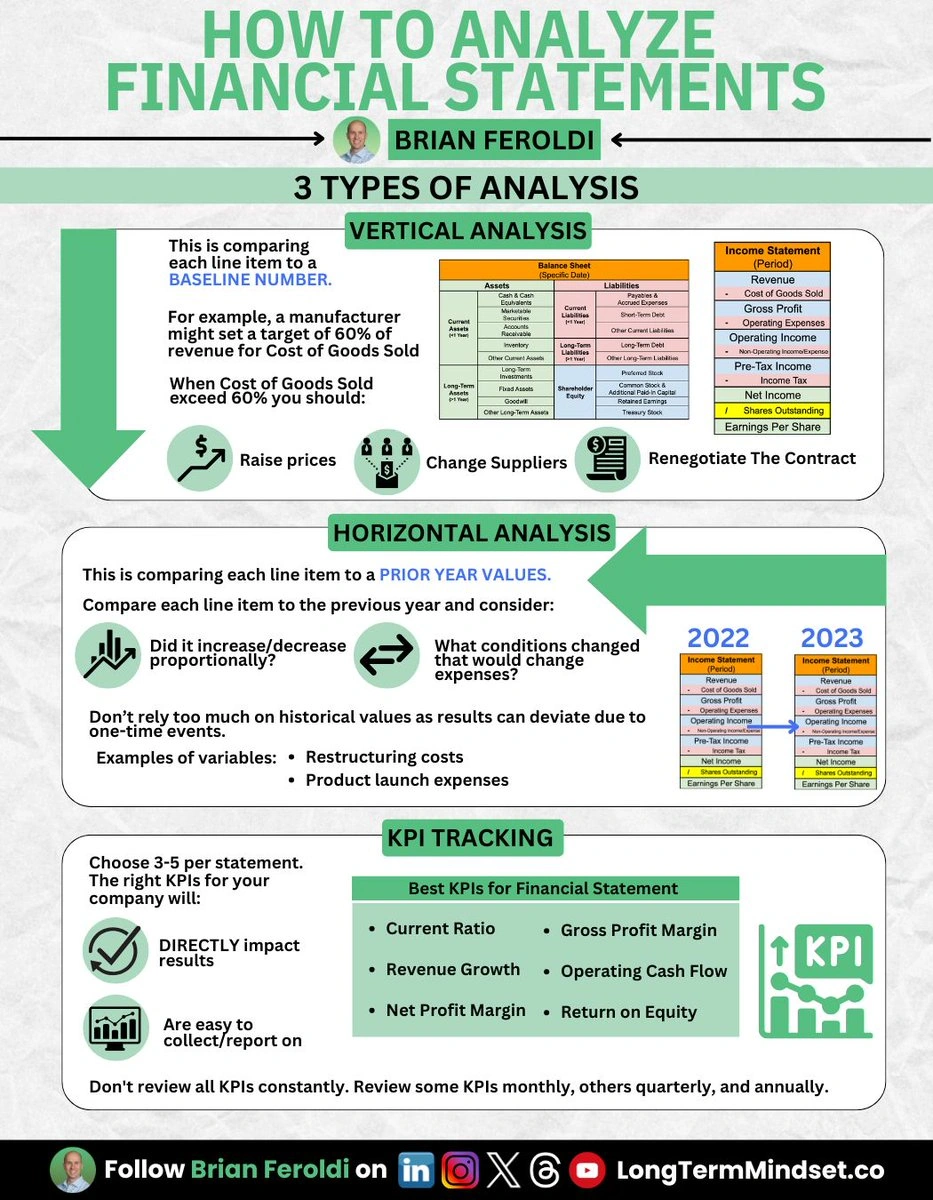
Types of Financial Statements
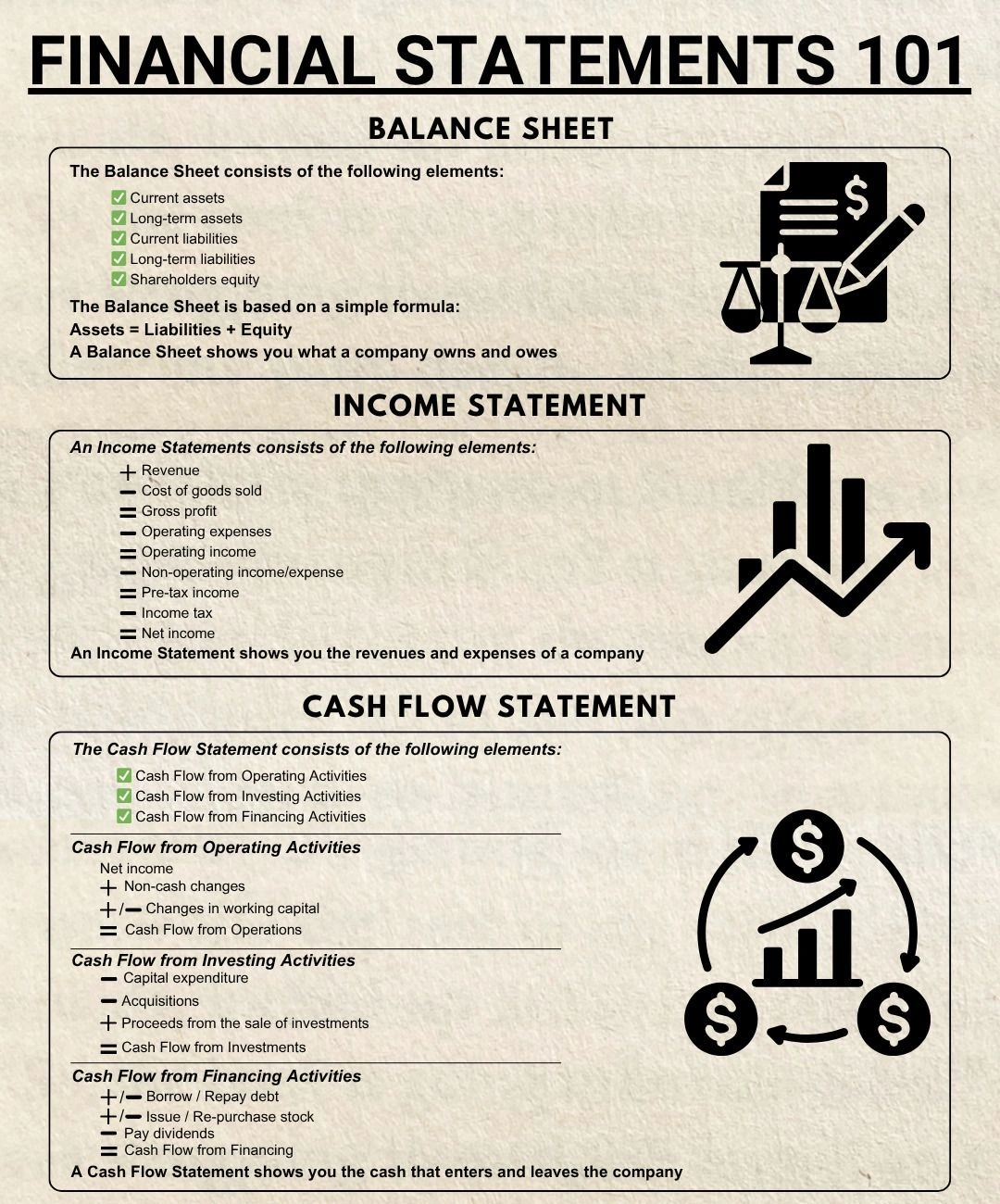
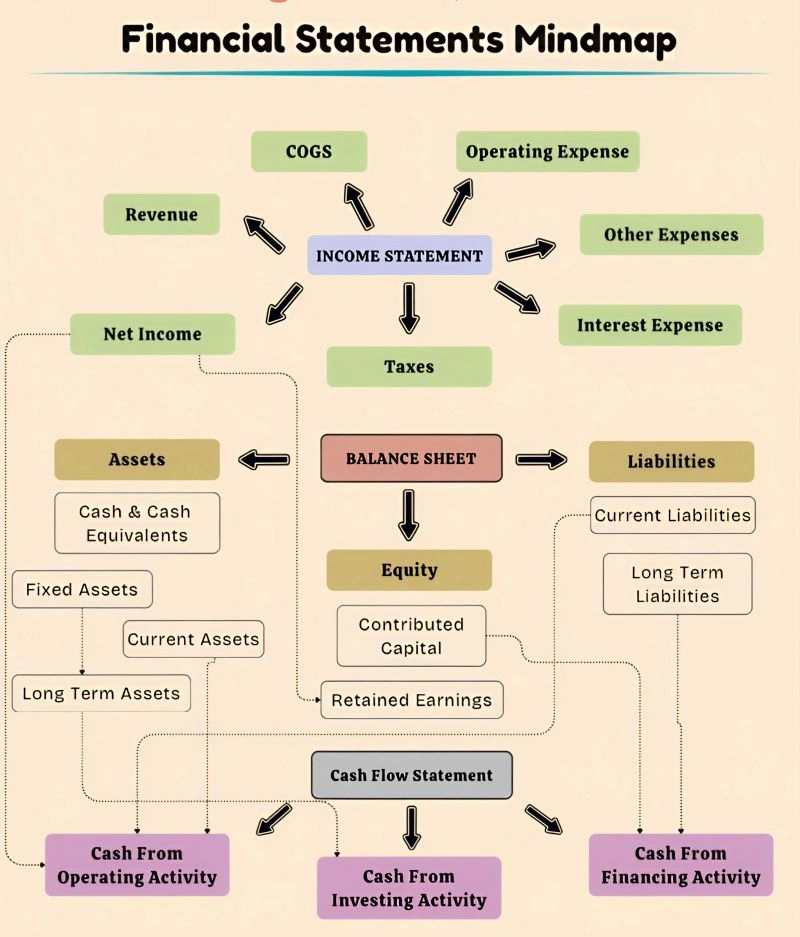
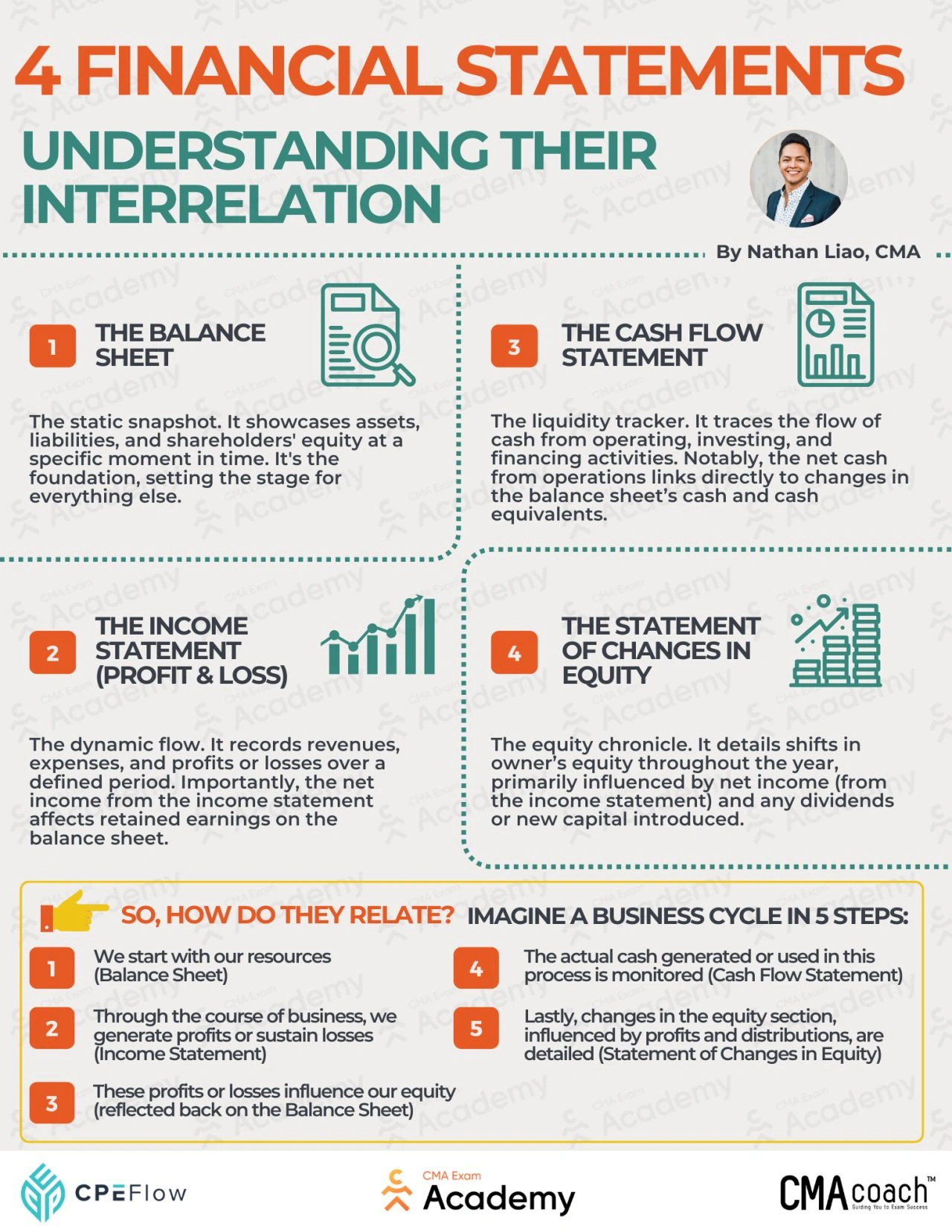
Income Statement
Shows revenue, expenses, and profit over specific period (quarterly, annually).
Key Components:
- Revenue: Sales, services, interest income
- Expenses: Operating costs, depreciation, interest
- Profit: Revenue - Expenses
Balance Sheet
Snapshot of assets, liabilities, and equity at specific date.
Key Equation:
- Assets = Liabilities + Equity
Components:
- Current Assets: Cash, accounts receivable, inventory
- Fixed Assets: Property, equipment, intangible assets
- Current Liabilities: Accounts payable, short-term debt
- Long-term Liabilities: Bank loans, mortgages
- Equity: Owner's investment, retained earnings
Cash Flow Statement
Tracks cash movement from operating, investing, and financing activities.
Categories:
- Operating Activities: Cash from core business operations
- Investing Activities: Purchase/sale of assets
- Financing Activities: Debt, equity transactions
Financial Analysis Techniques
Ratio Analysis
- Profitability: Gross margin, net margin, ROE
- Liquidity: Current ratio, quick ratio
- Solvency: Debt-to-equity, interest coverage
- Efficiency: Asset turnover, inventory turnover
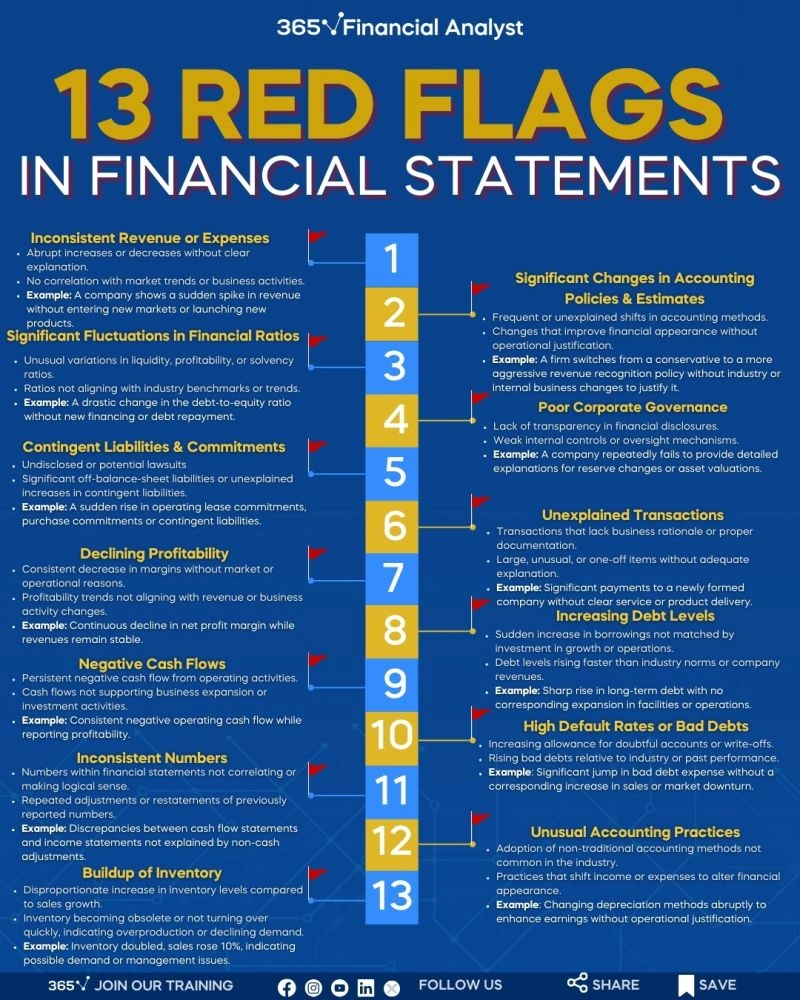
Trend Analysis
- Compare current period vs previous periods
- Identify growth patterns and concerning trends
- Industry benchmarking for context
Business Applications
Investment Decisions
- Assess company's financial health and performance
- Evaluate investment opportunities
- Support loan applications and credit decisions
Strategic Planning
- Set realistic financial goals based on historical data
- Create budgets and forecasts
- Monitor key performance indicators
Best Practices
Preparation
- Use consistent accounting methods
- Ensure accurate data entry and classification
- Reconcile accounts regularly
Analysis
- Compare against industry standards
- Consider economic conditions and market trends
- Use both horizontal and vertical analysis
Reporting
- Generate statements timely and accurately
- Include management discussion and analysis
- Ensure compliance with accounting standards
This comprehensive approach to financial statements provides essential insights for business decision-making and strategic planning.