BUILD then MARKET Branding
startup tech firm in New Brunswick, NJ, offering digital marketing, software engineering, and UX design, "creative design" takes on a holistic and deeply integrated meaning, especially when viewed through the lens of Local SEL. It's not just about aesthetics; it's about purposeful, empathetic, and impactful visual and experiential communication that resonates with the local community and fosters positive connections.
1. Beyond Aesthetics: Design with Intent and Empathy:
- Problem-Solving through Design: Creative design isn't just "making things pretty." It's about using visual communication, layout, color, typography, and imagery to solve specific business problems (e.g., increasing conversions, improving user engagement, building brand recognition).
- User-Centric Creativity (UX/UI focus): In your firm, "creative design" is intrinsically linked to UX design. It means designing interfaces, websites, and applications that are not just visually appealing but also intuitive, easy to use, and emotionally satisfying. This requires deep empathy for the user's needs, frustrations, and goals.
- Emotional Connection through Visuals: Creative design in this context aims to evoke specific emotions and create memorable experiences. For a local business in New Brunswick, this could mean using imagery that reflects the local community, colors that evoke warmth or trust, and a visual style that feels approachable and authentic.
2. Storytelling and Brand Identity with Local Relevance:
- Visual Storytelling: Creative design tells your clients' stories (and your own) in a compelling way. This involves crafting visual narratives that communicate values, benefits, and differentiators. For local New Brunswick businesses, this might mean designing logos, websites, and marketing materials that tell their unique local story.
- Brand Identity that Resonates Locally: Creative design is crucial for building a strong brand identity. This identity needs to be visually distinct and memorable, but also connect with the local audience in New Brunswick. Think about the local culture, demographics, and what makes the community unique.
- Authenticity over Hype: "Creative design" that aligns with Local SEL means avoiding generic, flashy designs and instead focusing on designs that feel authentic, trustworthy, and genuinely reflect the client's business and its connection to the local community.
3. Integrated Design for Digital Marketing Success:
- Visuals for Digital Campaigns: For digital marketing, creative design produces all the visual assets: social media graphics, ad banners, email templates, landing page layouts, infographics, video thumbnails, etc. These need to be not only eye-catching but also strategically designed to drive engagement and conversions.
- Consistency Across Platforms: Creative design ensures a consistent visual brand experience across all digital touchpoints. This builds trust and recognition for local businesses.
- Accessibility and Inclusivity: Creative design, viewed through an SEL lens, also considers accessibility. Are your designs usable and understandable for everyone in the New Brunswick community, including those with visual impairments or other disabilities?
4. Community-Minded Creative Design (Local SEL in Action):
- Pro-Bono/Reduced Rate Work for Local Non-Profits: Use your creative design skills to help local New Brunswick non-profits or community initiatives. This directly applies your firm's talent to community benefit.
- Designing for Local Events/Causes: Offer to design promotional materials for local New Brunswick events, fundraisers, or social awareness campaigns. This shows direct engagement.
- Reflecting Local Diversity: Ensure your designs, especially for local clients, subtly reflect the diversity of the New Brunswick community in imagery, representation, and messaging.
- Empathetic Content Design: When creating content (e.g., for blogs or social media), the creative design should enhance empathetic messaging, making information easily digestible and emotionally resonant for local audiences.
In essence, "creative design" in this context is about more than just making pretty pictures. It's about strategic visual communication and experience creation that is deeply empathetic, culturally aware, and contributes positively to the human connections within the local New Brunswick community.
Table of Contents
- The difference between Marketing, Branding, and Advertising
- Branding
- Naming
- Voice and Tone
- Value Proposition
- Competitive Advantage
- Design
- Social/Environmental Awareness
Branding
flex technology
- https://www.dnb.com/business-directory/company-profiles.ambitious_royalty_llc.c3acbe0f3e111737f92a78ba42678018.html
- https://www.buzzfile.com/operations/Skyline-Global-Consulting-908-705-0115
- https://www.bizapedia.com/nj/
Voice and Tone
Tone is the expression of our brand personality based on different intents (i.e., how we use our voice in different situations). Unlike our voice, our tone changes depending on the context and audience.
In a nutshell, voice is what makes us unique, and tone is what makes us relatable.
Voice
Our voice stays the same no matter the context.
Example
Fraction of the costs Personal relationship Free evaluation / Free project quote
Tone
While our voice stays the same, our tone changes depending on context. These are the three tones we use in different situations:
Humorous
We use purposeful humor to create relatable experiences based on insights that attract, entertain, and hold attention. Our humor can come to life in our copy or in our visuals.
Straightforward
Keep it simple. When a consumer or customer just needs information, we tell it like it is, with writing that's clear, concise, and genuine.
Reassuring
We use a reassuring tone, and we show empathy by acknowledging our audience's feelings when supporting customers through sensitive situations, e.g., claims communications. It's important that we always put people first.
Addressing our users
Keep it conversational by addressing users as "you" and BUILDTHENMARKET as "we."
- A recognized Image
- color
- design
- Trust and Loyalty
- people trust brands because of broken promises
- A Clear Mission
- people expect consistent experiences with brands
- Consistent Delivery
- people stay loyal to a brand because of shared values
What is a Brand Guideline
It is mostly believed that every brand has an online existence now. It is either via website or an application. Brands stick in our minds because their presence is marketed by the repetition of the same logo, fonts, colors, and images. But brand guidelines go far beyond a logo or an icon. It’s cognitively present in their colors, fonts, tone, and even the feeling you get when you see one of their ads.Brand guidelines incorporate people inside or outside your organization; a document to reference if they have a doubt about using your brand colors, fonts and more. A well-outlined brand guideline ensures flawless branding approach for any website or Application.
Logo
- Logo Size and Placement
- Construction
- Padding and Minimum Size
- Approved Lockups
- Logo Colors and Treatment
- Logo Misuses (what not to do - everyone interprets things differently, so having what not to do is important)
Color
- Identify Brand Colors and Consistency
- Hex
- RGB
- CMYK
- Pantone
Composition
- Patterns
- Accents & Graphic Elements
Iconography
- Iconography
Illustration Style Photography
- Photography Style
- Goals and Context
- Visual Style
- Color Grade
- Subject Matter
- Special Effects
Tone of Voice
- Voice and Tone
- Brand Descriptors
Typography
- Type Scale
- Fonts/Typography
The difference between Marketing, Branding, and Advertising
Marketing is how you see yourself
Marketing is the image that you are trying to present to others. It starts with how you dress, the colors and patterns you choose, and how you groom. We all have a strategy for this — yes, everyone, including your unkempt second cousin who rarely showers and wears the same Star Wars shirt he’s worn since college.
Even not having a strategy for your personal appearance is a strategy itself.
You choose your image to portray yourself as a business professional, a punk rocker, a tech nerd, etc., and by doing so, you are expressing to others through your appearance your character, lovable attributes, and in the end, the value you offer to others.
It isn’t fun to admit that appearances are as important as they are, but let’s be honest, first impressions are driven by appearance. Impressions can evolve and be molded later, but as we all know, they require time and effort to change, so we do our best to get it right up front.
For a business, a marketing strategy considers how you want others to perceive your company. It should convey the vision and values of the business and express these in a way that the public will recognize and associate with your company.
How you “dress” your company will determine how effectively your message and image will be accepted by consumers.
Advertising is how you act in public
If marketing is how you see yourself, advertising describes your actions.
How you carry yourself, where you hang out, and what you say are just as important as how you look. All of this should be considered with your marketing strategy to assure that you have consistency between your image and your actions.
For instance, imagine that you wear a New England Patriots jersey and get a “I Heart Tom Brady” tattoo, but during the Super Bowl, you cheer for the Philadelphia Eagles and celebrate their victory. You will confound — and probably infuriate — all of your friends and likely be exiled from future Sunday game days.
Your business advertising strategy is the same. If you execute it in the wrong places, with the wrong message and tone, at the wrong times, or to the wrong audience, it will ultimately confuse consumers and could turn them away.
Branding is how others see you
While marketing is how you want others to see you, branding is how they actually do.
Your marketing strategy should assess and consider your personal brand. If you have a strong brand, you can spend more time building on it. If you have reputation problems, however, you need to focus on rebuilding or changing perceptions.
As an example, if your professional network believes you to be a fraud or slacker, then it will require more than just dressing professionally and mastering your LinkedIn profile to change this perception.
Similarly, from a business standpoint, understanding how consumers perceive your business is crucial for how you decide to execute a marketing and advertising strategy.
Social Native Brands
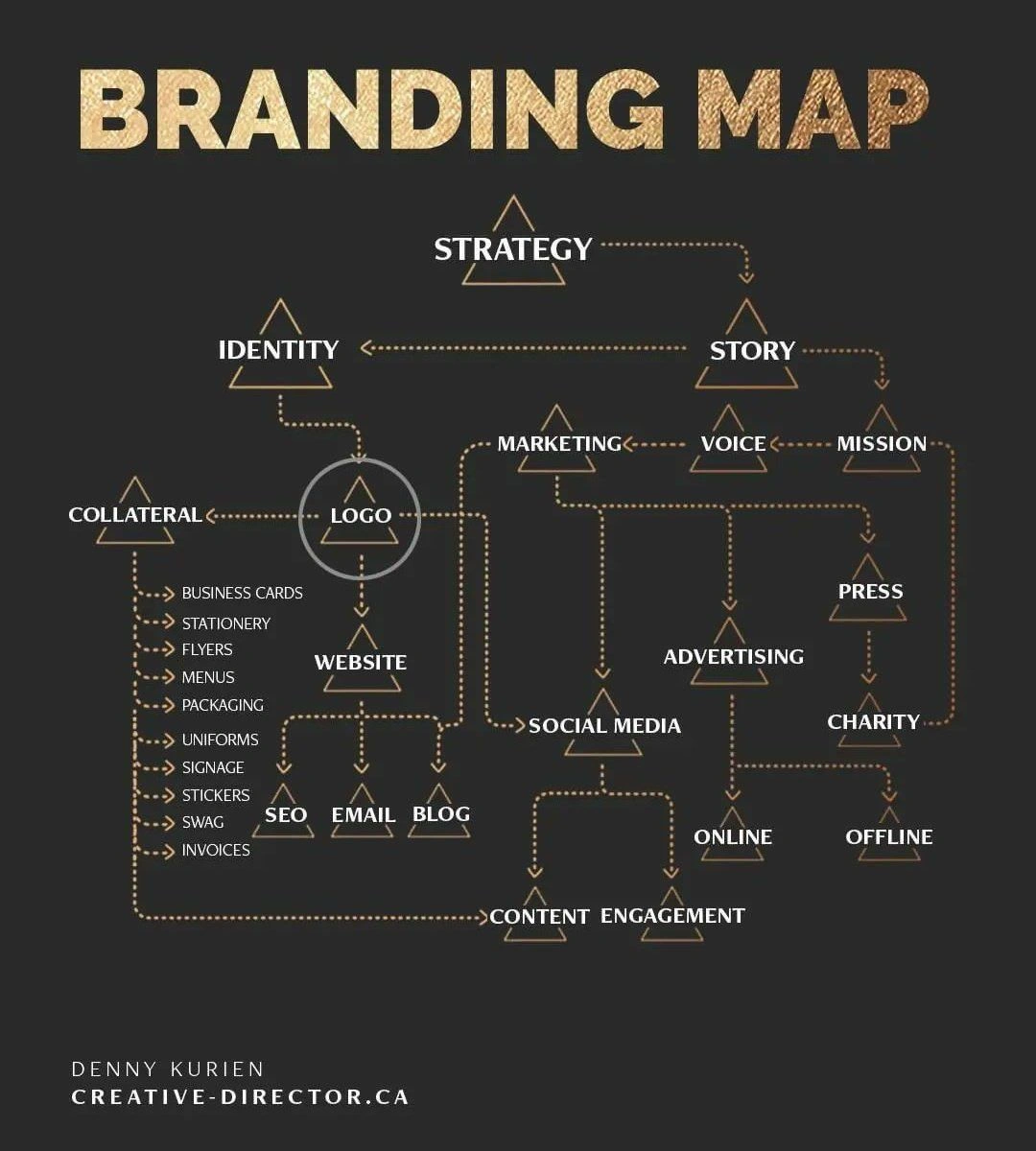
What is Branding?
it's not the logo, that's a symbol for the brand
the brand is NOT a promise
A brand is NOT the impression
A BRAND IS A RESULT
A CUSTOMER'S GUT FEELING ABOUT A PRODUCT, SERVICE, OR COMPANY
a brand is a business reputation
Marketing >> persuade people to buy your product
Personal Brand
Tell your Story
The difference between understanding who you are versus who you wish you were.
Long Term Game
Naming
Creative criteria for naming a brand Experiential functional emotional
consumer psychology Branding
- Value Proposition
- Competitive Advantage
- Design
- Social/Environmental Awareness
Appendice
Terms | Definitions
Consultancy | Consultancy refers to the practice of providing expert advice, guidance, and support to individuals or organizations seeking to improve their performance, solve problems, or achieve specific goals. Consultants are typically hired by clients to provide objective and independent insights, expertise, and recommendations on a wide range of topics, such as business strategy, operations, finance, marketing, human resources, technology, and more. Consultancy can be provided by individuals or firms who specialize in a particular area or industry, and who have the knowledge, skills, and experience to help clients identify and address their challenges. The consultancy process typically involves a thorough analysis of the client's needs, goals, and current situation, as well as the development of customized solutions and strategies to help them achieve their desired outcomes. Consultancy can be a valuable resource for individuals and organizations looking to improve their performance, gain a competitive advantage, or overcome complex challenges.