Scheduling
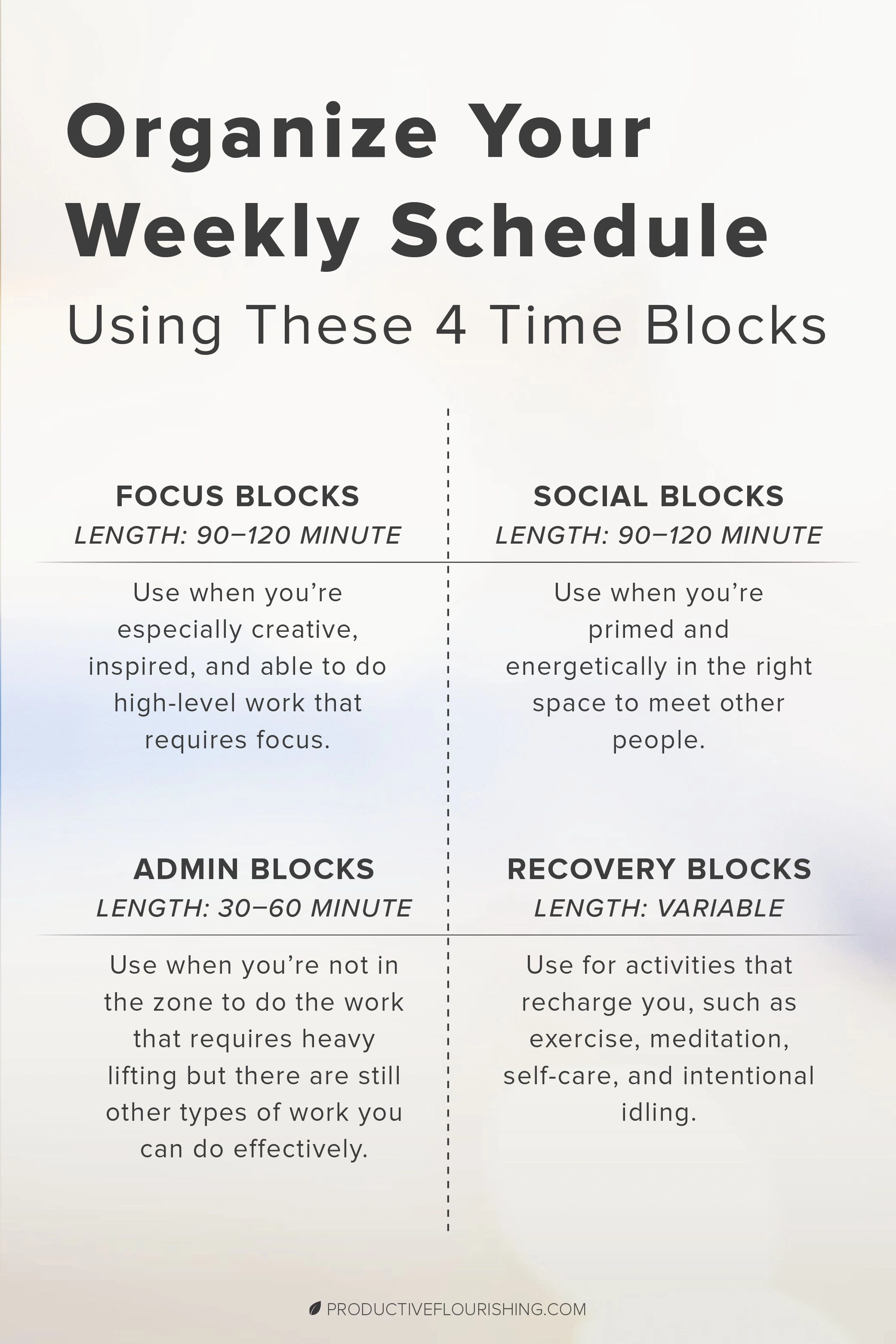
Time Blocking
working with full focus for 52 minutes followed by a 17-minute break
2 min rule
if a task arises that can be done in two minutes or less, it should be done immediately
Time Boxing
Timeboxing is a time management method where you allocate a fixed period, or ‘box’, to complete a specific task or set of tasks before moving on. This technique contrasts with the Pomodoro Technique, which involves working in set intervals (typically 25 minutes) followed by a short break, regardless of the task type or its completion status. Timeboxing allows for more flexibility as the length of each time box can be adjusted based on the task’s complexity and priority, rather than adhering to a uniform interval.
Step 1: Identify your most important goals, one by one
Do you know, I mean really know, what is important for you, your family and friends, or your career? Write down what you want as long-term goals. Be specific. The more personal, the better.
Step 2: Imagine your goal and all of the benefits attached to reaching this goal
The more benefits you attach to each goal, the more likely you will to keep working towards it. Some people maintain a so-called "vision board" with vivid images of their primary goals in life. Personally, I remind myself every other morning to take another look at what's important for me in the long run and review my progress so far.
Step 3: Break down any big goal into smaller goals
There might be many obstacles you have to climb to reach your larger goal. Challenges may arise and drag you down from time to time. Split your goal into individual steps with every milestone becoming a comparatively smaller task on your Schedule list. As a result of this, every accomplishment along the way will further boost your morale.
Step 4: Plan your individual actions to reach the goal
For each goal, write down your detailed plan of when you will work on which tasks and set a realistic deadline for the overall goal's completion. I usually put a timeline next to the goal in Schedule, and once a week I put it on the wall as a sticky note as well as in my phone's calendar. Then, for example with personal goals, I make continued efforts -- either as part of my morning routine just before leaving for work or extra room over the weekends -- to spend more time on really pushing things forward on a regular basis.
Step 5: Seek outside help or share your commitment
Who could actively support you in reaching your goal? Who could be your commitment partner-in-crime for the next few weeks or months to come? Is it your partner, your best friend or a post shared publicly on Facebook? Openly speaking about your goal makes you work extra hard to not disappoint anyone---either by working on the wrong things, sometimes referred to as "procrastination," or by quitting and leaving it unfinished at some point.
Step 6: Get it done!
Follow your plan for what and when you wanted to work on something. Finish on time. No more excuses!
Last but not least, take an occasional break for a moment of reflection and enjoy the feeling of finally working toward your most important long-term goals. Life is about more than just fighting a daily workload that always comes in as urgent and important. To achieve your dreams, work on your very own plan and priorities instead.