Eisenhower Matrix
This framework helps prioritize tasks by urgency and importance.
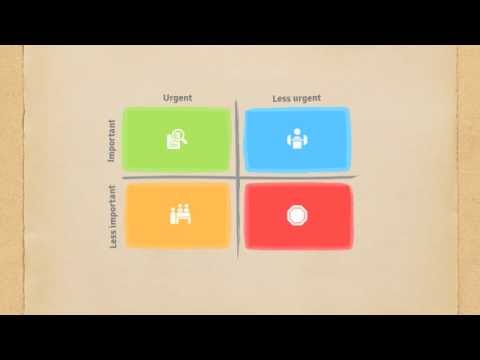
Quadrant Definitions:
-
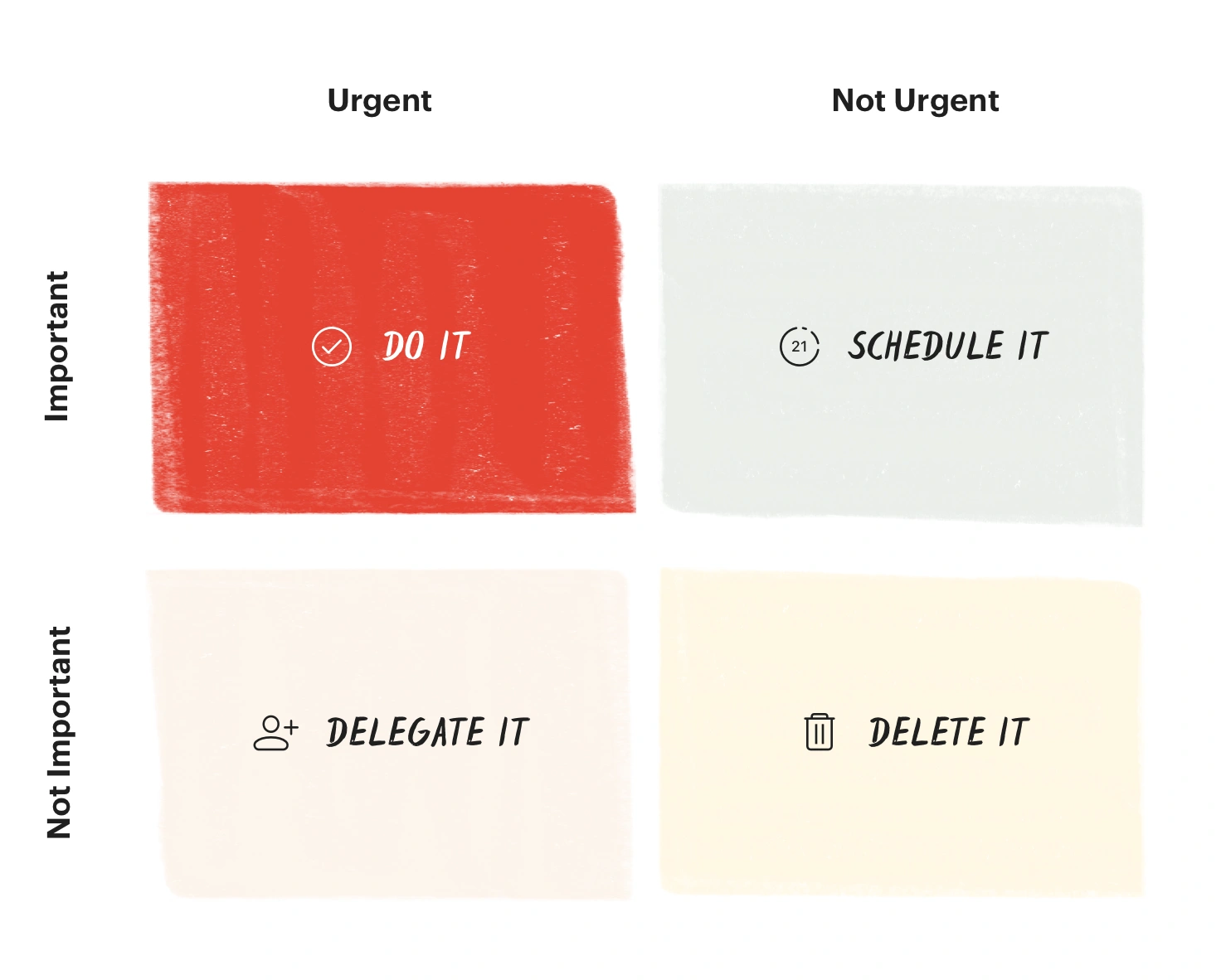
Q1: Do First (Urgent & Important): Crises, deadlines, problems. These are your top priorities.
-
Q2: Schedule (Important, Not Urgent): Prevention, relationship building, new opportunities, planning. These are crucial for long-term success.
-
Q3: Delegate (Urgent, Not Important): Interruptions, some meetings, some reports. For you, this might initially involve automation or pushing non-critical immediate tasks.
-
Q4: Don't Do (Not Urgent & Not Important): Trivia, some mail, some phone calls, time wasters. Eliminate these.
-
Besides filtering out incoming tasks that are neither urgent nor important, discover and stop bad habits, like surfing the internet without a reason or gaming too long.
-
The fourth and last quadrant in the Eisenhower Matrix is called Don’t Do because it is there to help you sort out things you should not do at all.
- From smoking to overeating to all those other things we do even though we know they're bad for us or don’t serve our vision. These are the things that give you an excuse for not being able to deal with important tasks in the 1st and 2nd quadrant. Put them all down in the fourth quadrant.
upgrade to Most Important Task (MIT)
This technique involves identifying the two or three most crucial tasks that need to be accomplished each day. The idea is to focus your energy on completing these high-priority items first before moving on to less important tasks. This ensures that you make progress on what truly matters.
MIT stands for Most Important Tasks.
The single most important activity or task that you should focus on to make progress towards your goals. Identifying what is most important to you and determining the specific action or task that will provide the greatest leverage in achieving your desired outcome. By prioritizing and focusing on your MIT, you can increase your productivity and make effective use of your time.
Eisenhower Matrix
- Is this task really urgent? Does it need to be done today or can it wait? In other words: Should I aim for doing it today (Do First quadrant) or put it down with a date that I am committed accomplishing it by instead (Schedule)?
- And is this task important for me personally? For my family or my long-term career? Really? (Do First or Schedule, but if not, a candidate for Delegate or Don't Do)
- Am I the best and the only one able to do this? Could the person who requested me to do it complete this task if I provide the required information, or is another person better suited to this job? Could I afford seeking outside help to get this done (Delegate)?
- Is there something of little urgency and importance I could stop doing right now? To whom or which task, whether started or not, can I say no? What time-wasters have I given into today and should remind myself every day not to do again (Don't Do)? Your goal should be to trim down your existing to-do list and closely review any new task coming in, starting today.
**Pro tip:**If you're having trouble being hard on yourself, for each task you review, speak out loud the above questions in a serious tone of voice—it might feel strange at first, but this really helped me. Be honest, realistic and try to reflect on your responses strictly. You will become more confident in automatically categorizing tasks over time.
steps
Step 1 First, let's categorize your tasks
High-Level Task Breakdown & Initial Categorization:
- Identify your most important goals, one by one
Do you know, I mean really know, what is important for you, your family and friends, or your career? Write down what you want as long-term goals. Be specific. The more personal, the better.
Step 2
Imagine your goal and all of the benefits attached to reaching this goal
The more benefits you attach to each goal, the more likely you will to keep working towards it. Some people maintain a so-called "vision board" with vivid images of their primary goals in life. Personally, I remind myself every other morning to take another look at what's important for me in the long run and review my progress so far.
Step 3
Break down any big goal into smaller goals
There might be many obstacles you have to climb to reach your larger goal. Challenges may arise and drag you down from time to time. Split your goal into individual steps with every milestone becoming a comparatively smaller task on your Schedule list. As a result of this, every accomplishment along the way will further boost your morale.
Step 4
Plan your individual actions to reach the goal
For each goal, write down your detailed plan of when you will work on which tasks and set a realistic deadline for the overall goal’s completion. I usually put a timeline next to the goal in Schedule, and once a week I put it on the wall as a sticky note as well as in my phone's calendar. Then, for example with personal goals, I make continued efforts – either as part of my morning routine just before leaving for work or extra room over the weekends – to spend more time on really pushing things forward on a regular basis.
Step 5
Seek outside help or share your commitment
Who could actively support you in reaching your goal? Who could be your commitment partner-in-crime for the next few weeks or months to come? Is it your partner, your best friend or a post shared publicly on Facebook? Openly speaking about your goal makes you work extra hard to not disappoint anyone—either by working on the wrong things, sometimes referred to as "procrastination," or by quitting and leaving it unfinished at some point.
Step 6
Get it done!
Follow your plan for what and when you wanted to work on something. Finish on time. No more excuses!
Last but not least, take an occasional break for a moment of reflection and enjoy the feeling of finally working toward your most important long-term goals. Life is about more than just fighting a daily workload that always comes in as urgent and important. To achieve your dreams, work on your very own plan and priorities instead.