User Story
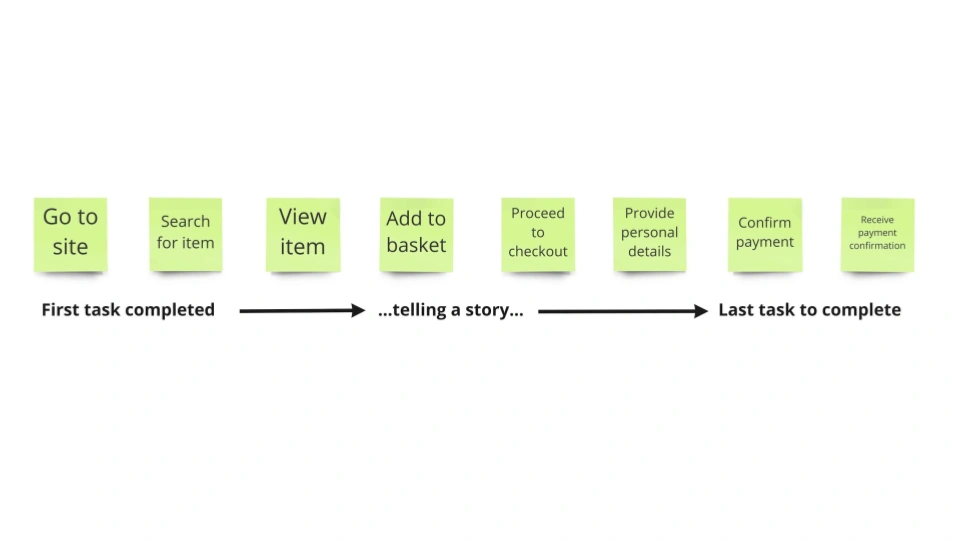
- Understand the Problem: Start by gaining a deep understanding of the problem or need you are trying to address. Talk to stakeholders, conduct user research, and gather as much information as possible.
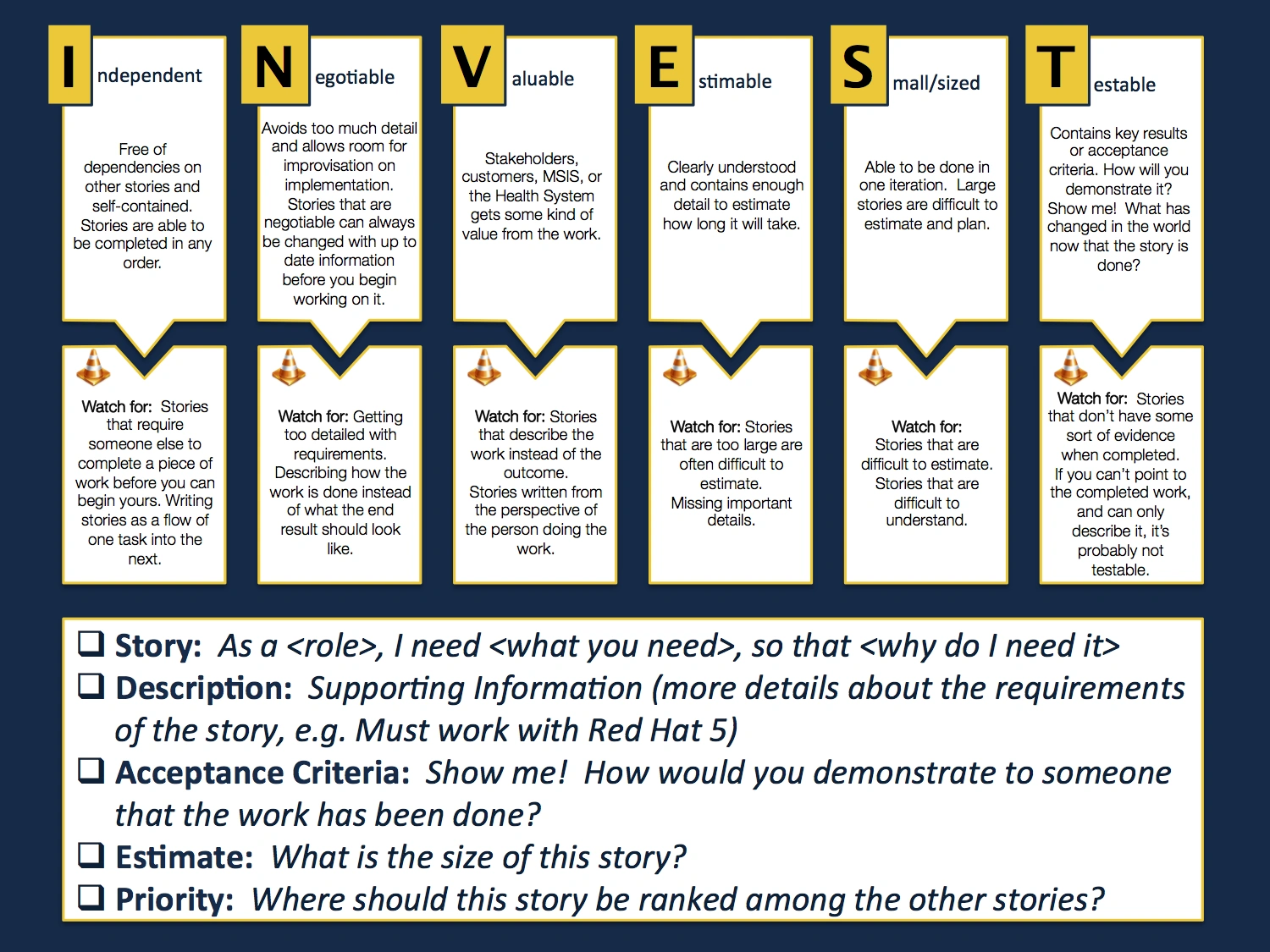
- Collaborative Story Writing: Involve the entire team in the process. Break down the problem into its smallest pieces and create user stories that represent specific tasks. Use the INVEST criteria (Independent, Negotiable, Valuable, Estimable, Small, and Testable) to ensure well-formed user stories.
- Prioritize User Stories: prioritize user stories based on their value and dependencies. Consider biz goals, user needs, and technical feasibility.
- Estimate Effort: As a team, estimate the effort required to implement each user story. You can use relative sizing techniques like story points or t-shirt sizing to provide a rough estimate of effort.
- Refine and Iterate: Continuously refine and iterate on the user stories as you gain more insights and feedback. Refinement sessions can be conducted regularly to clarify requirements and address any questions or uncertainties.
Understand the Vision and Mission
thoroughly understand the company's vision and mission to provide the context needed to align tasks with the overall goals and direction of the business.
Conduct a SWOT Analysis
conducti a SWOT (Strengths, Weaknesses, Opportunities, and Threats) analysis. This analysis helps identify internal strengths and weaknesses as well as external opportunities and threats. By understanding these factors, you can prioritize tasks that leverage strengths, address weaknesses, seize opportunities, and mitigate threats.
Break Down the Vision into Milestones
Work with the team to break down their vision into specific milestones. These milestones represent significant achievements that move the business closer to realizing its vision. Each milestone can then be broken down into actionable tasks.
Prioritize Tasks based on Impact and Urgency
Help the team assess the impact and urgency of each task. Impact refers to the potential positive effect on the business, such as revenue generation, customer acquisition, or product improvement. Urgency refers to the time sensitivity of the task and its alignment with immediate goals or deadlines.
Apply the Eisenhower Matrix
Guide the team in using the Eisenhower Matrix, a prioritization framework that categorizes tasks based on their importance and urgency. Tasks can be classified into four categories:
- Urgent and Important: These tasks should be prioritized and addressed immediately, as they have both high impact and urgency.
- Important but Not Urgent: These tasks should be planned and scheduled for completion as they contribute to long-term goals and growth.
- Urgent but Not Important: These tasks can be delegated or minimized as they may consume time without significant impact on the vision and mission.
- Not Urgent and Not Important: These tasks can be eliminated or postponed as they have low impact and urgency.
- Is this task really urgent? Does it need to be done today or can it wait? In other words: Should I aim for doing it today (Do First quadrant) or put it down with a date that I am committed accomplishing it by instead (Schedule)?
- And is this task important for me personally? For my family or my long-term career? Really? (Do First or Schedule, but if not, a candidate for Delegate or Don't Do)
- Am I the best and the only one able to do this? Could the person who requested me to do it complete this task if I provide the required information, or is another person better suited to this job? Could I afford seeking outside help to get this done (Delegate)?
- Is there something of little urgency and importance I could stop doing right now? To whom or which task, whether started or not, can I say no? What time-wasters have I given into today and should remind myself every day not to do again (Don't Do)?
Consider Dependencies and Resources
Assist the team in considering task dependencies and available resources. Some tasks may be dependent on others or require specific resources (such as funding, expertise, or technology). Prioritize tasks that can be accomplished with the available resources or identify the necessary resources to acquire.
Review and Iterate
Regularly review and reassess the prioritization of tasks as the business evolves and new information becomes available. Priorities may shift due to changing circumstances, market dynamics, or emerging opportunities.
Remember to encourage the team to maintain focus on high-impact tasks while addressing urgent matters. Balancing short-term needs with long-term goals is essential for sustainable growth and success.